Municipal Heritage Site
Old English Church
Hartney, Manitoba
Also known as St. Andrew's Anglican Parish, St. Andrew's Anglican Church
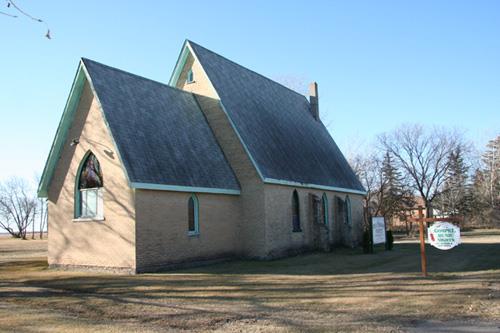
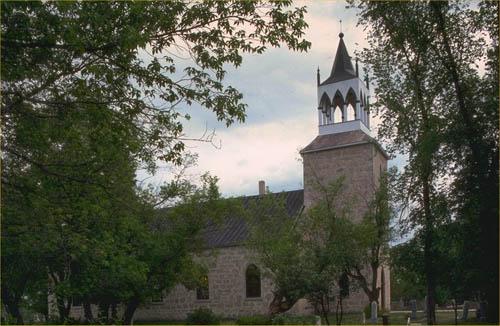
Primary elevations, from the northeast, of the Old English Church, Hartney, 2009
Photo: Historic Resources Branch, Manitoba Culture, Heritage and Tourism, 2009
- Built
- 1893–1894
- Recognized
- 2009
- By
- Local government
The register’s text, word for word
Description
The Old English Church, built between 1893 and 1894, is situated on the western edge of the town of Hartney in southern Manitoba. The municipal designation refers to the building on its footprint.
Heritage value
The Old English Church, originally known as the Anglican Parish of St. Andrew's, is an exceptional expression of some of the basic and most familiar traditions of Anglican church architecture. Beginning with its exceptionally steep roof, continuing through to its stolid brick walls and buttresses, and concluding in its sublime internal features and details, many carried out in delicate wood carvings, the church is a textbook example of the type. Constructed by local artisans and church members, this picturesque church gained a chancel echoing the same roofline in 1907, while the prescribed furnishings appeared as funds were raised by the Ladies' and Girls' auxiliaries as well as private endowments, a co-operative approach typical of small towns in southwestern Manitoba. In later years, the church languished for lack of a permanent pastor but has recently found new life with a new faith community and is being restored in the same progressive manner in which it was built.
SourceTown of Hartney By-law 929/09, September 8, 2009
Character‑defining elements
Key elements that define the heritage character of the Old English Church site include:
- its landmark status on the main axis street as it enters the town from Highway 21
- its spacious yard pleasingly landscaped with well-kept trees
- its ongoing historic and physical relationship with the former rector's house (west) and a large old mansion of the same buff brick (east)
Key elements that characterize the exterior of the Anglican-Gothic church include:
- an east-facing rectangular shape made of buff brick walls with two buttresses on each side, all set on a rubble stone foundation with a partial basement
- a chancel addition on the east end, a vestry near the southeast corner of the chancel and a wood porch at the west entrance
- a distinctive steeply-pitched gable roof over the nave, a chancel and porch with a shed roof over the vestry on the south side
- the original openings along the side walls, including eight pointed windows tucked closely under the shallow eaves and set with coloured glass, a large pointed window behind the altar, a small door in the vestry and tiny keyhole openings under the gable peaks on the ends
Key interior elements that define the church's heritage character include:
- the dramatic nave space, vaulted high upon exposed wooden scissor trusses truncated near the apex
- the plain pastel-coloured walls contrasted with the dark wood trims used on windows, main and vestry doors and baseboards, etc.
- the use of simple tracery windows throughout, with the exception of the inner double doors, which have a large pointed transom in coloured glass
- original wood-carved furnishings including pews, altar and pulpit, etc.
End of the register’s text
Location
602 River Avenue, Hartney, Manitoba, Canada
49.47977° N, 100.51903° W
Get directions (opens in a new tab)Being on the register doesn’t make a place open to visitors. Many are private homes or businesses; please view them from the street.

Loading map…
Nearby
Similar places
Places whose register descriptions are closest to this one.
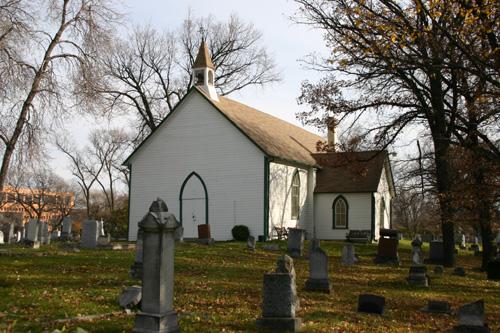
 St. George's Anglican ChurchTurtle Mountain, Manitoba
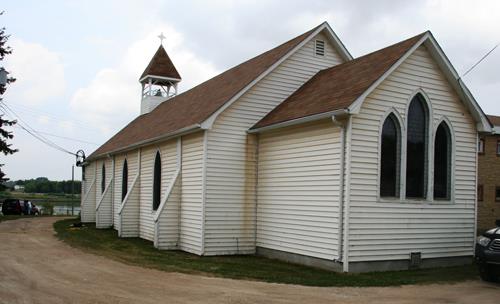
 Old St. James Anglican ChurchWinnipeg, Manitoba
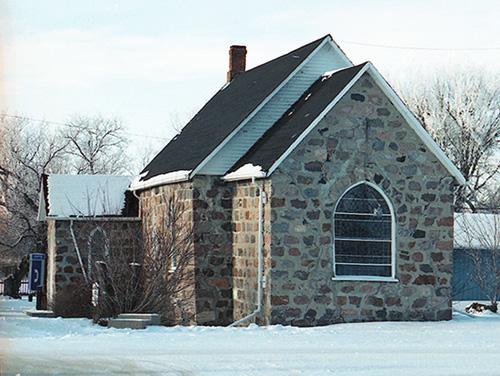
 Christ ChurchKelsey (Carrot Valley), Manitoba
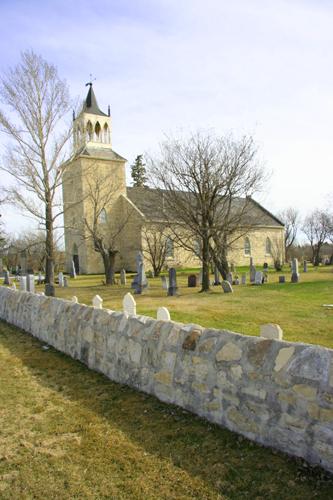
 Christ Anglican ChurchCartwright, Manitoba
 St. Andrew's on the Red Anglican ChurchSt. Andrews, Manitoba
 St. Andrew's Anglican Church National Historic Site of CanadaSt. Andrews, Manitoba
From the Canadian Register of Historic Places, as last updated on December 12, 2025. The register’s text is shown word for word.