National Historic Site of Canada
Ukrainian Catholic Church of the Immaculate Conception National Historic Site of Canada
Cook's Creek, Manitoba
Also known as Ukrainian Catholic Church of the Immaculate Conception, Église catholique ukrainienne Church of the Immaculate Conception
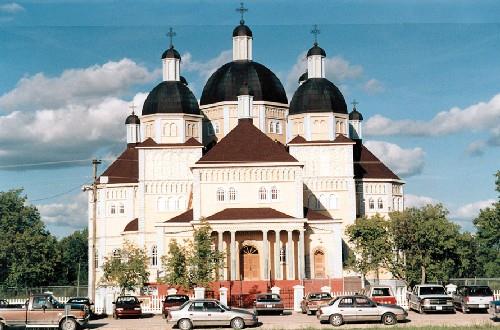
View of the main entrance to the Ukrainian Catholic Church of the Immaculate Conception, showing its multi-domed Kievan style.
Photo: Parks Canada Agency / Agence Parcs Canada.
- Built
- 1930–1938
- Recognized
- 1997
- By
- Government of Canada
The register’s text, word for word
Description
The Ukrainian Catholic Church of the Immaculate Conception National Historic Site of Canada stands at a crossroads in rural Cook’s Creek, Manitoba. Its substantial size and many-domed profile create a distinctive silhouette on the flat landscape of the surrounding prairie. It is a relatively unsophisticated Kievan-style Ukrainian church that features complex Byzantine massing, Depression-era materials and a folk-type handling of details. The designated place is the single, legally-defined property at the time of designation.
Heritage value
The Ukrainian Catholic Church of the Immaculate Conception was designated a national historic site of Canada in 1996 because:
- it is one of the most ambitious and accomplished buildings designed by the Reverend Philip Ruh, a prolific and imaginative designer of early Ukrainian Catholic churches in Canada;
- the church itself, a "Prairie Cathedral" built in the multi-domed Kievan style, is remarkable for its size, the complexity of its massing, and its delightfully painted interior and exterior surfaces.
The heritage value of the Ukrainian Catholic Church of the Immaculate Conception National Historic Site of Canada lies in its illustration of the architectural work of Reverend Philip Ruh and its representation of Ukrainian-Canadian religious architecture on the Prairies. From 1930 to 1962, Cook’s Creek was the home parish of Reverend Philip Ruh (1883-1962) who was responsible for designing 33 other Ukrainian church buildings in Canada, several of them in Manitoba.
The church, one of Ruh’s most adventurous designs, is endowed with nine domes or dome-like structures, a multiplicity of stepped masses, and accommodating side aisles and chapels in keeping with the style of the multi-domed Kievan churches that served as inspiration. The warm golden tones of the exterior walls simulate Tyndall limestone, and are accentuated with rows of red and green stars at the lower cornice levels and around the arched doorways. Inside, solid-colour areas create drama in their juxtapositions of burnt oranges, periwinkle blues, yellow ochres, and dark greens, while boldly painted bands of marbling highlight distinct architectural components, such as vault ribs and the edges of pilasters, lending the building a charming vernacular quality.
SourceHistoric Sites and Monuments Board of Canada, Minutes, 1996.
Character‑defining elements
Key elements that contribute to the heritage value of this site include:
- its location at a rural crossroads in a historic Ukrainian settlement area of Manitoba;
- its siting, set back from the road and raised on a high foundation;
- its complex Byzantine massing, nine-domed Kiev-inspired design with bell-tower and nave expressed on the exterior by the central, projecting frontispiece;
- its classically inspired exterior decoration with arcading, round-headed windows and columned entry porch;
- its reinforced concrete construction technology;
- its vernacular, twentieth-century New World interpretations of traditional Ukrainian finishes such as the textures, surfaces and composition of its original construction materials concrete-stucco as an exterior finish, concrete as decorative material, reinforced concrete as a floor and foundation medium, and interior detailing including cement and concrete stucco for interior wall surfacing, fibreboard for the interior arches of the ceiling, interlocking Bruno tile blocks as a wall material, and religious art painted by local artists;
- its generous well-landscaped site with grotto and separated from the road by formal fencing;
- the associated cemetery marking the graves of Ruh and others involved in the construction;
- its continued use as a community church.
End of the register’s text
Location
Highway 212 & Zora Road, Cook's Creek, Manitoba, R0E, Canada
50.00399° N, 96.77320° W
Get directions (opens in a new tab)Being on the register doesn’t make a place open to visitors. Many are private homes or businesses; please view them from the street.

Loading map…
Nearby
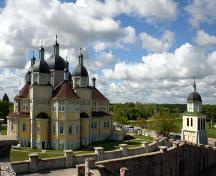 Ukrainian Catholic Church of the Immaculate Conceptionwithin 100 m · Springfield · 1930
- St. Andrews United Church9.4 km · Garson · 1910
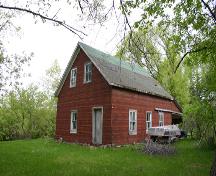 Cox House11 km · St. Andrews · 1862
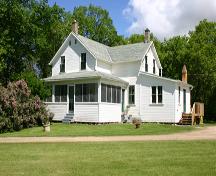 Speer House11 km · Springfield · 1882
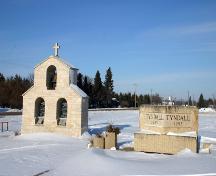 Bell Tower of the Ukrainian Catholic Church of St. Michael the Archangel12 km · Brokenhead · 1916
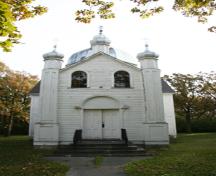 Sts. Peter and Paul Ukrainian Orthodox Church13 km · Brokenhead · 1933
Similar places
Places whose register descriptions are closest to this one.
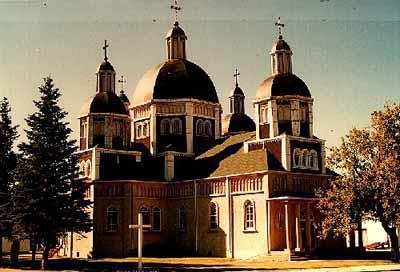 Ukrainian Catholic Church of the Resurrection National Historic Site of CanadaDauphin, Manitoba
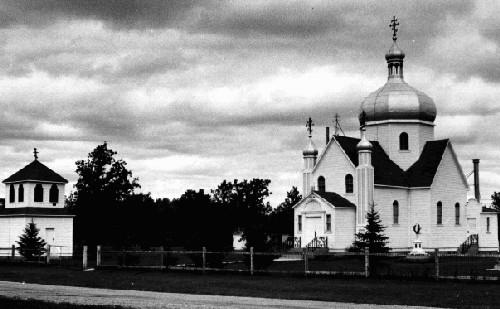 St. Michael's Ukrainian Greek Orthodox Church National Historic Site of CanadaStuartburn, Manitoba
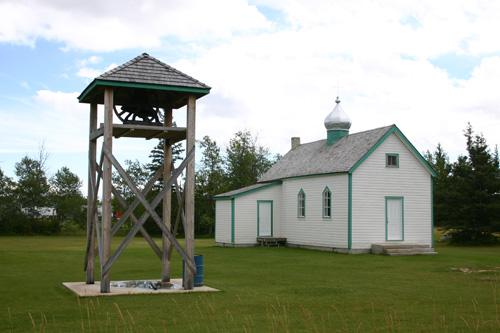 St. Mary's Ukrainian Catholic ChurchGimli, Manitoba
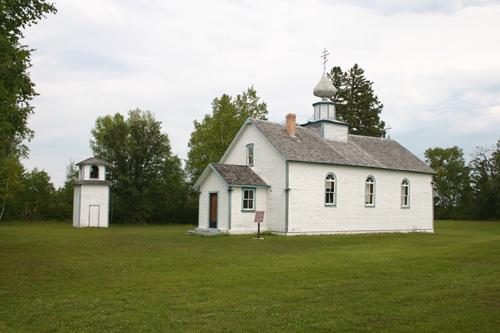 St. Michael's Ukrainian Catholic ChurchGimli, Manitoba
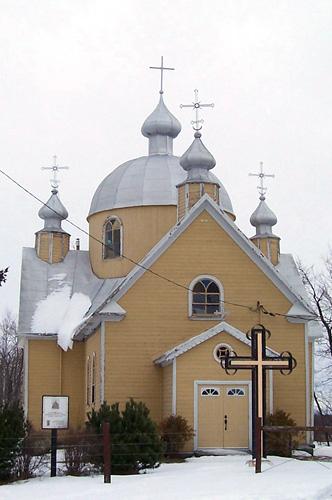 St. John the Baptist Ukrainian Catholic ChurchStrathclair, Manitoba
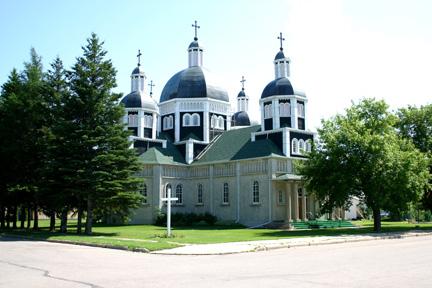 Historic Ukrainian Catholic Church of the ResurrectionDauphin, Manitoba
From the Canadian Register of Historic Places, as last updated on December 12, 2025. The register’s text is shown word for word.