Provincial Heritage Site
Ukrainian Catholic Church of the Immaculate Conception
Springfield, Manitoba
Also known as Prairie Cathedral, Cathédrale des Prairies, Cooks Creek Church
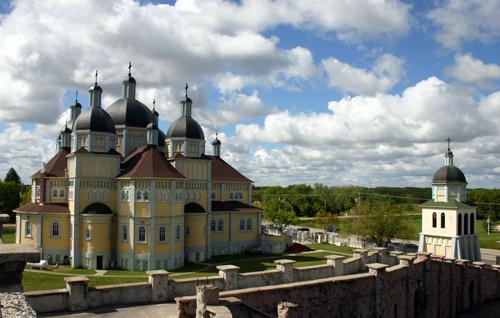
Context view, from the northwest, atop the adjacent grotto, of the Ukrainian Catholic Church of the Immaculate Conception, Cooks Creek, 2005
Photo: Historic Resources Branch, Manitoba Culture, Heritage, Tourism and Sport, 2005
- Built
- 1930–1952
- Recognized
- 1986
- By
- Province of Manitoba
The register’s text, word for word
Description
The Ukrainian Catholic Church of the Immaculate Conception, constructed in stages beginning in 1930 and consecrated in 1952, is a multi-storey domed structure situated on Road 212 in the village of Cooks Creek in a complex that includes the Grotto of Our Lady of Lourdes and a cemetery. The provincial designation applies to the church and its large lot.
Heritage value
The Ukrainian Catholic Church of the Immaculate Conception holds important connections to a significant era in Ukrainian church construction in Manitoba, as well as to its noted priest-architect, Father Philip Ruh, O.M.I.. One of the largest Ukrainian Catholic churches in Western Canada and one of the impressive `Prairie cathedral-style' churches in Manitoba, the building exhibits a formal approach to design that follows the dynamic forms and colours of Ukrainian Baroque churches coupled with a wealth of other architectural motifs and elements - all carried out in concrete, stucco and paint. The vernacular is innovatively fused with Ukrainian motifs, while the basic materials are enlivened with faux finishes in emulation of the richness of grand European churches. The structure was almost entirely hand-built by volunteers (including Father Ruh) and local artisans painted the elaborate interior. Father Ruh, who is buried in the nearby church cemetery, is credited with designing more than 30 churches from Alberta to Ontario, each a distinct interpretation of his `Prairie cathedral' aesthetic.
SourceManitoba Heritage Council Minutes, June 22, 1984
Character‑defining elements
Key elements that define the heritage character of the Ukrainian Catholic Church of the Immaculate Conception site include:
- the extensive well-groomed grounds on Road 212 in Cooks Creek, with clusters of mature trees, grassed expanses and formal paved walkways
- the church's inclusion in an ecclesiastical complex that also contains a free-standing bell tower, the Grotto of Our Lady of Lourdes and the cemetery
Key elements that define the church's eclectic and flamboyant `Prairie cathedral style' include:
- its complex form, with many adjoining volumes set on a reinforced concrete foundation and united under a highly animated roofline, with the nave denoted by a rectangular hipped section, and the transepts and apses highlighted with roof fragments and domes of various sizes and shapes
- the hierarchy of nine domes, with the largest at the crossing, four smaller domes set on square towers and four much smaller domes atop tall drums marking the end points of the cruciform plan, each dome featuring a wooden drum topped by a metal dome and decorative Latin cross
- the many stucco surfaces strikingly rendered in polychromatic faux finishing (carried out in a bright colour scheme of yellow, light blue and white), including Neo-Classical and Romanesque elements such as columns, pilasters, round-arched blind arcades, entablatures, belt courses, etc.
- the classically appointed entrance porch featuring three sets of wooden doors with fanlights, Tuscan columns supporting an entablature, and a grand staircase with apsidal side walls supporting heralding angel statuary, etc.
- the abundance of round-arched openings throughout, some with coloured glass and decorative surrounds, found in pairs or triples on the upper levels
- the details, including marble, houndstooth and stone block effects, etc.
Key elements that define the church's formal interior layout, finishes and details include:
- the sprawling cruciform plan with a dominant nave; arcaded side aisles; short apsidal transepts; numerous altars, including the main raised altar and apsidal sanctuary; a cantor's loft; etc.
- the ceiling composed of multiple forms, including the barrel-vaulted nave and transepts culminating in a squinched and octagonal domed crossing, the groined arcaded side aisles, etc.
- the rich interior decorative treatment throughout, including vibrant polychromy, gold leaf and faux-marble painting effects on the walls, ceilings, exaggerated ribs, pilasters, square column heads, etc., and the sanctuary with numerous paintings depicting biblical scenes
- the formal seating consisting of wooden pews
- the details and finishes, including some wood plank flooring and stairs, wooden doors with fanlights, mouldings, an ornate chandelier, the carved loft balustrade, icon stands, medallions, etc.
End of the register’s text
Location
Springfield, Manitoba, R0E, Canada
50.00460° N, 96.77312° W
Get directions (opens in a new tab)Being on the register doesn’t make a place open to visitors. Many are private homes or businesses; please view them from the street.

Loading map…
Nearby
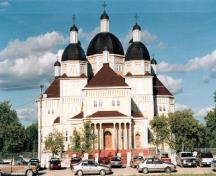 Ukrainian Catholic Church of the Immaculate Conception National Historic Site of Canadawithin 100 m · Cook's Creek · 1930
- St. Andrews United Church9.3 km · Garson · 1910
 Cox House11 km · St. Andrews · 1862
 Speer House11 km · 1882
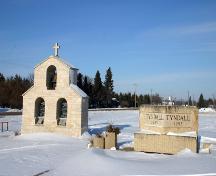 Bell Tower of the Ukrainian Catholic Church of St. Michael the Archangel12 km · Brokenhead · 1916
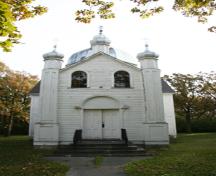 Sts. Peter and Paul Ukrainian Orthodox Church12 km · Brokenhead · 1933
Similar places
Places whose register descriptions are closest to this one.
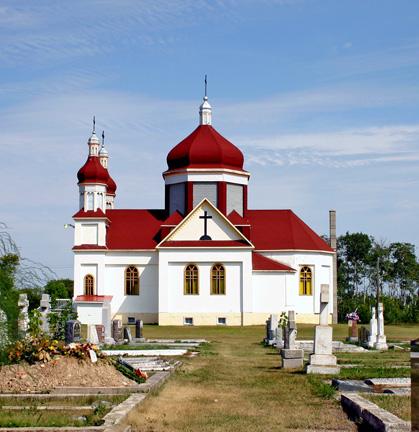 Ukrainian Catholic Church of the Immaculate ConceptionWinnipegosis, Manitoba
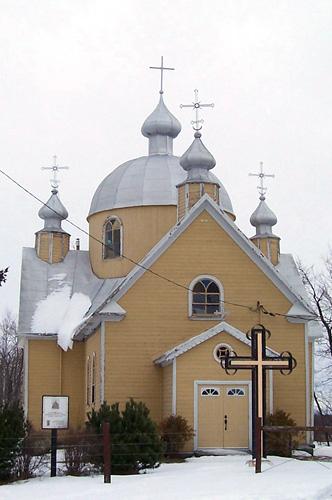 St. John the Baptist Ukrainian Catholic ChurchStrathclair, Manitoba
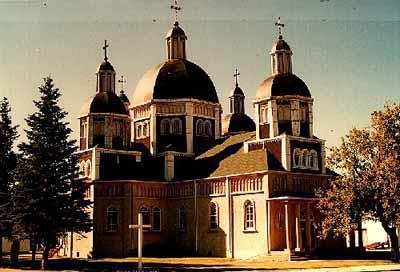 Ukrainian Catholic Church of the Resurrection National Historic Site of CanadaDauphin, Manitoba
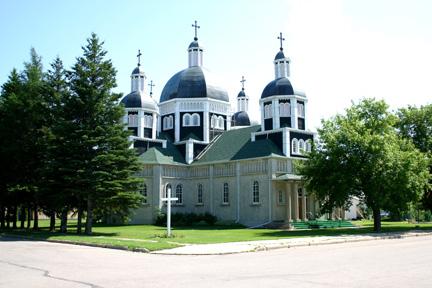 Historic Ukrainian Catholic Church of the ResurrectionDauphin, Manitoba
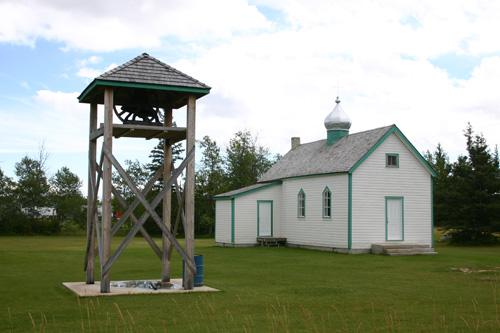 St. Mary's Ukrainian Catholic ChurchGimli, Manitoba
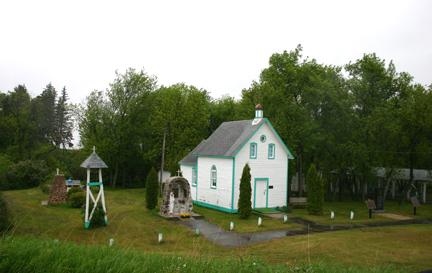 St. Michael's Ukrainian Catholic ChurchDauphin, Manitoba
From the Canadian Register of Historic Places, as last updated on December 12, 2025. The register’s text is shown word for word.