Provincial Heritage Site
Trappist Monastery Ruins
Winnipeg, Manitoba
Also known as Abbey of Our Lady of the Prairies, Notre-Dame des Prairies, Abbaye de notre Lady des Prairies
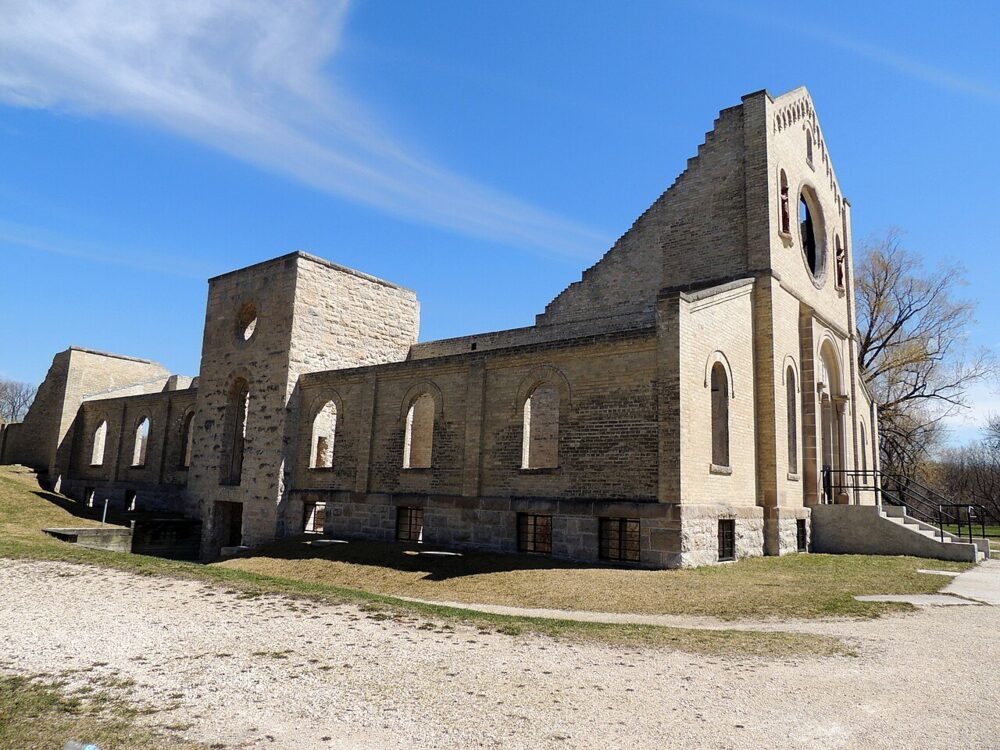
Not from the Register. Photo: Kevin M Klerks, Wikimedia Commons · CC BY 2.0
- Built
- 1903–1905
- Recognized
- 1988
- By
- Province of Manitoba
The register’s text, word for word
Description
The Trappist Monastery Ruins are the brick and stone remnants of a religious complex constructed in 1903-05 in St. Norbert, now a south Winnipeg suburb. The provincial designation applies to the ruins and the grounds they occupy.
Heritage value
The Trappist Monastery Ruins recall a complex of religious architecture unique to Manitoba. The ruins also recall the St. Norbert area's distinct character as an early French-speaking Metis community associated with prominent Manitoba figures such as Father Noel-Joseph Ritchot, who, along with Archbishop A-A. Tache, invited Cistercians of the Trappist order in France to establish the monastery in 1892. Notre Dame des Prairies subsequently provided a private, tranquil existence for the Trappists, one centred on a Romanesque Revival church as their spiritual nucleus, the attached monastic wing and several self-supporting agricultural enterprises, all situated on a secluded peninsula of the La Salle River. Built by the monks to plans sent from their abbey, the exceptional church, in keeping with Cistercian values, featured simple architecture and minimal ornamentation. The monastic wing held the monks' modest rooms, lecture halls, and reception and service areas. In 1983, a few years after the Trappists moved to a new site, fire reduced the monastic wing to its foundation and the church to a shell. The stabilized ruins, and the grounds featuring mature trees, expanses of lawn and open fields, now form the Trappist Monastery Provincial Heritage Park.
SourceManitoba Heritage Council Meeting Minutes, March 28, 1987
Character‑defining elements
Key elements that define the heritage character of the Trappist Monastery Ruins site include:
- the location on an isolated La Salle River peninsula in St. Norbert, with the ruins set within a landscape of lawns and fields punctuated by many mature trees;
- its proximity to the east of the 1912 Trappist Monastery Guest House, also a Provincial Heritage Site.
Key elements that define the ruins' form and surviving Romanesque Revival architecture include:
- the elongated rectangular expanse of the church meeting the similarly shaped perpendicular volume of the monastic wing, with brick facades of varying heights rising from rusticated stone bases, with all exterior and former interior surfaces open to the air;
- the church's largely intact west facade composed of lesser-ornamented side aisles with shed rooflines and a full-height central bay detailed with a parapet, niches, statuary, a large central circular void, etc.;
- the church's largely intact bell tower featuring a bull's eye opening, the apse walls, etc.;
- the openings, including the round-arched church windows with lug sills, keystones and brick hood moulding and the monastic wing's square-headed windows;
- the details, including limestone belt courses and coping, pilasters, corbelling, etc.
End of the register’s text
Location
Winnipeg, Manitoba, R3V, Canada
49.75672° N, 97.15383° W
Get directions (opens in a new tab)Being on the register doesn’t make a place open to visitors. Many are private homes or businesses; please view them from the street.

Loading map…
Similar places
Places whose register descriptions are closest to this one.
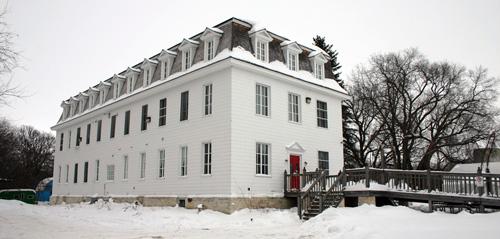 Trappist Monastery Guest HouseWinnipeg, Manitoba
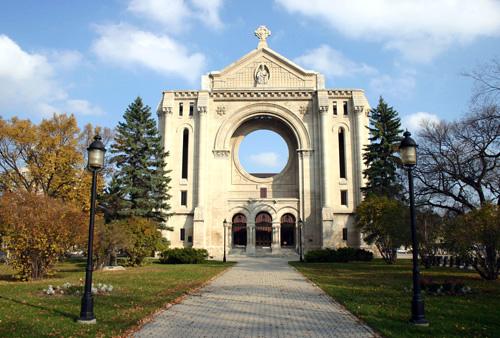 St. Boniface CathedralWinnipeg, Manitoba
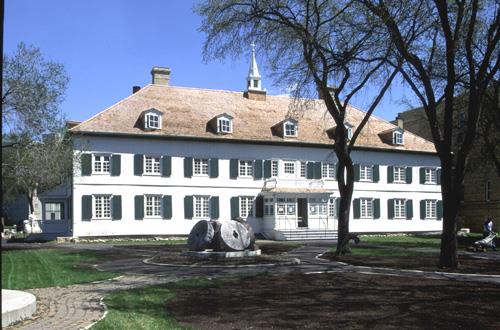 Grey Nuns' ConventWinnipeg, Manitoba
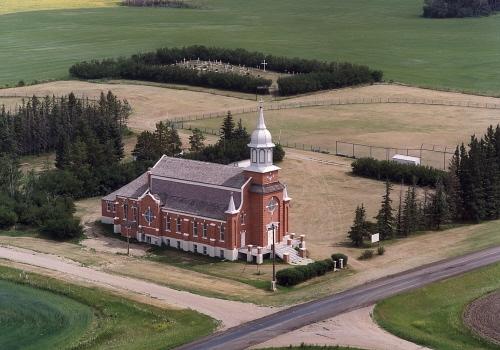 St. Norbert's Roman Catholic Churchnear Provost, Alberta
 Convent of the Sisters of the Holy Names of Jesus and MaryWinnipeg, Manitoba
 First Scandinavian Mission ChurchWinnipeg, Manitoba
From the Canadian Register of Historic Places, as last updated on December 12, 2025. The register’s text is shown word for word.