Stuart House
Description
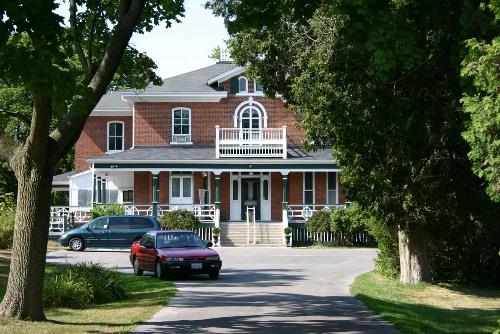
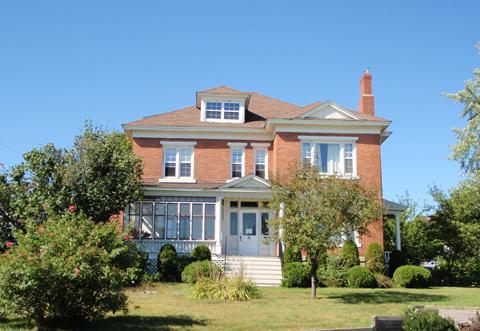
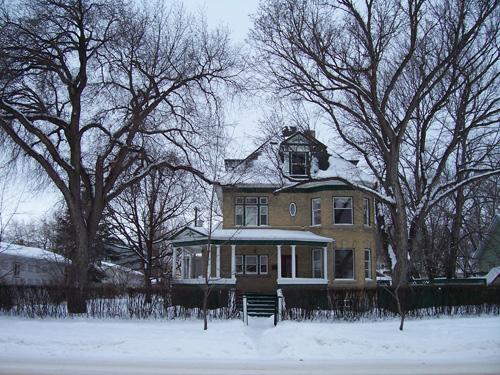
Stuart House, with its distinctive brickwork and Queen Anne Revival features, is located in a northeast residential neighbourhood in Selkirk. Somewhat isolated from the rest of the city on Eveline Street north of Queen Avenue, the 2 1/2 -storey dwelling, built in 1904, backs on to Selkirk Park and the Marine Museum of Manitoba. The municipal designation applies to the building and its four lots.
Heritage Value
Stuart House, a largely unaltered brick-veneer dwelling, is one of the finest examples of the builder's trade still remaining in Selkirk. Distinguished by its richly coloured bricks and plain and saw-toothed stringcourses, the dwelling also features many Queen Anne Revival elements, including the original finely crafted verandah. Built for James Stuart and occupied by his family for 75 years, the house has important ties to Selkirk's early history. Stuart managed the Selkirk Electric Light Co. and his house was located next to the community's first electrical power plant.
Source: Town of Selkirk By-law No. 4891, November 10, 1997
Character-Defining Elements
Key elements that define the heritage character of the Stuart House site include:
- the dwelling's placement on a grassed and treed lot on the east side of Eveline Street in Selkirk, with its front oriented to the west
Key elements that define the dwelling's external heritage character and fine craftsmanship include:
- its 2 1/2 - storey rectangular volume with a large hipped roof, overhanging eaves, pedimented dormers on three sides and a brick chimney
- the polychrome brickwork ranging in colour from sienna to orange; also detailing such as the saw-toothed stringcourse that outlines the separation between the floors and the plain stringcourses that introduce the windows' segmental arches
- the variety of openings, including the canted bay window on the ground floor of the west (front) facade, a transom window above the front entrance, the stained-glass window on the south elevation and other tall rectangular openings, all with smooth stone sills
- the traditional white-painted verandah with Queen Anne Revival-style details, including turned spindles, posts and trim
Gallery
1 imageLocation
Loading map...
Similar Places
Heritage sites with similar characteristics