National Historic Site of Canada
St. Roch National Historic Site of Canada
Vancouver, British Columbia
Also known as St. Roch
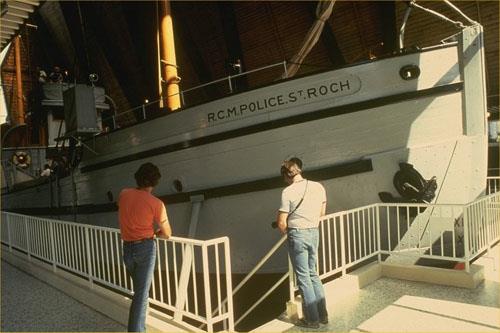
General view of the St. Roch, 1982.
Photo: Parks Canada Agency / Agence Parcs Canada, 1982.
- Built
- 1928
- Recognized
- 1962
- By
- Government of Canada
The register’s text, word for word
Description
Dry-docked in a purpose-built A-frame structure as part of the Vancouver Maritime Museum at Kitsilano Point, the St. Roch is an auxiliary Royal Canadian Mounted Police schooner restored to her external appearance as she was during her 1944 crossing of the Northwest Passage. She is 31.6 metres long with a beam of 7.6 metres, a depth of hold of 3.4 metres and a displacement of 323 tons. St. Roch is made primarily of thick Douglas fir planks with hard Australian Eucalyptus ‘iron bark’ on the outside and an interior hull reinforced with heavy beams to withstand ice pressure. The official recognition refers to the ship itself.
Heritage value
St. Roch was designated a national historic site of Canada because:
- she became the first ship to cross from the Pacific to the Atlantic by the North West Passage;
- she was also the first ship to complete the hazardous journey in both directions.
The Canadian-built St. Roch is valued as an excellent example of Canada’s maritime history. She navigated the Northwest Passage, arriving in Halifax in 1942, after spending two winters frozen in the ice. She was the second ship to make the Passage, and the first to conquer the journey from the Pacific to the Atlantic. In 1944, the refitted St. Roch returned to Vancouver via the more northerly, deep route of the Prince of Wales Strait in eighty-six ice-free days – the first to navigate the Northwest Passage in a single season. Retired in 1948, St. Roch was sent to Halifax via the Panama Canal in 1950, making her the first ship to circumnavigate North America.
Under the command and leadership of Sergeant Henry Larsen (1899-1964) who was first mate and captain for twenty years, the voyages of the St. Roch demonstrated Canadian sovereignty in the Arctic. She extended and maintained Canadian control over its vast northern territories as an all-purpose supply, patrol and transport vessel and governmental representative to service isolated and relatively inaccessible R.C.M.P. detachments by settling disputes and conducting a census of the Inuit. During this time the St. Roch was the only federal presence in the far north. During the Second World War the St. Roch was sent through the North West Passage to protect war industries in the north, specifically a mine in Greenland which was the sole source of cyrolite essential to the production of aluminum.
The heritage value lies in the original design and the multiple refits that were designed to deal harsh conditions and reflect the changing technologies in marine transportation over the course of her working life. The St. Roch has been restored to her appearance during her epic journeys between 1940-1944 that was a mix of original elements and subsequent refits. Additional value in her material fabric include the spare and well-considered details of her design in terms of the efficiency and economy of her living and working quarters.
SourceStatement of Commemorative Intent and Description of Designated Place, February 11, 2004; Historic Sites and Monuments Board of Canada, Agenda Paper 68-33: Restauration of the St. Roch.
Character‑defining elements
Key elements that define the heritage character of the St. Roch include its:
- schooner form, relatively large scale and compact massing;
- surviving original construction materials and craftsmanship;
- intact spatial configuration above and below deck, illustrating the daily living and working arrangements of the ship’s crew, intact mess and galley facilities;
- intact interior millwork throughout the domestic and common quarters;
- hardware including decorative and nautically themed brass and iron fixtures, plumbing, washbasins and radiators;
- navigational equipment including scientific instruments, compass, maps and charts, chart rack, set of international code flags, steering wheel and helm;
- nautical equipment including the masts and swivels, sails, ropes, decks and rigging, propeller and rudder, booms, crow’s nest, anchor, winches and windlass;
- safety equipment including lifeboats, lifebuoys and racks, fire extinguishers;
- communication equipment including wireless transmitters and receivers;
- mechanical equipment including diesel engines, pistons, compressors, fuel tanks, pumps, generators and auxiliary;
- recreational materials such as gramophone, records and reading material such as periodicals;
- lettering cut in main beam under hatch coaming: ‘O.N. 154, 809 R.T. 80.07’.
End of the register’s text
Location
1905 Ogden Avenue, Vancouver, British Columbia, V6J, Canada
49.27735° N, 123.14732° W
Get directions (opens in a new tab)Being on the register doesn’t make a place open to visitors. Many are private homes or businesses; please view them from the street.

Loading map…

Similar places
Places whose register descriptions are closest to this one.
 S.S. Klondike National Historic Site of CanadaWhitehorse, Yukon
 S.S. Acadia National Historic Site of CanadaHalifax, Nova Scotia
 Britannia Shipyard National Historic Site of CanadaRichmond, British Columbia
- North Sea Wreck SiteNone, British Columbia
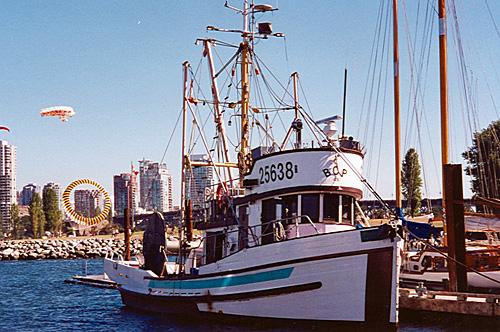 Motor Vessel BCP 45 National Historic Site of CanadaCampbell River, British Columbia
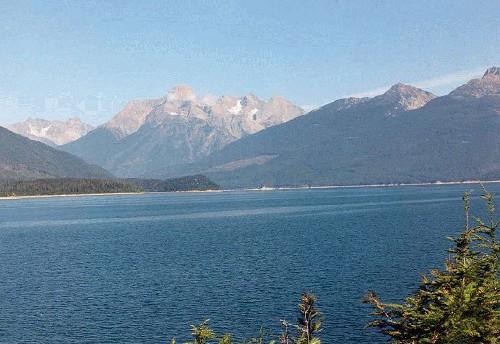 Boat Encampment National Historic Site of CanadaRed Rock Bay, British Columbia
From the Canadian Register of Historic Places, as last updated on December 12, 2025. The register’s text is shown word for word.