National Historic Site of Canada
Southwold Earthworks National Historic Site of Canada
Southwold, Ontario
Also known as Southwold Earthworks, Remblais-de-Southwold
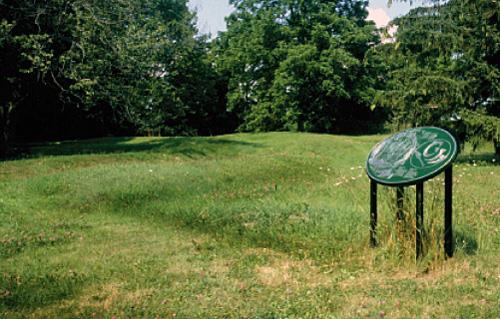
General view of Southwold Earthworks National Historic Site of Canada, showing the earthworks, which form a double ring of low earthen mounds that surround the site.
Photo: Parks Canada Agency / Agence Parcs Canada.
- Built
- 1450–1550
- Recognized
- 1923
- By
- Government of Canada
The register’s text, word for word
Description
Southwold Earthworks National Historic Site of Canada, located near Iona, in Elgin County, is a piece of property containing the archaeological remains of a village, originally inhabited by the Attiwandaron, also known as the Neutral Iroquois. Conspicuous earthworks, a rarity in southern Ontario, surround the village and are well preserved. The interior of the village shows a typical Iroquoian pattern of closely spaced longhouses, many of which are overlapping. The overlapping houses indicate that many houses were reconstructed during the life of the village, another typical Iroquoian pattern. Official recognition refers to the archaeological site administered by Parks Canada.
Heritage value
Southwold Earthworks was designated a national historic site of Canada in 1923 because:
- it is a rare and well-preserved example of an Aboriginal fortified village completely surrounded by earthworks, built by the Attiwandaron (Neutral Iroquois) between about A.D. 1450 and 1550.
Attiwandaron is a name from the Huron-Wendat language that refers to the confederacy of Iroquoian peoples living north of Lake Erie who were neutral in the conflict between the Huron-Wendat and the League of Five Nations Iroquois. The village was once home to several hundred people who lived in longhouses, which were multi-unit dwellings that housed entire extended families related by a common maternal ancestor. The village was, and is, surrounded by conspicuous earthworks. The 17th-century French referred to the Attiwandaron as the “la nation Neutre” or the Neutrals. There is no distinct descendant population of the Attiwandaron today, as the entire confederacy was dispersed or incorporated into the Five Nations Iroquois during the years 1647 to 1651. This is the only Iroquoian village administered by Parks Canada that is commemorated as a village in itself.
SourceHistoric Sites and Monuments Board of Canada, Submission Report and Minutes, March 2005.
Character‑defining elements
Key elements contributing to the heritage value of this site include:
- the integrity and materials of the surviving subsurface archaeological remains; features and artifacts in their original placement and extent, including the in situ vestiges, and various archaeological features both identified and as yet unidentified that relate to the occupations and activities pursued on this site;
- the earthworks, which form a double ring of low earthen mounds that surround the site;
- the flat plain of the village itself inside the earthworks, the location of the longhouses, the work spaces and common areas within the village;
- the views from atop the earthworks, and from the surrounding area towards the earthworks.
End of the register’s text
Location
Southwold, Ontario, Canada
42.67413° N, 81.36018° W
Get directions (opens in a new tab)Being on the register doesn’t make a place open to visitors. Many are private homes or businesses; please view them from the street.

Loading map…
Nearby
 Port Stanley National Historic Site of Canada12 km · Central Elgin · 1669
 Port Stanley Breakwater Lighthouse12 km · Port Stanley · 1911
 St. Thomas Pioneer Church17 km · City of · 1824
 Armoury17 km · St. Thomas · 1901
 St. Thomas City Hall National Historic Site of Canada18 km · St. Thomas · 1898
 Former Canada Southern Railway Station18 km · St. Thomas · 1871
Similar places
Places whose register descriptions are closest to this one.
 Norton Attawandaron SiteCity of London, Ontario
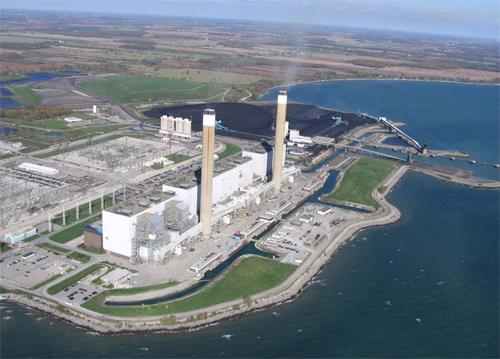 Nanticoke National Historic Site of CanadaNanticoke, Ontario
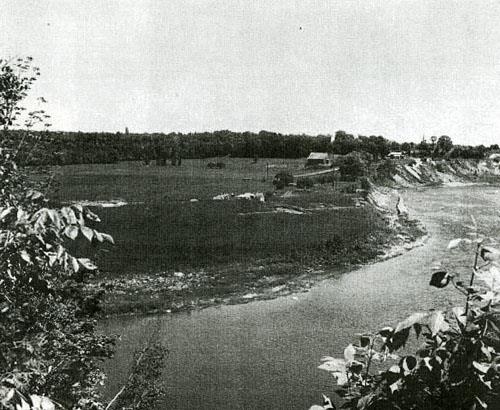 Donaldson Site National Historic Site of CanadaChippawa Hill, Ontario
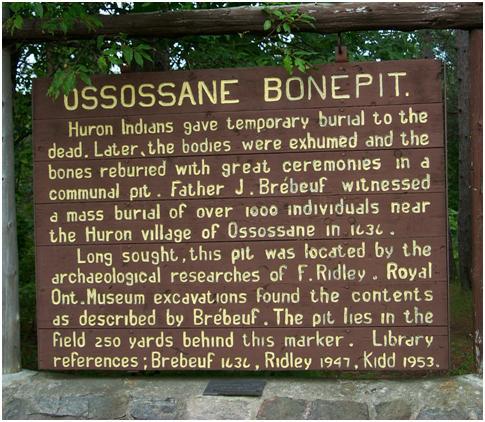 Ossossane Sites National Historic SiteOssossane Beach, Ontario
 Sheguiandah National Historic Site of CanadaManitoulin Island, Ontario
- Earthlodge Village National Historic Site of CanadaCluny, Alberta
From the Canadian Register of Historic Places, as last updated on December 12, 2025. The register’s text is shown word for word.