National Historic Site of Canada
Donaldson Site National Historic Site of Canada
Chippawa Hill, Ontario
Also known as Donaldson Site, Site Donaldson, Saugeen Culture Site
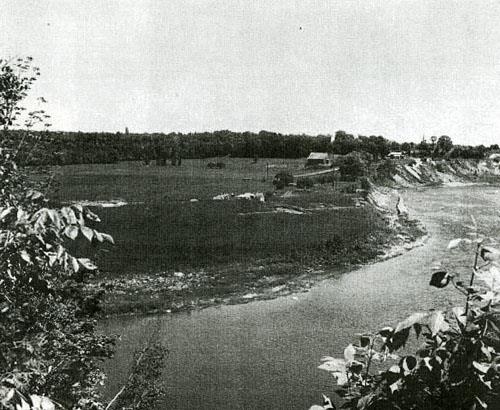
1960 photograph of Donaldson during the course of the excavations by James V. Wright. The photographer is looking east from the opposite bank of the river.
Photo: J.V. Wright and J.E. Anderson, “The Donaldson Site,” National Museum of Canada Bulletin 184, (1963))
- Recognized
- 1982
- By
- Government of Canada
The register’s text, word for word
Description
Donaldson Site National Historic Site of Canada is located at the first major rapids upstream from Lake Huron on the northern band of the Saugeen River near Chippawa Hill, Ontario. Covering approximately 1.2 hectares, this archaeological site is comprised of three river terraces that contain the remains of a macroband settlement occupied intermittently for over 1,000 years by the Saugeen People. The site was the subject of several archaeological investigations that revealed numerous artefacts, including two house structures, various pits, deposits, depressions and assorted cultural goods. Official recognition refers to a single irregular polygon on the bank of the Saugeen River.
Heritage value
Donaldson Site was designated a national historic site of Canada in 1982 because:
- it is the largest and best documented Saugeen Complex site known, representing many aspects of
Middle Woodland (200 BC – 900 AD) life, including habitation and mortuary practices.
Donaldson Site is the largest and best-documented known site of the Saugeen culture from the Middle Woodland Period (c. 200 BC - 900 AD). Occupied by a small macroband during the spring and summer months, the settlement served primarily as a harvesting station that exploited the abundant fish resources of the Saugeen River. Numerous cultural materials associated with these native inhabitants have been discovered through various archaeological excavations, including the remains of two residential structures, two separate burial grounds, and several hearths that lie on the middle and upper terraces. Large midden deposits, pits containing floral and faunal evidence and a large assemblage of artefacts, including ceramics, stone, metal and bone implements, provide rare insight into Saugeen Complex habitation and mortuary practices.
SourceHistoric Sites and Monuments Board of Canada, Minutes, November 1975
Character‑defining elements
Key elements that contribute to the heritage character of the site include:
- its location on the northern band of the Saugeen River in Chippawa Hill, Ontario;
- its setting on three low river terraces, each at a different level, at the first major rapids upstream from
Lake Huron;
- the integrity of any archaeological remains relating to the occupation of the site by the Saugeen culture
including house structures, cemeteries, middens, pits, hearths, ceramics, and various tools and implements constructed of bone, stone and copper;
- the integrity of any surviving or as yet undiscovered archaeological remains which may be found within
the site in their original placement and extent;
- the retention of the knowledge associated with all period artifacts relating to the site including
those in situ, those removed for research, and those in storage and on display to the public, including ceramic, metal, and stone fragments, and residential structures;
- viewscapes from the site to the Saugeen River and rapids.
End of the register’s text
Location
Old Bridge Road, Chippawa Hill, Ontario, Canada
44.50000° N, 81.33000° W
Get directions (opens in a new tab)Being on the register doesn’t make a place open to visitors. Many are private homes or businesses; please view them from the street.

Loading map…
Nearby
Similar places
Places whose register descriptions are closest to this one.
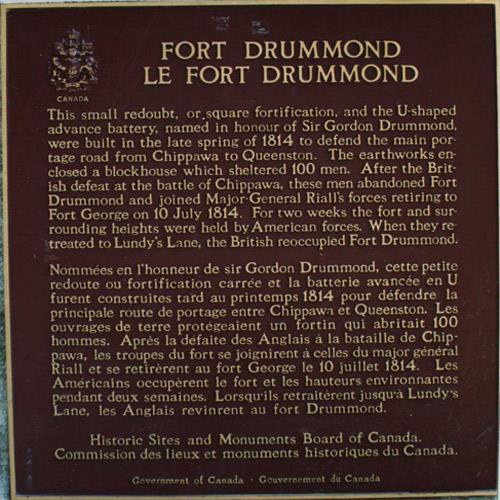 Fort Drummond National Historic Site of CanadaNiagara-on-the-Lake, Ontario
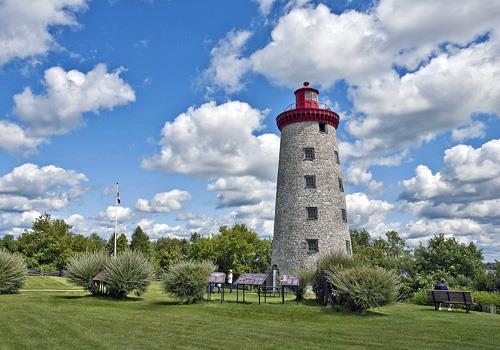 Battle of the Windmill National Historic Site of CanadaPrescott, Ontario
 Brockinton National Historic Site of CanadaMelita, Manitoba
 Battle Hill National Historic Site of CanadaSouthwest Middlesex, Ontario
 Bead Hill National Historic Site of CanadaToronto, Ontario
 Nanticoke National Historic Site of CanadaNanticoke, Ontario
From the Canadian Register of Historic Places, as last updated on December 12, 2025. The register’s text is shown word for word.