Kicking Horse Pass National Historic Site of Canada
Also known as: Kicking Horse Pass National Historic Site of Canada, Kicking Horse Pass, Col Kicking Horse
Description
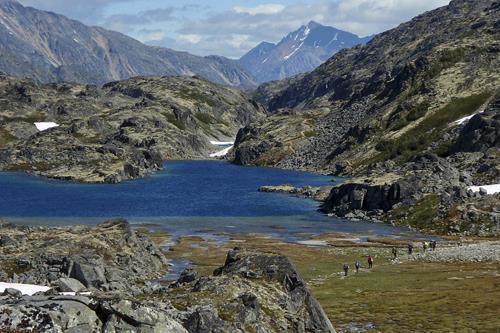
Located in Banff and Yoho National Parks of Canada, the Kicking Horse Pass National Historic Site of Canada is a major rail and highway transportation corridor through the Rocky Mountains. The corridor is an engineered landscape of rails, railbed, grades and curves, sidings, snowsheds, tunnels, runaway sidings, rock cuts, remains of work camps and other elements of construction. Some of the most spectacular mountain scenery in the world frames this transportation corridor to either side. The official recognition refers to a corridor of 200 metres on either side of the Canadian Pacific Railway right of way, except in the tunnels where official recognition extends to the interior surfaces.
Heritage Value
The Kicking Horse Pass National Historic Site was designated a national historic site of Canada in 1971 because:
-the Canadian Pacific Railway adopted it as their route through the Rockies.
First recorded by the Palliser expedition of 1857-60, this pass takes its name from an incident in which Dr. James Hector, surgeon to the expedition, was kicked by his horse while exploring in this vicinity. The pass was little used until after 1881 when the Canadian Pacific Railway decided to adopt it as their new route through the Rockies, foregoing the earlier preference for the more northerly Yellowhead Pass. This decision altered the location of the line across western Canada and dramatically affected the development of the West.
Source: Commemorative Integrity Statement, 1996.
Character-Defining Elements
Key elements contributing to the heritage value of this site include:
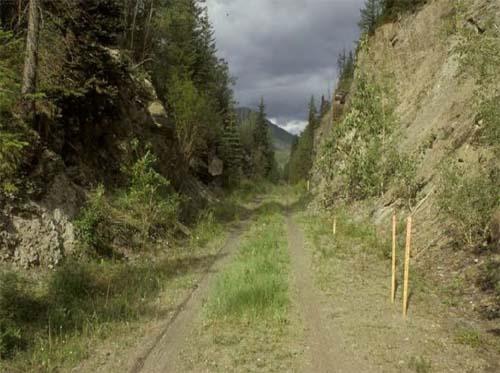
-the surviving configurations of the routes, the material, massing and form of the roadbeds, grades and curves, embankments, ballasting, snowsheds, tunnels, runaway sidings and rock cuts;
-the engineered quality of the landscape, continuity as a linear route, evidence of engineering activities such as earth-moving and blasting;
-the Spiral Tunnels, abandoned bridge and grade relating to the original line;
-the beehive oven in Kicking Horse Campground;
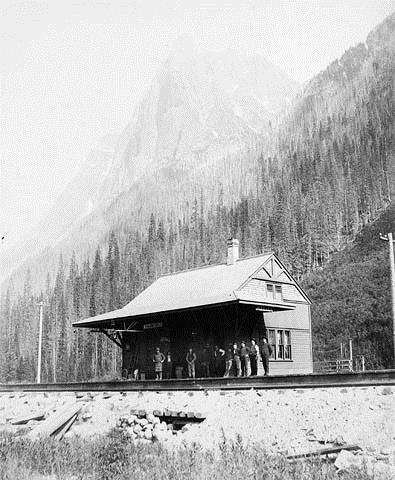
-surviving railway equipment in its current location and condition, including the remains of the Laggan station, yard and wye, and remains of locomotive parts;
-viewscapes along the corridor in both directions and towards the flanking mountains;
-archaeological remains in their current location and condition that are evidence of railway construction, provisioning and working and social life, their condition as abandoned material, the materials of which they are made, the surface impressions and subsidence;
-other archaeological remains that are witness to Aboriginal pre-contact sites, evidence of the mining and logging industries, and early tourism, in their current location.
Gallery
3 imagesLocation
Loading map...
Similar Places
Heritage sites with similar characteristics