City of St. John's Heritage Building
Harris Cottage Municipal Heritage Building
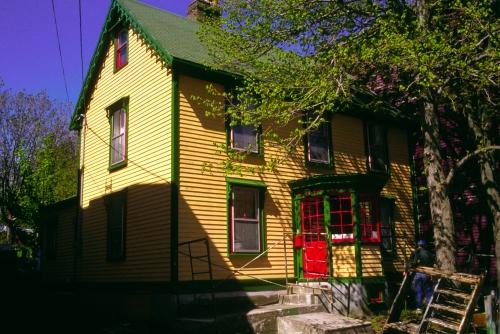
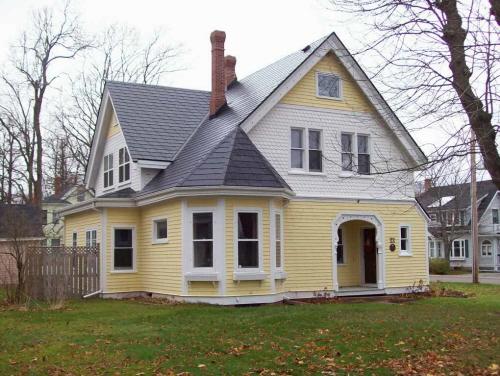
Photo: HFNL 2007
- Construction
- 1833
- Reconnaissance
- 2004
- Par
- Ville de St. John's
Le texte du répertoire, mot pour mot
Description
Harris Cottage is the end unit of a row of unrelated houses, located at 43 Monkstown Road. This two-and-one-half storey wooden house with a steep gable roof is striking on this streetscape because of its bright yellow colour and its small size compared to neighbouring houses. Built in 1833, it is a rare example of a residential building that managed to survive two of the Great Fires that razed the city during the nineteenth century. The designation is confined to the footprint of the building.
Valeur patrimoniale
Harris Cottage has been designated a Municipal Heritage Building because of its aesthetic, historical and cultural values.
Harris Cottage has aesthetic value because it is a good example of the early residential architectural style once common in St. John’s. It is representative of the vernacular style of building erected following the Great Fire of 1817. The two-and-one-half storey, wooden building has a steep gable roof - one of the first of its kind in Georgestown, and a five-sided porch with two doors and wooden, multi-paned windows. Other decorative elements such as bargeboard and a finial give this house a distinctive appearance.
Harris Cottage has historical value because it is one of the oldest, intact residential buildings in St. John’s. It is also associated with the building of Georgestown, an early community separate from St. John’s and located just above the compact downtown core. William Harris and his son, William, became noted builders in St. John’s, particularly in this area of the city, beginning in the early 1830s.
Harris Cottage has cultural value as a physical reminder of the development of separate, distinguishable residential areas in St. John’s. It represents the expansion of St. John’s during the nineteenth-century, when fires consumed the wooden, closely-spaced, downtown row houses. The area known then as Georgestown was a separate community developed by residents who were trying to escape the possibility of future conflagrations. It was eventually absorbed into greater St. John’s, but locally the neighbourhood is still known by its original name.
SourceCity of St. John’s, Council Meeting held 2004/05/17
Éléments caractéristiques
All those features that represent early nineteenth-century residential design in St. John's, including:
-steep gable roof;
-two-and-one-half storey construction;
-wooden roof shingles;
-narrow wood clapboard;
-corner boards;
-bargeboard, finial and eaves brackets;
-window size, style, trim and placement;
-flat hoods and brackets above windows on front facade;
-size, style, trim and placement of exterior doors;
-location and style of five-sided porch on central front facade;
-traditional exterior paint scheme of buff yellow with red and green trim;
-chimney style and placement; and,
-original dimensions and location as the end unit of a row of houses within historic Georgestown; and -the property setback.
Fin du texte du répertoire
Emplacement
47.57019° N, 52.71052° W
Itinéraire (s’ouvre dans un nouvel onglet)L’inscription au répertoire ne rend pas un lieu accessible au public. Beaucoup sont des résidences ou des commerces privés; admirez-les depuis la rue.

Chargement de la carte…
À proximité
Les 222 lieux de St. John's Harris Cottageà moins de 100 m · St. John's · 1833
 Monkstown Manorà moins de 100 m · St. John's · 1889
 The Houseà moins de 100 m · St. John's · 1890
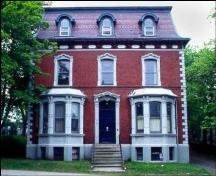 Kelvin House and Conservatory Registered Heritage Structureà moins de 100 m · St. John's · 1885
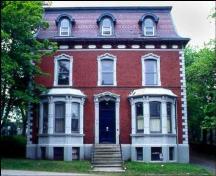 Kelvin House and Conservatory Municipal Heritage Buildingsà moins de 100 m · St. John's · 1885
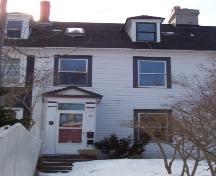 Peppercorn House Municipal Heritage Buildingà moins de 100 m · St. John's · 1870
Lieux semblables
Les lieux dont la description du répertoire se rapproche le plus de celle-ci.
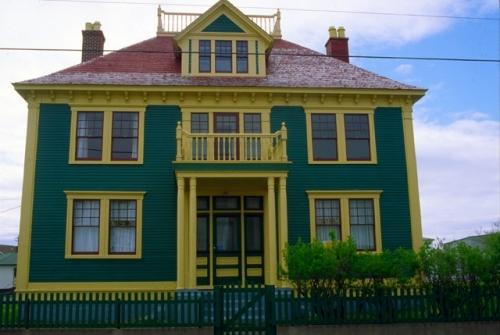
Tiré du Répertoire canadien des lieux patrimoniaux, dans sa dernière mise à jour du 12 décembre 2025. Le texte du répertoire est reproduit mot pour mot.