Fort Sainte Marie de Grace National Historic Site of Canada
Also known as: Fort Sainte Marie de Grace National Historic Site of Canada, Fort Sainte Marie de Grace, Fort Sainte-Marie-de-Grâce
Description
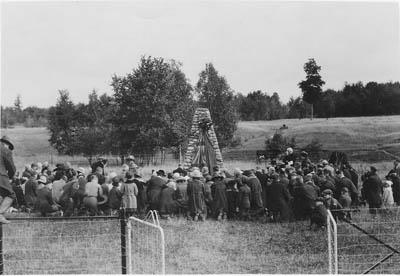
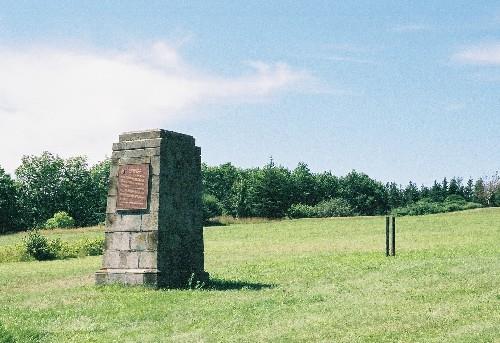
Fort Sainte Marie de Grace National Historic Site of Canada is strategically located at LaHave, Nova Scotia, on a point of land where the LaHave River narrows. The land upon which the original fort was built has now eroded away; a Historic Sites and Monuments Board of Canada cairn, which marks the site, is situated near the original location of the fort. Official recognition refers to the small plot of land approximately equivalent to the footprint of the cairn.
Heritage Value
Fort Sainte Marie de Grace was designated a national historic site of Canada in 1924 because:
- it was one of the permanent settlements established in Acadia after the Treaty of St. Germain-en-Laye in 1632;
- it was here that Isaac de Razilly built a fort and established the capital of the colony of Acadia.
Following the signing of the Treaty of St. Germain-en-Laye in 1632, the area around the LaHave River narrows was returned to French settlers, who established permanent settlements in Acadia, where fishing and fur trapping resources were abundant. Commander Isaac de Razilly, first Viceroy and Lieutenant-General of Acadia, and a Knight of Malta, built a fort and established the capital of the colony. The fort became a farming colony of around 40 residents, complete with a local mill and chapel. After de Razilly’s sudden death in 1636, most of the settlers moved to Port Royal. The fort was destroyed by fire in the 1650s.
Sources: Historic Sites and Monuments Board of Canada, Minutes, April 2008.
Character-Defining Elements
Key elements that contribute to the heritage character of the site include:
- its location on Fort Point, on the west side of the mouth of the LaHave River, where the river narrows;
- its strategic setting in an area rich in resources such as fishing, trapping, and lumber, leading to the growth of Acadia;
- the integrity of any surviving or as yet unidentified archaeological remains relating to the original site;
- viewscapes overlooking the LaHave River.
Gallery
3 imagesLocation
Loading map...
Similar Places
Heritage sites with similar characteristics