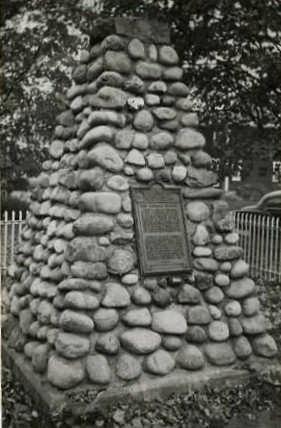
Fort La Tour National Historic Site of Canada
Also known as: Fort La Tour National Historic Site of Canada, Fort La Tour, Fort La Tour
Description
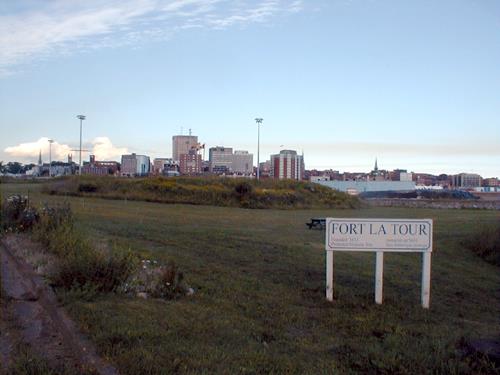
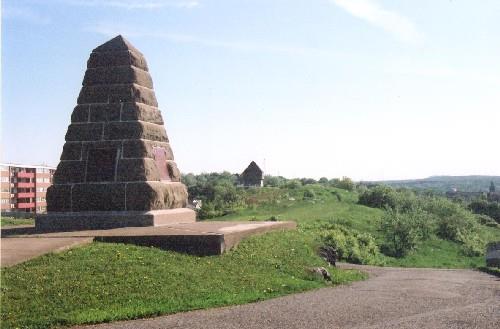
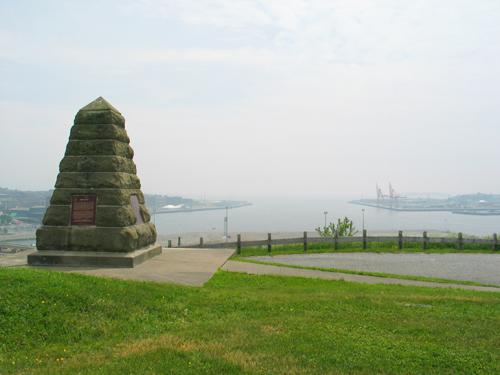
Fort La Tour National Historic Site of Canada is an archaeological site containing the remains of a 17th-century fortified fur-trading post in Saint John, New Brunswick. It sits on a grassy knoll on Portland Point, at the mouth of the Saint John River. Strategically located, the fort enjoyed uninterrupted viewscapes up the river and across the Bay of Fundy. Since the 19th century, the surrounding area has become industrialized and is now characterized by a series of wharves and structures lining the shore. Official recognition refers to the footprint of the fort.
Heritage Value
Fort La Tour was designated a national historic site of Canada in 1923 because:
- it was erected by Charles de Saint-Étienne de La Tour, Governor of Acadia, in 1631;
- it was one of the earliest centres of the French fur trade with the region’s Aboriginal peoples;
- because of the heroic but unsuccessful defence by Françoise-Marie Jacquelin, Sieur de La Tour’s wife, against an attack by de La Tour’s rival, Charles de Menou d’Aulnay.
In 1631, Charles de Saint-Étienne de La Tour, Governor of Acadia and fur-trading entrepreneur, established a fortified fur trading post named Fort Sainte-Marie, at the mouth of the Saint John River. Located on ground traditionally used by First Nations peoples, the fort became one of the earliest centres of the French fur trade in the region. Aboriginal traders carried furs down the Saint John River to trade at the fort for goods such as beads, iron spear points and arrow heads. It also provided a strategically located, fortified stronghold against La Tour’s rival, Charles de Menou d’Aulnay, whose base was at Port-Royal on the opposite side of the Bay of Fundy. In 1645, d’Aulnay attacked the fort during Sieur de La Tour’s absence. Sieur de La Tour’s wife, Françoise-Marie Jacquelin, led a defence of the garrison for four days, until finally surrendering to d’Aulnay. After taking possession of the fort, d’Aulnay reneged on the conditions of surrender and executed the members of the garrison. Jacquelin’s bravery, and her death while in d’Aulnay’s custody, have made her a Canadian heroine. The fort itself was destroyed at an unknown date in the 17th or early-18th century.
Sources: Historic Sites and Monuments Board of Canada, Minutes, May 1923; 1956; 1989; Commemorative Integrity Statement, 2003.
Character-Defining Elements
Key elements which relate to the heritage value of Fort La Tour National Historic Site include:
- its location in Saint John, New Brunswick;
- its strategic siting on a grassy knoll on Portland Point at the mouth of the Saint John River;
- the in situ archaeological remains of the 1631 fort, including the remains of fortifications, fort buildings, and any other features from the La Tour occupation of the site;
- the integrity of any as yet unidentified archaeological remains which may be found within the site in their original placement and extent;
- the uninterrupted viewscapes toward the mouth of the Saint John River and across the Bay of Fundy.
Gallery
1 imageLocation
Loading map...
Similar Places
Heritage sites with similar characteristics