National Historic Site of Canada
Fort St. Louis National Historic Site of Canada
Barrington - Port La Tour, Nova Scotia
Also known as Fort St-Louis, Fort St. Louis
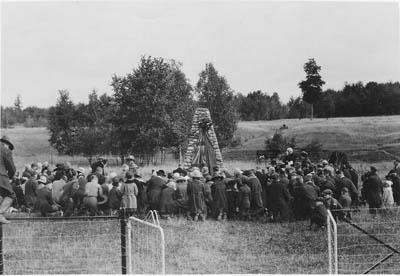
Fort St-Louis
Photo: Parks Canada / Parcs Canada
- Recognized
- 1931
- By
- Government of Canada
The register’s text, word for word
Description
Fort St. Louis National Historic Site of Canada is situated one kilometre southeast of Port La Tour, a small town on the south-eastern tip of Nova Scotia. There are no visible remains of this 17th-century French Regime fort, which was constructed during the 1620s on Fort Point, overlooking a small bay on the Atlantic coast. By 1629 Fort Saint Louis was the sole remaining French military post of significance in early Acadia. The English were unsuccessful in their attempts to capture the fort. The site’s landscape now consists of a small grassed area with an HSMBC cairn and plaque surrounded by trees and brush, bounded to the west and to the east by the shoreline’s high water mark. Official recognition refers to the cairn surrounded by a radius of 100m excluding the small lake to the north.
Heritage value
Fort St. Louis was designated a national historic site of Canada in 1931 because:
- during the Scottish occupation of Port Royal from 1629 to 1632, it was the only remaining foothold of France in Acadia.
Fort St. Louis, a French fort near the south-eastern tip of Nova Scotia, was built in 1623 by Charles de La Tour in connection with the fur trade. By 1629 the fort was the only remaining French fort in Acadia and was threatened by Scottish settlers based at Port Royal. Claude de La Tour, Charles’s father, had allied himself with the English. In 1630, Claude arrived at Fort St. Louis at the head of an Anglo-Scottish expedition aboard two war vessels. After failing to convince his son to surrender this last foothold of France in Acadia he led his forces in an unsuccessful attack on the fort. Having lost his reputation with the English at Port Royal, Claude de la Tour and his English wife were later allowed by Charles to live with on the land surrounding Fort St. Louis. By 1632 Acadia was once again under French control. Archaeological remains at the site reveal material evidence dating from the early French period.
Character‑defining elements
Key elements that contribute to the heritage character of the site include: - its location close to Port La Tour, facing the Atlantic, on the coast of Nova Scotia; - its strategic location on a site circumscribed on two sides by the shoreline on Fort Point a headland north of Fort Creek overlooking the bay; - the in situ remains of the fort that was constructed during the 1620s, including the remains and traces of fortifications, fort buildings and any other features dating from the period of the fort’s occupation; - the integrity of any as yet unidentified archaeological remains which may be found within the site in their original placement and extent; - the retention of the knowledge associated with all period artifacts associated with the site; - the unimpeded viewscapes to and from the site in its dramatic waterfront setting.
End of the register’s text
Location
near Route 3, Barrington - Port La Tour, Nova Scotia, Canada
43.49514° N, 65.47110° W
Get directions (opens in a new tab)Being on the register doesn’t make a place open to visitors. Many are private homes or businesses; please view them from the street.

Loading map…
Nearby

Similar places
Places whose register descriptions are closest to this one.
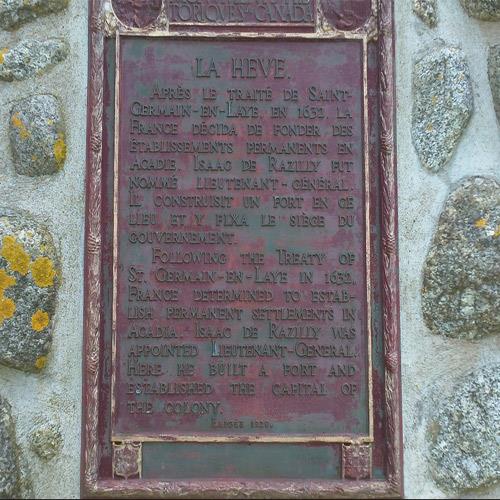 Fort Sainte Marie de Grace National Historic Site of CanadaLaHave, Nova Scotia
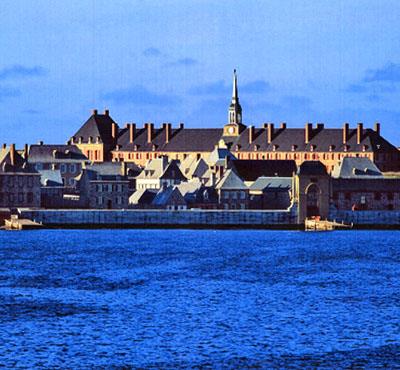 Fortress of Louisbourg National Historic Site of CanadaLouisbourg, Nova Scotia
 Fort St-Louis National Historic Site of CanadaKahnawake, Quebec
 Charles Fort National Historic Site of CanadaAnnapolis Royal, Nova Scotia
 Fort La Tour National Historic Site of CanadaSaint John, New Brunswick
 Fort Lawrence National Historic Site of CanadaCumberland, Nova Scotia
From the Canadian Register of Historic Places, as last updated on December 12, 2025. The register’s text is shown word for word.