Battle of Lacolle National Historic Site of Canada
Also known as: Battle of Lacolle National Historic Site of Canada, Battle of Lacolle, Bataille de Lacolle
Description
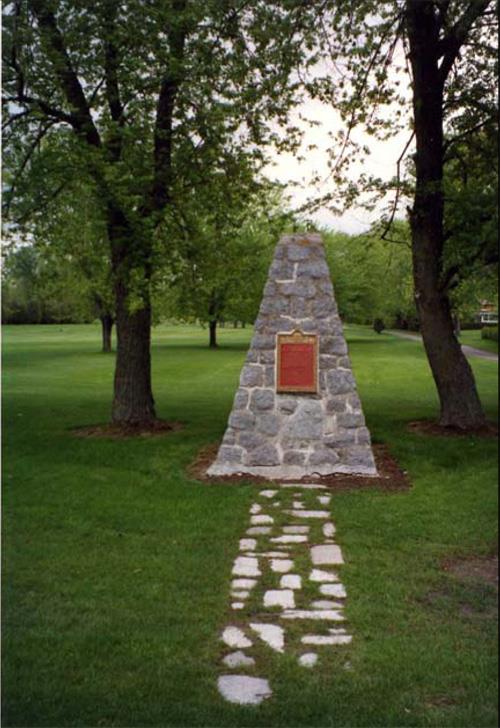
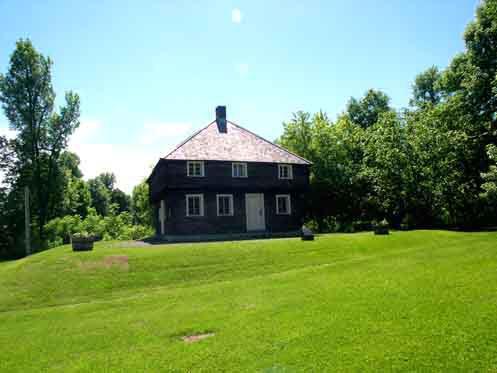
Battle of Lacolle National Historic Site of Canada is located within a suburb of the town of Lacolle, Quebec, just north of the border between Canada and the United States. In March 1814, a small force composed of the British garrison the 13th Regiment of Foot, Royal Marines, Canadian Fencibles, Voltigeurs and Aboriginal warriors withstood an attack by 4,000 American soldiers. Resistance to the American forces centred at the local mill on the river’s southern bank and a blockhouse 200 metres away on the northern bank. The mill’s location on the Lacolle River is marked by an HSMBC cairn next to the road. Official recognition refers to a 150 meter radius from the centre of the bridge on route 223 that crosses the Lacolle River.
Heritage Value
The Battle of Lacolle was designated a national historic site of Canada in 1923 because:
- The Battle of Lacolle Mill ended the last American invasion of Lower-Canada during the War of 1812.
The Battle of Lacolle, the final battle against the American invasion of Lower-Canada during the War of 1812, is valued for its associations with the protection of Canada. Following a previously unsuccessful attempt to march into Montreal in 1812, Major-General James Wilkinson planned an American invasion of Lower-Canada for March 1814. Major-General Wilkinson crossed the frontier with an army of 4 000 men and headed towards the Lacolle River where he had been defeated in 1812. On March 30th 1814, the Americans opened fire on the mill near the Lacolle River where Major R.B. Handcock led a small force of approximately 500 men. This force comprised a small British garrison of the 13th Regiment of Foot, Royal Marines, Canadian Fencibles, Voltigeurs and Aboriginal warriors. Major Handcock’s forces withstood the attack on the fortified mill. Daunted by Major Handcock’s resistance, Major-General Wilkinson gave up his incursion and retreated to the American border, thus ending the last American invasion of Lower Canada during the War of 1812.
Sources: Historic Sites and Monuments Board of Canada, Minutes, May 1927; June 2010
Character-Defining Elements
Key features contributing to the heritage value of this site include:
- the site’s location in the town of Lacolle surrounding the bridge crossing the Lacolle River near the
Lacolle Mill and the blockhouse;
- its proximity to the border between Canada and the United States, and the Richelieu River;
- the in situ remains of the garrison that existed during the War of 1812 including the blockhouse;
- the integrity of any surviving or as yet unidentified archaeological remains which may be found within
the site in their original placement and extent.
Gallery
3 imagesLocation
Loading map...
Similar Places
Heritage sites with similar characteristics