Arden Mound and Camp Site
Also known as: Borden EbLt-3, Borden EbLt-3, Terrain de campement Arden
Description
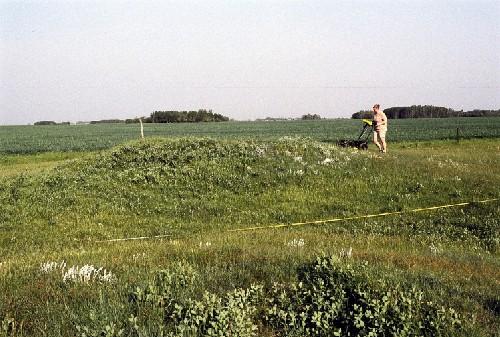
The Arden Mound and Camp Site consists of archaeological artifacts and features and a reconstructed mound in the village of Arden. The provincial designation applies to the quarter section of land in which the archaeological materials are located.
Heritage Value
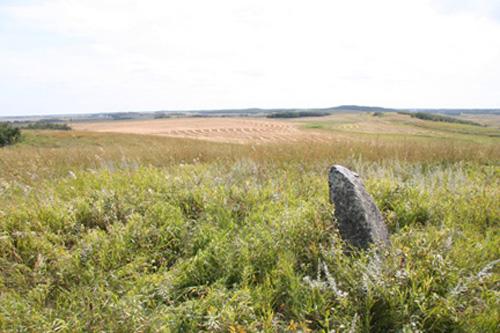
The Arden Mound and Camp Site is a place where First Nations effigy mound-building is believed to have taken place, and also where archaeological materials from many pre-contact campsites are known to be situated. The Arden Mound is one of three recorded effigy mounds in what is now Manitoba. Such mounds, which were prominent throughout the upper Midwest of the United States from 2500 to 500 years ago, were used for communal burials and ceremonial purposes. The Arden Mound, which was thought to be in the shape of a beaver, was originally reported to be 18 metres (60 feet) in diameter and two metres (six feet) high, with an artificial ridge that extended northward. It was greatly disturbed around 1906 when excavated by an anthropologist who removed the burials of nine individuals. The recently reconstructed mound and nearby archaeological sites nonetheless still contain artifacts indicating approximately 8,000 years of human occupation in the area, which is defined by the confluence of the Whitemud River and Snake Creek and the ancient Campbell Beach Ridge (the former shoreline of glacial Lake Agassiz that runs north-south through much of Manitoba). At this notable site First Nations peoples exploited the elevated views from the ridge and the abundant water, game and berry-bearing trees and bushes. In the late 1940s, the community of Arden recognized the site's rich archaeological potential, and successfully petitioned the Province of Manitoba to protect it through heritage designation, making it and the Stott Site near Brandon the first examples of heritage site protection in the province.
Source: Minister in Charge of Libraries and Museums, May 11, 1948
Character-Defining Elements
Key elements that define the site character of the Arden Mound and Camp Site include:
- its location in Arden, and its situation near the Campbell Beach Ridge and at the confluence of the Whitemud River and Snake Creek
Key elements that define the physical characteristics of the Arden Mound and Camp Site include:
- the reconstructed effigy mound
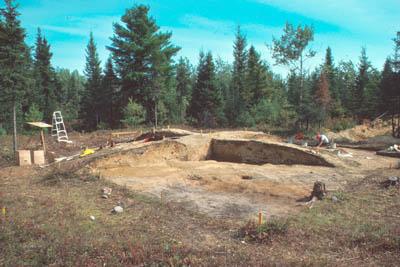
- the elements that reflect pre-contact use of the site, such as any undisturbed cultural stratigraphy and archaeological resources, including artifacts, bone, hearths, stone constructions and other cultural features, etc.
Gallery
3 imagesLocation
Loading map...
Similar Places
Heritage sites with similar characteristics