Windsor House
Also known as: Windsor House, Mowat Residence, Résidence Mowat
Description
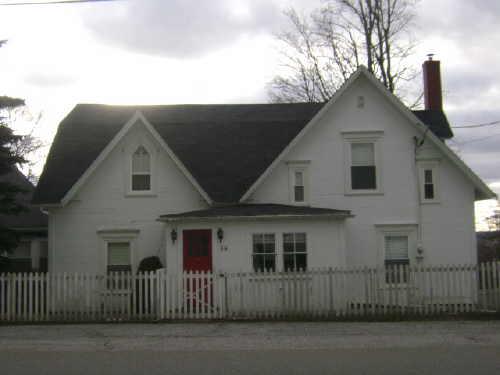
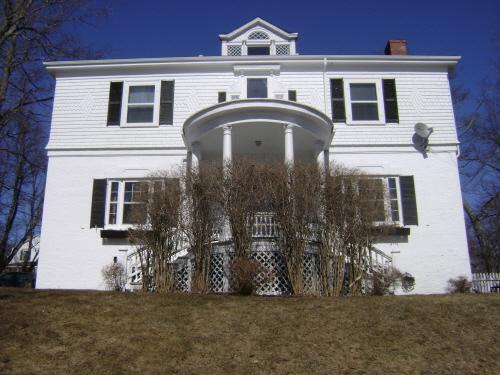
Windsor House is a wooden 2 ½-storey Georgian house with a side-gable roof and central entranceway. Built in the late 18th century, it is located on Water Street in St. Andrews.
Heritage Value
Windsor House is designated a Local Historic Place for its architecture, for its association with the Mowat family and for its hospitality industry.
Windsor House is recognized for its architecture. It is a good example of late 18th Century Georgian architecture in St. Andrews as expressed by its two and half storeys with a five bay façade and central entranceway. The overall appearance of the home respects the merits of the property. In the 1990's, the interior and exterior of the building was restored. The residence was built in 1797 for United Empire Loyalist Capt. David Mowat.
Windsor House is also recognized for its association with the Mowat family. Captain Mowat and his wife Mehitable Calef are a part of St. Andrews folklore. He was a master mariner and ship owner. He was a member of the Legislative Assembly for Charlotte County. During a storm off the Coast of Maine in 1810, Capt. Mowat shipwrecked and lost his life. After her husband’s death, Mehitable (Calef) Moffat heard of a woman that dug clams every day to feed her 8 children. She rode out to the poor woman’s home with a hamper of food and promised she would send men in a boat to bring them to St. Andrews. The following day the family was brought to Mehitable’s home and stayed there 6 months until the husband returned from England. This deprived family was that of Henry Goldsmith, nephew of the famous Irish writer, Oliver Goldsmith. One of the children that stayed at this home for 6 months was Oliver Goldsmith, the first native Canadian to publish a book of poems. Mehitable remained in this home until her death in 1860 at the age of 92. The home remained in the Mowat family until 1873.
Windsor House is also recognized for its importance in the history of hospitality in St. Andrews. From 1873 until 1940, it was a popular St. Andrews hotel.
Source: St. Andrews Civic Trust - Charlotte County Archives
Character-Defining Elements
The character-defining elements that describe Windsor House include:
- rectangular 2 1/2-storey massing;
- 5 bay façade;
- central entranceway;
- upper and lower balcony;
- narrow clapboard sheathing;
- side-gabled roof;
- gable returns;
- large open rooms with tin ceilings.
Gallery
3 imagesLocation
Loading map...
Similar Places
Heritage sites with similar characteristics