Greenleaf Houlton Residence
Description
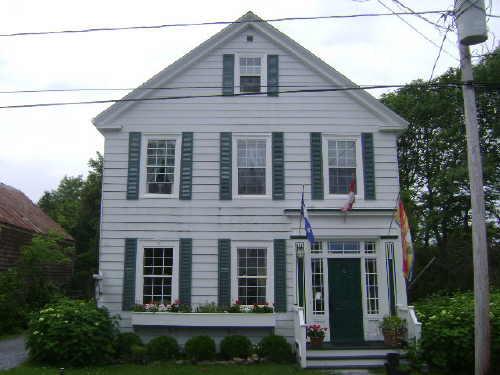
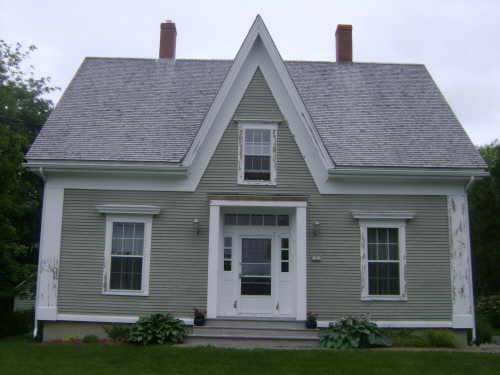
The Greenleaf Houlton Residence is a two-storey residence with an interesting mix of mid-19th century Gothic Revival and early-19th century Dutch Colonial styles. The property is located on Carleton Street in St. Andrews, adjacent to the historic Algonquin Hotel.
Heritage Value
The Greenleaf Houlton Residence is designated a Local Historic Place for its architecture, for its association with the historic Algonquin Hotel and for its association with the original occupants of the residence.
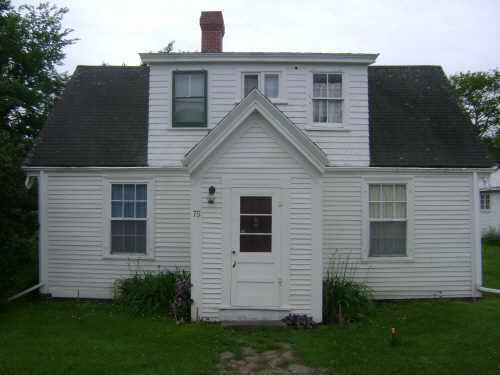
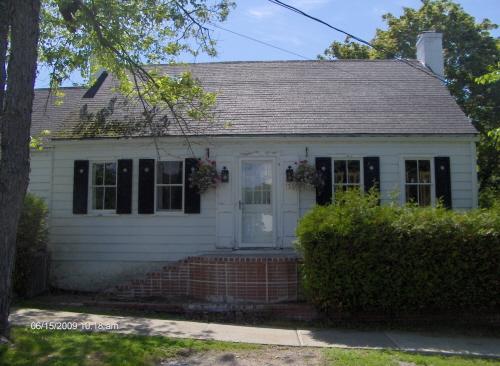
The Greenleaf Houlton Residence is recognized for its mix of architectural styles and features. The property has a gambrel roof and gables cross the plane of the roof-line along its side elevation. The smaller gable encompasses a Gothic window. The front façade displays an asymmetrical assortment of window openings. The residence was constructed using the shiplap technique in which the edges of the boards overlap each other in flush joints.
The Greenleaf Houlton Residence is also recognized for its association with past owners and for its association with the Algonquin Hotel. The construction date of this home is uncertain but is believed to be an early 19th century structure with different renovations throughout the years. The original structure may have consisted merely of a home or stable with a straight uninterrupted gambrel roof. In 1858, the home was sold to Greenleaf Houlton, who was born in 1825 and moved to St. Andrews from Houlton, Maine, circa 1854. His father, James Houlton, was the founder of Houlton, Maine. Greenleaf Houlton was a carpenter by trade and associated with the railway, filing a patent for a new and useful improvement for car axle boxes in 1874. He also served as the American Consul. Greenleaf may have put his carpentry skills to use in adding the gables to this building. In 1884, Greenleaf and his wife moved to San Francisco due to the removal of the railway works from St. Andrews to McAdam. He passed away at California in 1891. His daughter married Franklin Hichborn, a leading and controversial journalist of California and active in many early reform movements in California in the late 1800’s and early 20th century.
The adjacent Algonquin Hotel had built four cottages for rentals and this residence, also known as Cottage Number 5, was said to have been an old converted house. The cottages were rented out monthly and this home served as the residence of the General Manager. For many years, the offices of the Algonquin Hotel were located within this residence.
Source: Charlotte County Archives, Old Gaol, Town of St. Andrews
Character-Defining Elements
The character-defining elements of this residence include:
- irregular massing;
- gambrel roof;
- cross-gable with Gothic Revival window;
- shiplap construction;
- wood cladding;
- asymmetrical fenestration;
- window entablatures and moulded surrounds.
Gallery
3 imagesLocation
Loading map...
Similar Places
Heritage sites with similar characteristics