National Historic Site of Canada
Saint Paul's Roman Catholic Church National Historic Site of Canada
North Vancouver, British Columbia
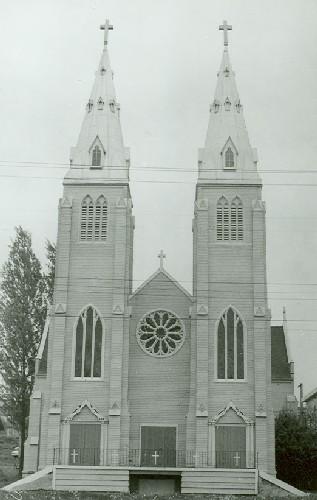
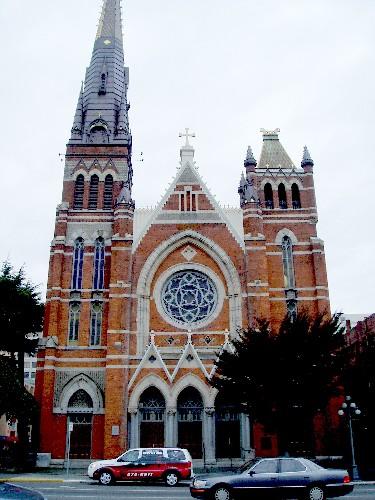
View of Saint Paul's Roman Catholic Church, showing its twin 26-metre-high ornate spires projecting from the front elevation.
Photo: Parks Canada Agency / Agence Parcs Canada.
- Built
- 1884
- Recognized
- 1980
- By
- Government of Canada
The register’s text, word for word
Description
Saint Paul’s Roman Catholic Church National Historic Site of Canada, with its twin spires and Gothic Revival style, is a local landmark located on the fifteen hectare Mission First Nations Reserve on the North Shore of Burrard Inlet, across from the Vancouver Harbour. It is situated within the Mission Reserve, surrounded by housing and public buildings and adjacent to a ‘Celebration of Creation Garden,’ created for the Squamish Nation Elders in 1998. Official recognition refers to the church on its footprint.
Heritage value
Saint Paul’s Roman Catholic Church was designated a national historic site of Canada in 1980 because:
- this oldest surviving mission church in the Vancouver area has long been a focal point of the Mission Reserve;
- it is an example of the Gothic Revival Style in Canada.
Saint Paul’s is associated with the Oblates of Mary Immaculate, a Roman Catholic missionary order that played an important role in the introduction of Catholicism to western Canada and the lower mainland of British Columbia. Established in 1864, this mission reserve was the first permanent settlement in the area now known as North Vancouver. The original chapel dating from the mid-1860s was replaced in 1884 by a larger frame church with a projecting front steeple. The current St. Paul’s church, which incorporates the walls of the 1884 church, was extensively remodeled and expanded with the addition of twin spires in 1909.
Saint Paul’s is a fine example of Gothic Revival ecclesiastical architecture in Canada. The walls of the 1884 building were retained but lofty 26-metre-high corner towers replaced the original central tower. The addition of transcepts and a vestry, along with circular-shaped chapels, created a sophisticated cruciform shape that was without precedent among Oblate mission churches in British Columbia. Apart from two chancel columns retained from the 1884 structure, decoration was confined to fret-sawn trim, largely removed in later renovations. The church was reopened in 1910 and named St. Paul’s in memory of Father Durieu, the first Oblate missionary in the area. St. Paul’s was the last mission church of this scale and complexity to be built on a First Nation mission in British Columbia, and is the last surviving example.
SourceHistoric Sites and Monuments Board of Canada, Minutes, June 1981, November 1983, February 1990.
Character‑defining elements
Key elements that contribute to the heritage character of this site include:
- its setting on the Mission Reserve surrounded by community housing and public buildings;
- views across Burrard Inlet to Vancouver;
- its cruciform plan and symmetrical massing;
- the twin 26-metre-high ornate spires that project from the front elevation;
- the wood shingled roof with wooden detailing at the soffit level;
- the wooden crosses on top of both spires and over each gable end;
- the wood construction and clapboard cladding;
- the symmetrical fenestration with Gothic arched windows in single, double and triple assembly, some with stained glass, as well as rosette stained glass windows;
- the wide wooden exterior staircase leading to the entry;
- the wooden, twin pilaster surrounds for the principle doors located at the base of the spires;
- the semi-circular chapels;
- the wall and two chancel columns retained from the 1884 structure;
- surviving original millwork in the interior, including the pews.
End of the register’s text
Location
426 Esplanade Street West, North Vancouver, British Columbia, V7M, Canada
49.31589° N, 123.08800° W
Get directions (opens in a new tab)Being on the register doesn’t make a place open to visitors. Many are private homes or businesses; please view them from the street.

Loading map…
Similar places
Places whose register descriptions are closest to this one.
 St. Paul's Anglican Church National Historic Site of CanadaHalifax, Nova Scotia
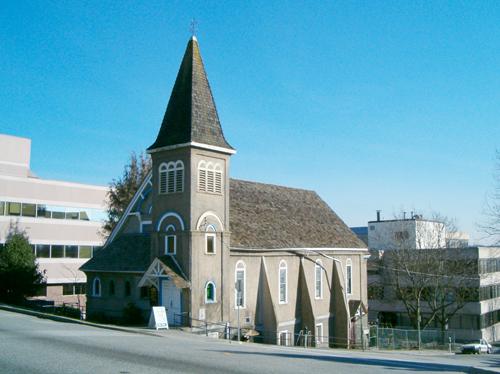 St. Paul's Reformed Episcopal ChurchNew Westminster, British Columbia
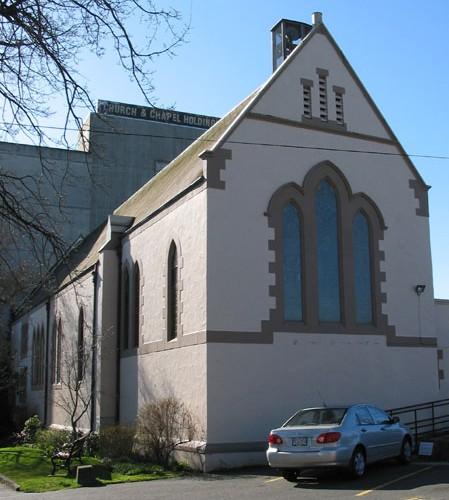 St. Paul's Anglican ChurchNanaimo, British Columbia
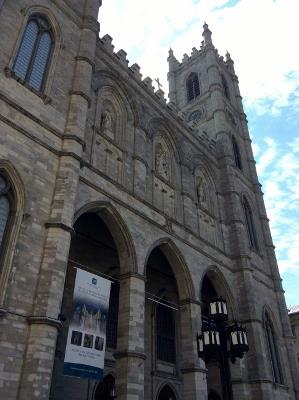 Notre-Dame Roman Catholic Church / Basilica National Historic Site of CanadaMontréal, Quebec
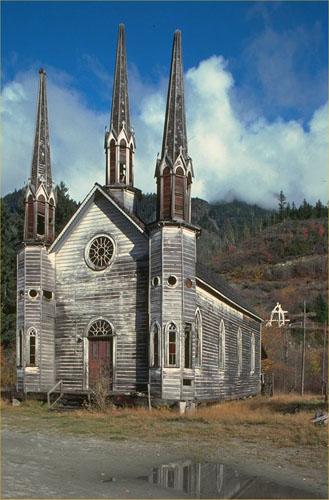 Church of the Holy Cross National Historic Site of CanadaSkookumchuck, British Columbia
 St. Andrew's Roman Catholic Cathedral National Historic Site of CanadaVictoria, British Columbia
From the Canadian Register of Historic Places, as last updated on December 12, 2025. The register’s text is shown word for word.