National Historic Site of Canada
Saint-Joachim Church National Historic Site of Canada
Châteauguay, Quebec
Also known as Saint-Joachim Church, Église de Saint-Joachim
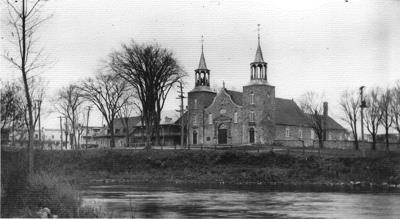
The church and its two rectories in 1925.
Photo: Archives nationales / National Archvies, PA-19976
- Built
- 1774–1797
- Recognized
- 1999
- By
- Government of Canada
The register’s text, word for word
Description
Saint-Joachim-de-Châteauguay Church National Historic Site of Canada is located in Châteauguay, Quebec, near Montreal. Begun in 1775, this small stone church presents a balanced composition with a simple rectangular plan and a semi-circular apse. Its exterior features an attractive neo-baroque façade flanked by two three-storey towers with spired belfries. Set on a flat, triangular lot, the classically influenced east-facing main entrance overlooks the Châteauguay River. Official recognition refers to the building on its legal lot.
Heritage value
Saint-Joachim-de-Cháteauguay Church was designated a national historic site of Canada in 1998 because:
- because it is the only surviving example of the baroque vernacular in its purest form;
- an outstanding architectural rendering inspired by the collective imagination of French Canadian settlers in the Saint Lawrence Valley;
- the building's interior decoration comprises paintings by well-known artists including the only known surviving painting by Philippe Liébert; and,
- Saint-Joachim-de-Châteauguay Church, noted for its enduring architectural quality, is the product of successive interventions since its construction at the end of the French Régime.
The heritage value of Saint-Joachim-de-Cháteauguay Church lies in its physical fabric, for example its neo-baroque façade, and in its historical associations. Works carried out through the years were skillfully executed by master craftsmen sympathetic to the building's original design. Saint-Joachim de Châteauguay, built between 1774 and 1797 to replace a church dating from 1735, is the dominating feature in a rare, surviving landscape typical of French Regime towns, the traict carré or town square. The square is of an exceptional and rare coherence surrounded by the church presbytery, the convent and French regime houses. The church is associated with a number of significant historic events, including the Battle of Châteauguay. The church’s interior decoration, executed by various artists, also provides examples of the work of sculptor Philippe Liébert.
Character‑defining elements
Key elements that contribute to the heritage character of the site include: - its location in the historic district in the village of Châteauguay; - the massing, rectangular footprint and metal-clad gabled roof with bell-cast eaves, the sacristy annex extending from the apse’s rear, and connecting passage at the apse’s south wall; - the coursed fieldstone exterior walls; - the monumental, symmetrical facade in a vernacular Baroque style expressed through simple ornament in its original dimensions and detailing including; a shaped gable with concave curved sides, capped by a shaped parapet, rising to a central point with a small statue of St. Joachim on a pedestal; - the two flanking three-storey towers with quoins, open metal-clad belfries and small spires with metal crosses and weathervanes; - the central main entrance, its fine stonework and classical ornamentation including the pediment and pilasters, the stone trim surrounding windows and doors; - the placement, design and materials of the arched doors and windows with wood, multi-paned glazing, the fan lights with radiating glazing bars, and the two bull’s eye windows, one oval and one round; - the open plan interior developed from the original 18th-century Maillou plan including the original, semi-circular apse and framework, the three-isled nave, false vaulted ceiling, and supporting pillars between nave and side-isles; - the interior decoration, mouldings, blind arcades, sculpture and furnishings; the cornice, the liturgical furniture including altars, the ornate main alter-piece, reredo, pulpit, chandeliers, ambon and credence table, also the tabernacle and altar table by Amable Gauthier, the baptistery, the churchwarden’s pew, the sculpture, bas-releifs, religious paintings and marouflage applied paintings attached to the interior, including pieces by Phillipe Liébert, Joseph Dynes, Edourd Meloche, Gauthier and Renaud.
End of the register’s text
Location
1 Youville Boulevard, Châteauguay, Quebec, Canada
45.36061° N, 73.74894° W
Get directions (opens in a new tab)Being on the register doesn’t make a place open to visitors. Many are private homes or businesses; please view them from the street.

Loading map…
Nearby
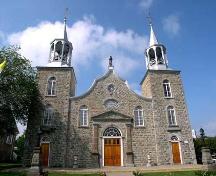 Église de Saint-Joachimwithin 100 m · 1774
 Maison Sauvageau-Sweeny2.8 km · Mercier
 Caughnawaga Presbytery National Historic Site of Canada7.6 km · Kahnawake · 1716
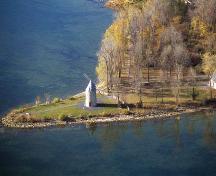 Moulin à vent de Pointe-du-Moulin8.1 km · Notre-Dame-de-l'Île-Perrot · 1705
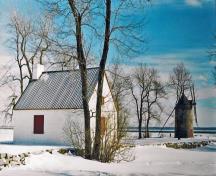 Île Perrot Windmill and Miller's House National Historic Site of Canada8.2 km · Notre-Dame-de-l'Île-Perrot · 1707
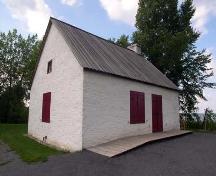 Maison du Meunier-de-Pointe-du-Moulin8.2 km · Notre-Dame-de-l'Île-Perrot · 1785
Similar places
Places whose register descriptions are closest to this one.
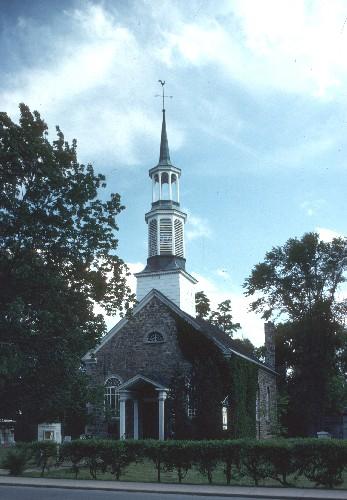 St. Stephen's Anglican Church National Historic Site of CanadaChambly, Quebec
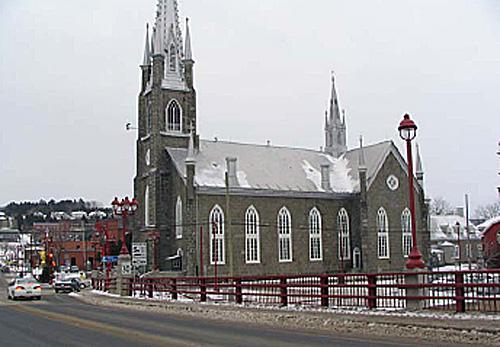 Church of Sainte-Marie National Historic Site of CanadaSainte-Marie, Quebec
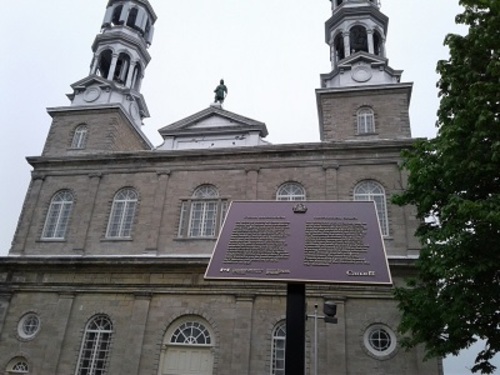 Saint-Eustache Church National Historic Site of CanadaSaint-Eustache, Quebec
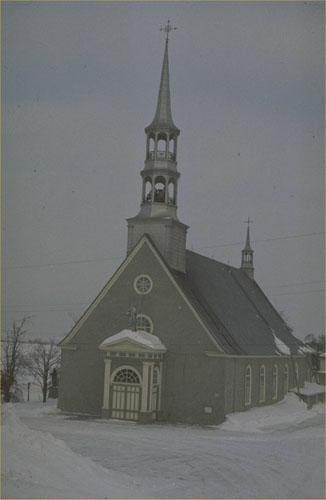 Saint-André-de-Kamouraska Church National Historic Site of CanadaSaint-André (Kamouraska), Quebec
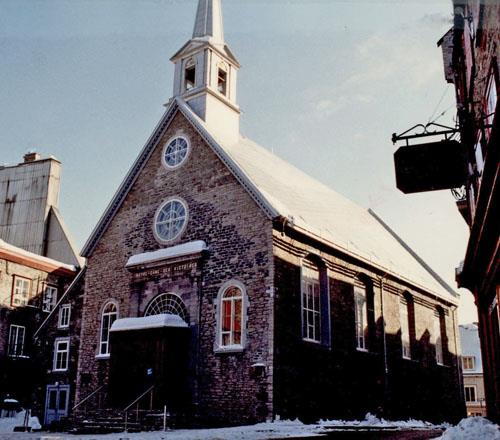 Notre-Dame-des-Victoires Church National Historic Site of CanadaQuébec, Quebec
 Sainte Anne Processional Chapel National Historic Site of CanadaNeuville, Quebec
From the Canadian Register of Historic Places, as last updated on December 12, 2025. The register’s text is shown word for word.