National Historic Site of Canada
Saint-Eustache Church National Historic Site of Canada
Saint-Eustache, Quebec
Also known as Saint-Eustache Church, Église Saint-Eustache, Church of Saint-Eustache
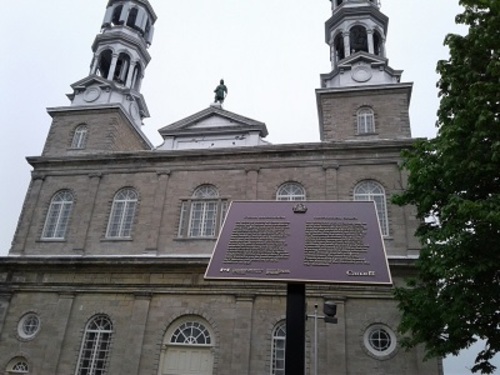
Photo of the façade and the HSMBC plaque
Photo: Parcs Canada | Parks Canada
- Recognized
- 2014
- By
- Government of Canada
The register’s text, word for word
Description
Saint-Eustache Church National Historic Site of Canada is a Roman Catholic place of worship in the heart of the town of Saint-Eustache, Quebec, just northwest of the island of Montreal. Begun in 1780, this substantial stone church features a monumental neoclassical façade with twin spires and belfries. A small pediment surmounted by a statue of St. Eustace screens the roof peak. The façade exhibits damage inflicted during the battle of Saint-Eustache in 1837, when the church also suffered extensive fire damage. Rebuilt several times in its history, most recently in 1905-07, Saint-Eustache Church remains a powerful symbol of the Lower Canada Rebellion of 1837. Official recognition refers to the building on its footprint, including the sacristy and the Sainte-Anne chapel.
Heritage value
Saint-Eustache Church was designated a National Historic Site of Canada in 2014. It is recognized because:
- it played a central role in the decisive Battle of Saint-Eustache, which was fought on 14 December 1837 and marked the end of the 1837 Lower Canada Rebellion. Its silhouette, its location and the scars of artillery fire in the masonry continue as a testament of this fateful event;
- over the years, it has come to be a powerful symbol of the history of the Patriotes, the rebellions of 1837, and came to occupy an important place in the popular imagination;
- many times altered and significantly repaired after the battle, its architecture mirrors the trends in vernacular religious architecture in Quebec through the 18th, 19th and 20th centuries.
The heritage value of Saint-Eustache Church lies in its historical associations, its location, and its architecture. During the Battle of Saint-Eustache on 14 December 1837 the church played a key role in the end of the Lower Canada Rebellion when the Patriotes used it as a defensive position. Many Patriotes also took positions in the nearby presbytery, convent and neighbouring houses. Having withstood cannonballs and musket fire, the church was destroyed by the fire that ended the battle, apart from the façade and base of the side walls. The attached sacristy was also destroyed by fire as were the presbytery and convent on either side of the church. The product of several transformations, Saint-Eustache Church mirrors the development of vernacular architecture in Quebec through the 18th, 19th and early 20th centuries. Built in 1780-83 on a Latin cross plan with semi-circular apse, the church was extended forward when the present façade was added in 1831-33. The church was reconstructed following the 1837 fire with slightly higher walls and windows. Between 1842 and 1845 the facade and towers were repaired and new bells fitted. 1905-07 saw many changes, the aisles extended, the sacristy rebuilt, a chapel built behind the church, and the roof replaced. New bell towers were constructed and a small pediment surmounted by a statue of St. Eustace screened the new roof peak.
SourceHistoric Sites and Monuments Board of Canada, Minutes, July 2012.
Character‑defining elements
Key elements contributing to the heritage value of this site include:
- its location in Saint-Eustache north-west of the island of Montreal;
- the site at the intersection of the Mille Îles and the Chêne rivers;
- its footprint, massing, and monumental neoclassical façade;
- the stone exterior walls, gabled roof, chapel of Sainte-Anne and the sacristy;
- the symmetrical façade executed in a vernacular neoclassical style expressed with simple ornament and detailing including; the bracketed stringcourse and the shaped gable with small triangular pediment surmounted by a statue of St. Eustace;
- the two flanking towers with open metal-clad belfries and small spires with metal crosses;
- the fine finished stonework of the façade and central main entrance, and the classical ornamentation including the quoins and trim surrounding doors and windows;
- the placement, design and materials of the arched doors and windows with wood, multi-paned glazing, the fan lights with radiating glazing bars, and the bull’s eye windows above the side doors;
- the integrity of any potential archaeological remains that may be found.
End of the register’s text
Location
123 Saint-Louis Street, Saint-Eustache, Quebec, Canada
45.55710° N, 73.88869° W
Get directions (opens in a new tab)Being on the register doesn’t make a place open to visitors. Many are private homes or businesses; please view them from the street.

Loading map…
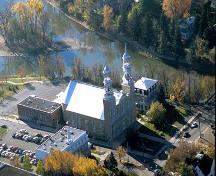 Église de Saint-Eustachewithin 100 m · Rue Saint-Louis · 1780
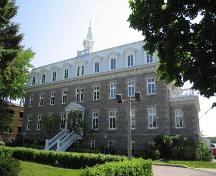 Mairie de Saint-Eustachewithin 100 m · Rue Saint-Louis · 1898
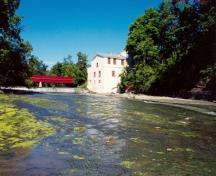 Légaré Mill National Historic Site of Canada550 m · 1762
 Domaine Globensky600 m · 1861
 EnhancedMoulin Légaré600 m · 1762
 Ancienne église presbytérienne de Saint-Eustache700 m · 1848
Similar places
Places whose register descriptions are closest to this one.
 Saint-Joachim Church National Historic Site of CanadaChâteauguay, Quebec
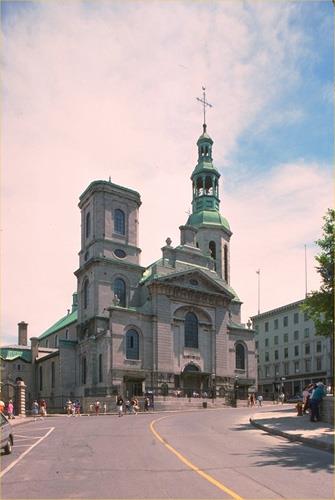 Notre-Dame Roman Catholic Cathedral National Historic Site of CanadaQuébec, Quebec
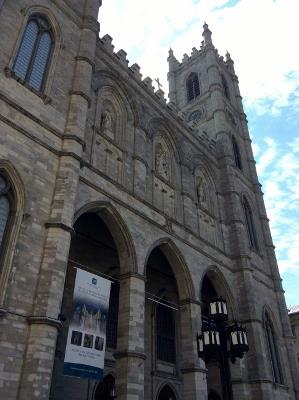 Notre-Dame Roman Catholic Church / Basilica National Historic Site of CanadaMontréal, Quebec
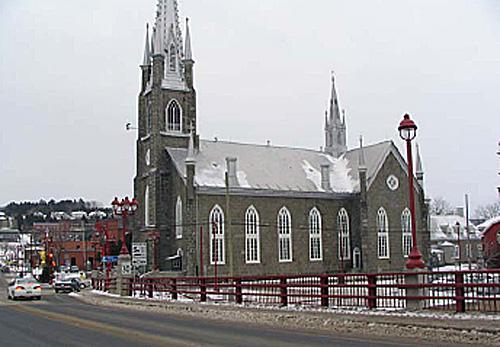 Church of Sainte-Marie National Historic Site of CanadaSainte-Marie, Quebec
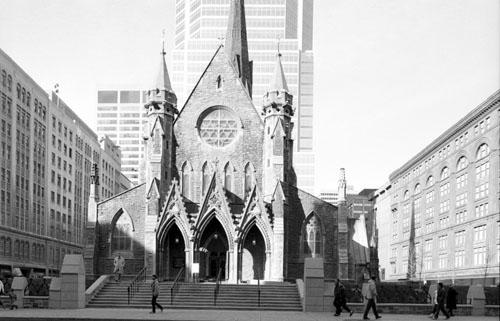 Christ Church Cathedral National Historic Site of CanadaMontréal, Quebec
 EnhancedNotre-Dame Roman Catholic Basilica National Historic Site of CanadaOttawa, Ontario
From the Canadian Register of Historic Places, as last updated on December 12, 2025. The register’s text is shown word for word.