Pioneers' Cemetery
Also known as: Pioneers' Cemetery, Old Cemetery, Ancien cimetière
Description
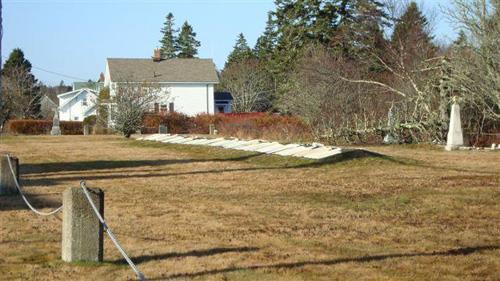
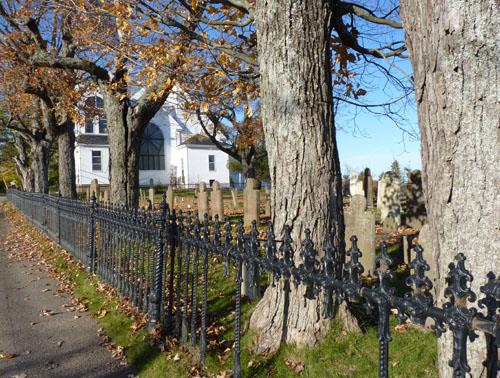
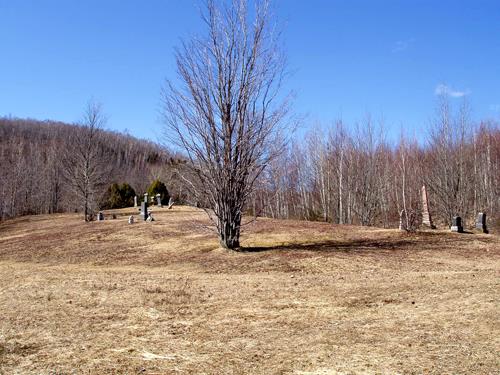
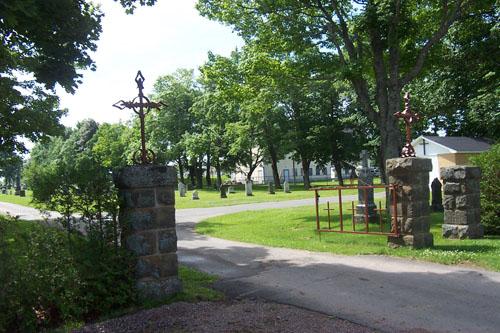
Pioneers’ Cemetery consists of a 1.82-hectare lot with tombstones located on de l’Église Avenue in Saint-Antoine.
Heritage Value
Pioneers’ Cemetery is designated a Local Historic Place for its association with the village’s 75 or so pioneers, as well as with the 17 victims of the 1918 Spanish flu epidemic who are buried in the right rear section of the old cemetery (southwest corner) under certain graves of the second generation of Saint-Antoine parishioners.
Because the first two churches were located on the same site along the former Robichaud Road, now the New Brunswick Trail, the bodies of the village’s first residents were buried behind those religious buildings between 1834 and 1926. It is estimated that 75 individuals were buried there before a new cemetery was established near the stone church in 1926.
In 1918, after the Second World War, Spanish flu took a terrible toll across Canada and abroad, and Saint-Antoine was no exception. During the month of October, 17 parishioners, or nearly 5% of the population, died of the disease. At the time, 75 families lived in the village. After 1918, storms quickly obliterated the wooden crosses that served as grave markers, and the exact locations of the graves were lost, which explains why a second generation of parishioners was buried on top of or among some of Saint Antoine’s pioneers and flu victims. Only those sites with stone markers indicate clearly the final resting place of certain pioneers and victims of the Spanish flu.
Sources: Village of Saint-Antoine Municipal Office - File A2 – "le cimetière des pionniers"
Character-Defining Elements
The character-defining elements that describe Pioneers’ Cemetery include:
- various tombstones representing first and second generation pioneers;
- orientation of the older tombstones towards site of former churches;
- the graves of 17 Spanish Flu victims, their exact locations unknown;
- raised ground in the right rear section of the village’s old cemetery;
- pre-20th-century tombstones suggesting the presence on the site of the graves of other parishioners from that period;
- location near the site of the former churches;
- land covered half in brush, half in grass.
Gallery
3 imagesLocation
Loading map...
Similar Places
Heritage sites with similar characteristics