Camille Vautour Presbytery
Also known as: Camille Vautour Presbytery, The presbytery, Le presbytère
Description
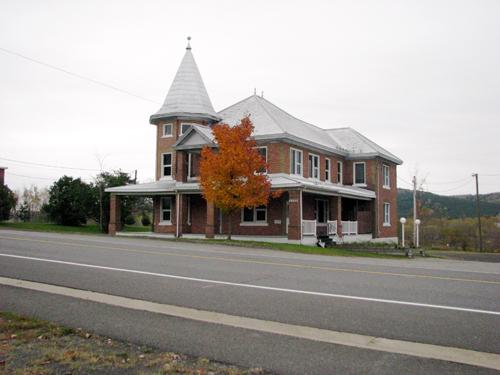
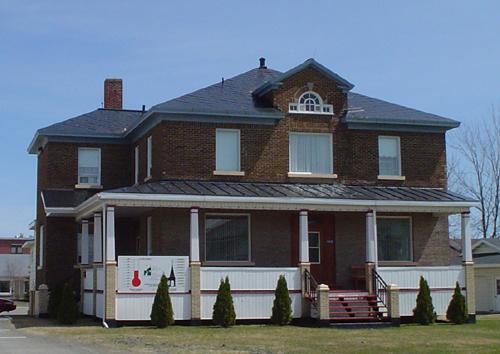
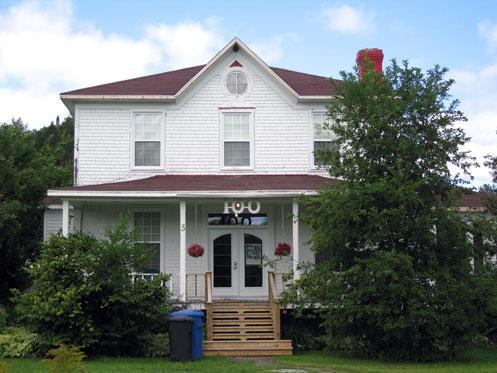
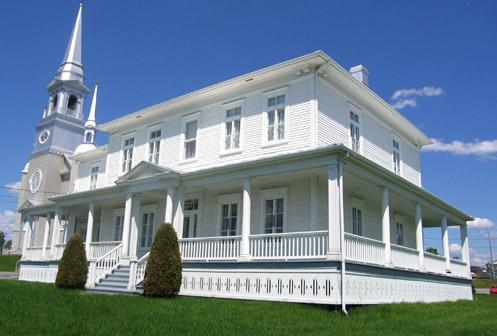
Camille Vautour Presbytery consists of a 2-storey Dutch Colonial presbytery on a landscaped lot located on de l'Église Avenue in Saint-Antoine.
Heritage Value
Camille Vautour Presbytery is designated a Local Historic Place for being the residence of Father Camille Vautour, the first resident parish priest of Saint-Antoine (1940 to 1980) and a prominent figure in the village.
To accommodate the first resident parish priest, the parishioners had a presbytery built in 1941 beside the stone church. Clément Cormier was the foreman. This example of 2-storey Dutch Colonial residential architecture still retains its original massing, gambrel roof and window and door placement, as well as a largely intact original interior. The residence sits on a landscaped lot, which has been well-maintained since the building’s construction.
Born in Shediac in 1905, Father Camille Vautour served as Saint-Antoine’s first resident parish priest from 1940 until 1980, the year in which he celebrated the 50th anniversary of his priesthood and his 75th birthday. A man with a vast biblical knowledge and a great event organizer, he was above all a devout person, which is why he left an obvious mark on the village and surrounding area. Someone even wrote, in the introduction to a history book, that “all in all, for the parishioners of yesterday and today, Father Vautour is Saint-Antoine and Saint-Antoine is Father Vautour”.
Source: Village of Saint-Antoine - File A12 - Camille Vautour Presbytery
Character-Defining Elements
The character-defining elements that describe Camille Vautour Presbytery include:
- lot measuring 2,965 square metres with its mature landscaping;
- structure of the building, which has remained unchanged since 1940;
- 2-storey rectangular massing;
- gambrel roof with full-width shed dormers;
- original window and door openings;
- original interior finish;
- wooden doors and windows dating from the time of Father Vautour’s residency;
- intact interior except for a blocked-up chimney and a few modifications in the kitchen.
Gallery
3 imagesLocation
Loading map...
Similar Places
Heritage sites with similar characteristics