Moose Factory Buildings National Historic Site of Canada
Also known as: Moose Factory Buildings National Historic Site of Canada, Moose Factory Buildings, Édifices de Moose Factory
Description
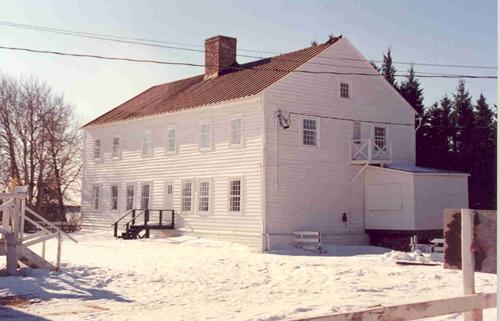
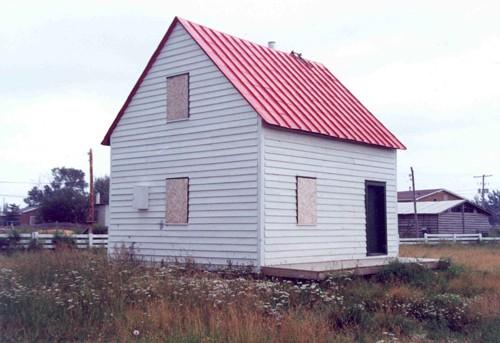
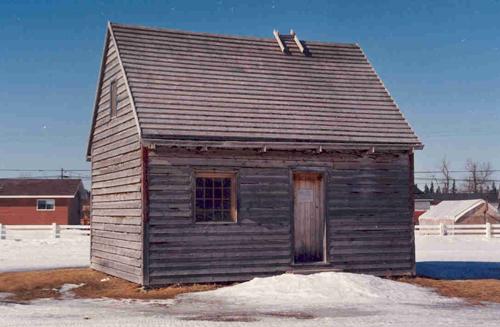
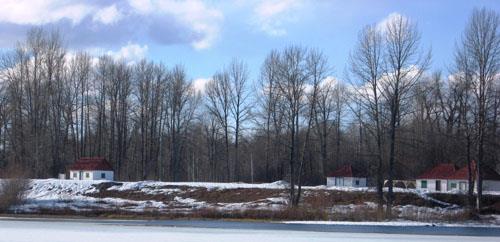
At the time of the Moose Factory Buildings designation in 1957, the property consisted of several buildings, of which only the Staff House is at its original location. Built in 1847-50, it is the last surviving fur trade officer’s dwelling in Canada and the oldest building in the James Bay area. The Powder Magazine, built in 1865-66, is situated some distance away on its original location, in what is now Centennial Park.
Heritage Value
Moose Factory Buildings were designated a national historic site of Canada in 1957. The reasons for designation, as derived from the 1992 plaque text, are:
- it is the second Hudson’s Bay Company post in what is now Canada;
- after 1821, Moose Factory became the supply point for posts inland as far as Lake Timiskaming on the Ottawa River watershed.
Established in 1673, this is the second Hudson's Bay Company post erected in what is now Canada. It was captured by the French under Pierre de Troyes in 1686 and renamed Fort St. Louis. After changing hands several times, it was ceded to Britain by the Treaty of Utrecht in 1713 and then abandoned until 1730. By the 1770s it was supplying the inland posts that had been built to compete with the North West Company. After the two companies merged in 1821, Moose Factory became the supply point for posts inland as far as Lake Timiskaming on the Ottawa River watershed.
Sources: Historic Sites and Monuments Board of Canada, Minutes; Submission Report, October 2006.
Character-Defining Elements
Key elements contributing to the heritage value of this site include:
- the Staff House and the Powder Magazine in their current locations;
- the design of the Staff House, including its two storeys with high gable roof, squared log construction, timber siding, its wooden surfacing and trim, its disposition of window and door openings, and any surviving interior spaces and finishes;
- the surviving features of the Powder Magazine, including its volume, construction and finishing materials, roof type, and door and window openings.
Gallery
3 imagesLocation
Loading map...
Similar Places
Heritage sites with similar characteristics