National Historic Site of Canada
Fort McLeod National Historic Site of Canada
McLeod Lake, British Columbia
Also known as Fort McLeod, McLeod Lake, Lac McLeod
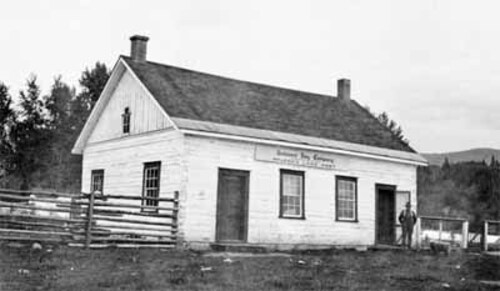
Side view of Fort McLeod National Historic Site of Canada, showing a Hudson's Bay Company post, 1929.
Photo: Department of Mines and Technical Surveys, Natural Resources Canada | ministère des Mines et des Relevés Technique, Ressources naturelles Canada, 1929
- Built
- 1805
- Recognized
- 1953
- By
- Government of Canada
The register’s text, word for word
Description
Fort McLeod National Historic Site of Canada is located on the west bank of Pack River at the north end of McLeod Lake, British Columbia. The site, set in the provincial heritage site, Fort McLeod Historic Park, consists of a workshop, a house, and a warehouse, which are situated within the fenced area of the fort. The small wooden buildings are topped with gable roof, and are simply constructed. Official recognition refers to the fenced area around the fort at the time of designation.
Heritage value
Fort McLeod was designated as a National Historic Site of Canada in 1953. It is recognized because:
- founded in 1805, it was the site of the first fur-trading post built by the North West Company west of the Rocky Mountains;
- Indigenous Peoples, their territories, and labour were foundational to the fur trade in North America. Posts were often built near existing Indigenous settlements, trading routes and/or meeting places and became important sites of economic, social and cultural exchange.
By the early 19th century, the fur trade was expanding westward over the Rocky Mountains to the Pacific Ocean, and the North West Company found itself increasingly threatened by the Hudson’s Bay Company and American fur traders. As a result, in 1805, Simon Fraser of the North West Company led an expedition westward from Fort William on Lake Superior to secure the fur trade for the company on the west side of the Rocky Mountains. This newly discovered area was named New Caledonia.
Fraser sent a group of men up the Pack River to build a stockaded log fort at Trout Lake, which was later named Fort McLeod in honour of Archibald Norman, a senior North West Company partner. Fort McLeod became the base of the company’s fur trading operations in New Caledonia, and was the only liaison between the two sides of the Rocky Mountains for two decades. After the amalgamation of the North West and Hudson’s Bay companies in 1821, the fort remained an active trading post into the 20th century.
SourceHistoric Sites and Monuments Board of Canada, Minutes, 1953, 1954, 1977, 2009, December 2020.
Character‑defining elements
Key elements that contribute to the heritage character of the site include:
- its location on the west bank of the Pack River at the north end of McLeod Lake, British Columbia;
- the small, rectangular massing of the buildings, clad with wood siding and topped with gable roof;
- the simple, unadorned façades, pierced with multiple windows;
- the integrity of any surviving or as yet unidentified archaeological remains which may be found within the site in their original placement and extent;
- viewscapes from the site across Pack River.
End of the register’s text
Location
McLeod Lake, British Columbia, Canada
54.99251° N, 123.03953° W
Get directions (opens in a new tab)Being on the register doesn’t make a place open to visitors. Many are private homes or businesses; please view them from the street.

Loading map…
Nearby
Similar places
Places whose register descriptions are closest to this one.
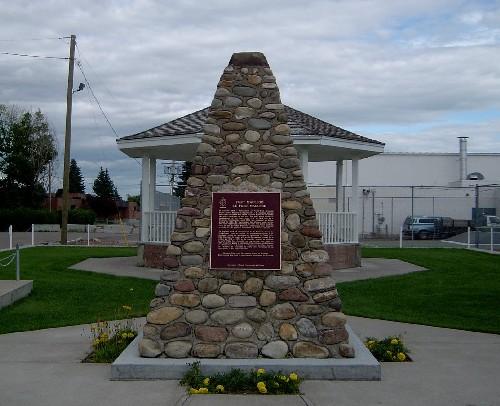 Fort Macleod National Historic Site of CanadaFort MacLeod, Alberta
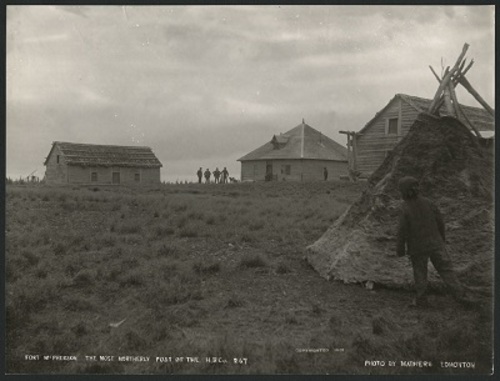 Fort McPherson National Historic Site of CanadaFort McPherson, Northwest Territories
 Fort Langley National Historic Site of CanadaLangley, British Columbia
 Fort Chipewyan National Historic Site of CanadaFort Chipewyan, Alberta
 Fort Fork National Historic Site of CanadaPeace River, Alberta
 Fort Alexandria National Historic Site of CanadaAlexandria, British Columbia
From the Canadian Register of Historic Places, as last updated on December 12, 2025. The register’s text is shown word for word.