National Historic Site of Canada
York Factory National Historic Site of Canada
York Factory, Manitoba
Also known as York Factory
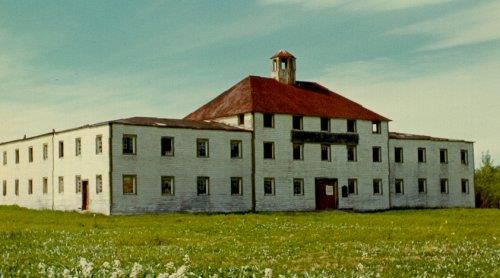
View of the front elevation of York Factory, 1992.
Photo: Parks Canada Agency/Agence Parcs Canada, 1992.
- Built
- 1788–1850
- Recognized
- 1936
- By
- Government of Canada
The register’s text, word for word
Description
York Factory National Historic Site is a 17th century fur trade post built by the Hudson’s Bay Company (HBC) near the mouth of the Hayes River on Hudson Bay, 250 km southeast of Churchill, Manitoba. Surrounded by marsh and boreal forest, this isolated 250-hectare site includes ruins of the former Hudson’s Bay compound now dominated by the company’s grand Depot building. The designation refers to the landscape, archaeological and the built resources associated with this trading post.
Heritage value
York Factory was commemorated as a National Historic Site:
- for its critical role in the French-English struggle on Hudson Bay for control of the fur trade,
- as an important HBC Trading post and entrepot for over two and one half centuries,
- as the principal base for expansion of the fur trade into the interior of western Canada.
The heritage value of York Factory lies in the legibility of its landscape and surviving resources as a major Hudson’s Bay Company fur trade post. Established in 1684 and briefly managed by the French from 1697 to1714, it had become the most important fur trade post on Hudson Bay by 1730, and the major storage, manufacturing and distribution centre for the company’s many other posts in the northwest by the end of the 18th century. During that time, York Factory existed in three iterations. York Factory I (1684-1715) and York Factory II (1715-1788) were situated on the north bank of the Hayes River and have disappeared due to erosion of its banks. York Factory III (1788-1957), established by Joseph Colen in 1788 on a higher land upstream from its predecessors, is the compound that remains today. Consisting of over fifty buildings at its peak in the 19th century, only two buildings, two ruins, and a cemetery are now visible. York Factory closed as a fur trade post in 1957 and is now operated by Parks Canada as a national historic site.
SourceHistoric Sites and Monuments Board of Canada, Minute, June 1982; Commemorative Integrity Statement, May 1998
Character‑defining elements
Aspects of this site which contribute to its heritage values include:
- its location at the confluence of Hudson’s Bay and the Hayes River;
- the site of the post on a rise, sloping towards the banks of Hudson Bay and the Hayes River;
- the grounds of the post and its immediate surroundings, cleared of encroaching vegetation;
- its overall organization in a series of concentric environments dominated by the prominent Depot building and the H-shaped layout of the public area of the post with the Depot building in the centre;
- evidence of the spatial relationship of each of the former buildings on the H;
- the Depot building in its rectangular three storey main block with steep hipped roof and conical cupola flanked by two-storey sections under low-hipped roofs which continue to form a central courtyard, its dominant scale, large central door, relatively large regularly spaced square-headed windows, surviving original interior layout, wood and stone construction materials, its adapted post and beam construction technique and system of shallow wooden foundations;
- the library in its location, small scale, square single-storey massing with hipped roof, 3-bay facade with central door, evenly spaced square-headed windows, wood construction;
- the cemetery in its location, extent and surviving grave markers;
- remnants of the wooden palisade encircling the central area with its main gate aligned with main Depot door;
- all archaeological evidence of the former Octagon warehouse, of boardwalks, drainage ditches and other organized utilities in the public and service area, of buildings outside the H but inside the palisade, of manufacturing shops and dwellings outside the palisade;
- support area north of the fort at Sloop Creek with surviving stone and brick walls of the powder magazine, evidence of graveyard and former palisade;
- evidence of campsites surrounding the outer edges of the fort and of the aboriginal campsite downstream:
- all remains of the post as a fur trade centre and life at this post, both above and below ground, including those removed from the fort and stored by Parks Canada;
- viewplanes from the fort towards Hudson’s Bay, the anchorage at Five Fathom Hole, to the Hayes River;
- the visibility of the fort, and in particular the Depot Building, from Hudson’s Bay and Hayes River approaches.
End of the register’s text
Location
PO Box 127, York Factory, Manitoba, R0B, Canada
57.04491° N, 92.24852° W
Get directions (opens in a new tab)Being on the register doesn’t make a place open to visitors. Many are private homes or businesses; please view them from the street.

Loading map…
Nearby
Similar places
Places whose register descriptions are closest to this one.
 Lower Fort Garry National Historic Site of CanadaSelkirk, Manitoba
 Prince of Wales Fort National Historic Site of CanadaEskimo Point, Manitoba
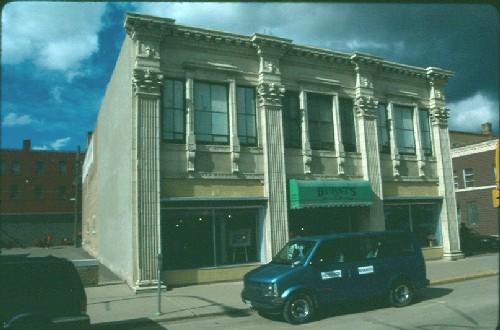 Hudson's Bay Company StoreYorkton, Saskatchewan
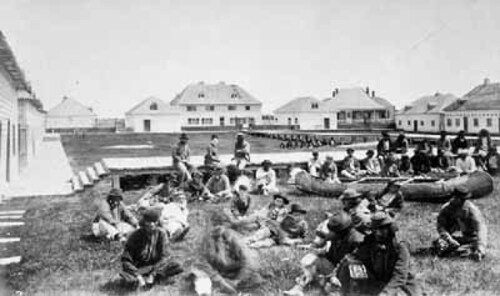 Norway House National Historic Site of CanadaNorway House, Manitoba
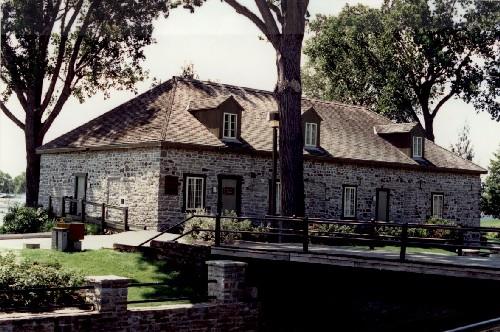 Hudson's Bay WarehouseMontréal, Quebec
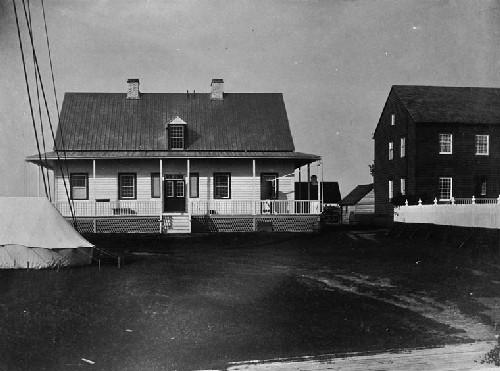 Moose Factory Buildings National Historic Site of CanadaNorth, Ontario
From the Canadian Register of Historic Places, as last updated on December 12, 2025. The register’s text is shown word for word.