National Historic Site of Canada
George Brown House National Historic Site of Canada
Toronto, Ontario
Also known as George Brown House, Maison George-Brown
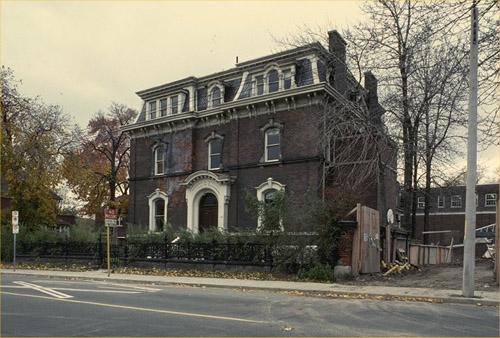
General view of the George Brown House National Historic Site of Canada, showing the front façade, 1983.
Photo: Agence Parcs Canada / Parks Canada Agency, 1983.
- Built
- 1875–1877
- Recognized
- 1976
- By
- Government of Canada
The register’s text, word for word
Description
George Brown House National Historic Site of Canada is a three-storey Victorian residence located at the corner of Beverley and Baldwin streets in the heart of downtown Toronto. The proprety includes a red brick mansard-roofed house with carved stone trim and a elegant cast iron garden railings, built for George Brown, a Father of Confederation. The house, where George Brown spent the end of is life, now houses a museum, a meeting space and offices. The designation refers to the house on its lot.
Heritage value
George Brown House was designated a national historic site of Canada in 1976 because:
- it was the home of George Brown, a Father of Confederation; and
- it is arguably the site most intimately associated with the Abolitionist movement and Underground Railroad History in Toronto.
The heritage value of George Brown House National Historic Site of Canada lies in its association with George Brown and through him with the achievement of Canadian Confederation as well as with the Abolitionist Movement and the Underground Railroad. The historical associations are carried by the house itself in both its location and physical properties.
This house was built for George Brown 1875-1877 and occupied by his family from 1877-1886. Brown lived here in retirement until his death in 1881. At the time he lived here, Brown was owner and editor of The Globe newspaper, a Senator and a Father of Confederation. Brown and his family also had played a central role in the Abolitionist movement whose Canadian activity centered in Toronto. Brown himself was personally involved in the lives of many Underground Railroad refugees. The house has been restored by the Ontario Heritage Foundation and is open for public visitation.
SourceHistoric Sites and Monuments Board of Canada, Minutes, 1976.
Character‑defining elements
Key elements contributing to the heritage value of the site include:
- its location in central Toronto;
- its setting on an urban residential lot with lawns and garden separating the house from the street;
- its rectangular three-storey massing, L-shaped footprint and mansard roof;
- its sophisticated Second Empire design with a three-bay façade and central entry; its surface variation through recessing central bay on façade, use of stringcourse; Italianate decorative elements such as bay windows and the heavily sculpted window and door surrounds, heavy bracketed cornice, and elaborate dormer windows;
- the substantial nature of its exterior materials (red brick with stone trim);
- the craftsmanship evident in its composition (carved stone and elaborate wood trim);
- the integrity of the symmetrical interior plan;
- surviving materials, forms, and finishes of interior furnishings, fittings and surfaces from the Brown period;
- the workmanship and materials of the cast iron fence.
End of the register’s text
Location
186 Beverley Street, Toronto, Ontario, M5T, Canada
43.65590° N, 79.39489° W
Get directions (opens in a new tab)Being on the register doesn’t make a place open to visitors. Many are private homes or businesses; please view them from the street.

Loading map…
Nearby
All 60 places in Toronto George Brown Housewithin 100 m · 1874
 The Grange National Historic Site of Canada250 m · 1817
 Kensington Market National Historic Site of Canada550 m · 1815
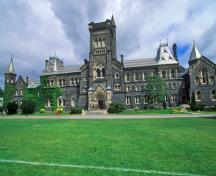 University College National Historic Site of Canada750 m · 1856
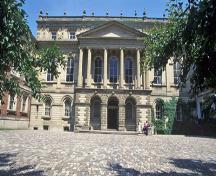 Osgoode Hall National Historic Site of Canada850 m · 1829
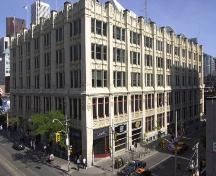 Wesley Building950 m · 1913
Similar places
Places whose register descriptions are closest to this one.
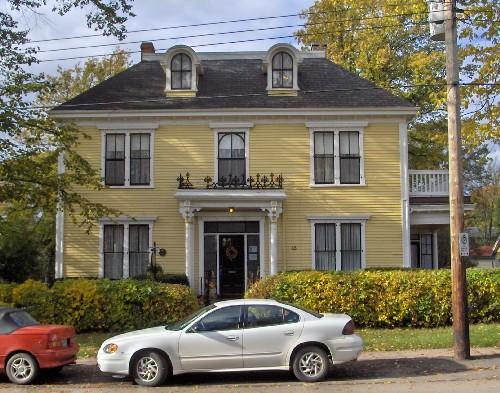 45 Fitzroy Street / Fitzroy HallCharlottetown, Prince Edward Island
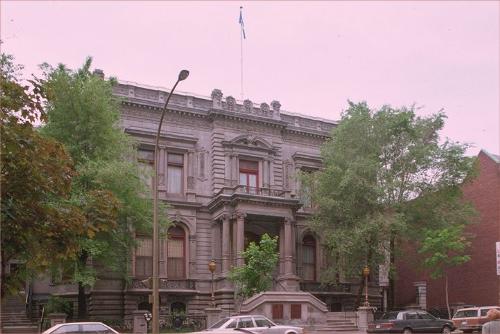 George Stephen House National Historic Site of CanadaMontréal, Quebec
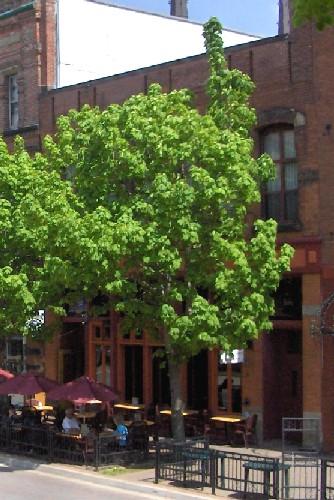 134 Richmond Street / Brown BlockCharlottetown, Prince Edward Island
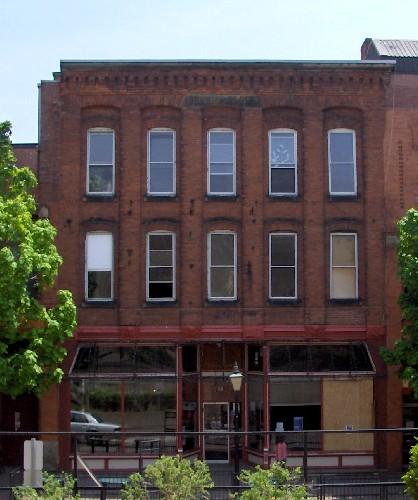 132 Richmond Street / Brown BlockCharlottetown, Prince Edward Island
 The Stone Park Farm SiteCharlottetown, Prince Edward Island
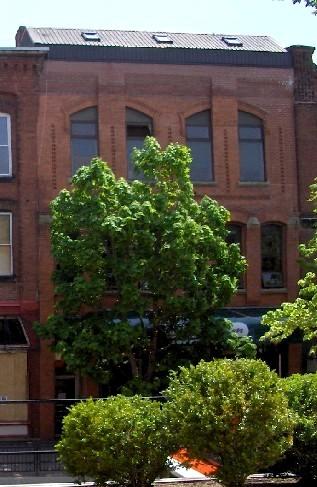 126-128 Richmond Street / Brown BlockCharlottetown, Prince Edward Island
From the Canadian Register of Historic Places, as last updated on December 12, 2025. The register’s text is shown word for word.