National Historic Site of Canada
Fort Victoria National Historic Site of Canada
Victoria, British Columbia
Also known as Fort Victoria
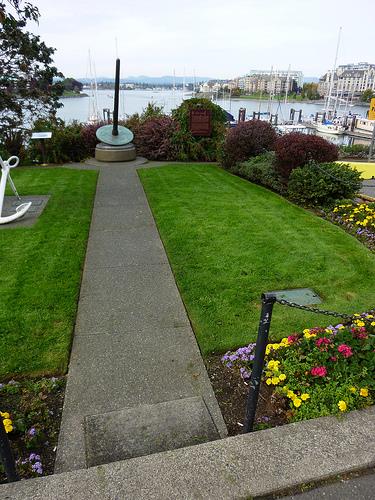
General view of Fort Victoria, showing its location at Victoria Harbour in Victoria, British Columbia, 2011.
Photo: Parks Canada Agency / Agence Parcs Canada, Andrew Waldron, 2011.
- Built
- 1843
- Recognized
- 1924
- By
- Government of Canada
The register’s text, word for word
Description
Fort Victoria National Historic Site of Canada is located on the southern end of Vancouver Island in Victoria, British Columbia. Now located in downtown Victoria at the intersection of Fort Street and Government Street, the site was established by the Hudson’s Bay Company in 1843. The only extant remains of the 19th-century fort include the palisade, two bastions and three mooring rings located west of the fort site in Victoria Harbour, adjacent to Malahat Building / Old Victoria Custom House National Historic Site of Canada. Official recognition refers to the footprint of Fort Victoria, including the palisade and bastions, as well as three nodes formed by three remaining mooring rings.
Heritage value
Fort Victoria was designated a National Historic Site of Canada in 1924 because:
- founded in 1843, Fort Victoria became, after 1846, the grand depot and headquarters of the Hudson’s Bay Company’s trade in British territory west of the Rocky Mountains;
- in 1849, the first Legislative Assembly of the Colony of Vancouver Island met in the fort.
The heritage value of Fort Victoria lies in its historical associations with the Hudson’s Bay Company (HBC) trade activities and its role as an early political centre in British Columbia. In 1843, the Hudson’s Bay Company established Fort Victoria on the coast of James Bay, in what is now the City of Victoria. The fort was constructed as a result of American encroachment on British territory. Fearing that the United States would assume control over the Oregon Territory and the lands to the north, the British established the fort to lay visual claim to the land. In 1846, the Oregon border was established at the 49th Parallel, and the Victoria post became the grand depot and headquarters of the HBC’s pacific fur trade. Ships moored at Fort Victoria to unload supplies for an extensive network of forts and to take on natural products for export, principally to Alaska, California and Hawaii
In 1849, the first Legislative Assembly of the Colony of Vancouver met at the fort, and the following year the Colony of Vancouver Island was founded under governor Richard Blanshard, with Fort Victoria as its capital. After a brief population boom in 1858 due to the Gold Rush, the fort property was sold, the palisade was torn down and within a few years, the last of the buildings were demolished.
SourceHistoric Sites and Monuments Board of Canada, Plaque Text, 1949, 1972.
Character‑defining elements
Key elements that contribute to the heritage character of the site include:
- its location at Victoria Harbour in Victoria, British Columbia;
- the three extant mooring rings located west of the fort site on Victoria Harbour;
- the integrity of any surviving or as yet not identified archaeological remains associated with Fort Victoria which may be found within the site in their original placement and extent, including the two bastions and palisade;
- the viewscapes from the fort site and the mooring rings to Victoria Harbour.
End of the register’s text
Location
Wharf Street at Broughton, Victoria, British Columbia, V8W, Canada
48.42487° N, 123.37008° W
Get directions (opens in a new tab)Being on the register doesn’t make a place open to visitors. Many are private homes or businesses; please view them from the street.

Loading map…
Similar places
Places whose register descriptions are closest to this one.
 Fort Rodd Hill National Historic Site of CanadaColwood, British Columbia
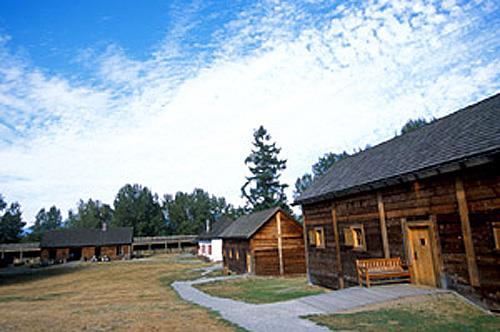 Fort Langley National Historic Site of CanadaLangley, British Columbia
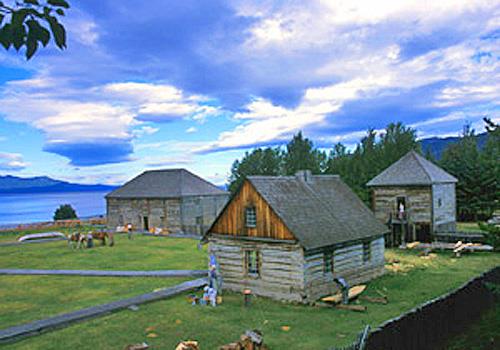 Fort St. James National Historic Site of CanadaFort St. James, British Columbia
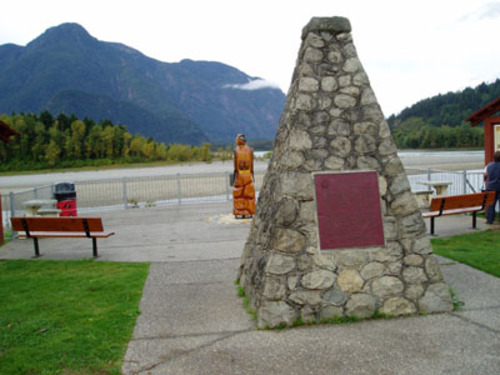 Fort Hope National Historic Site of CanadaHope, British Columbia
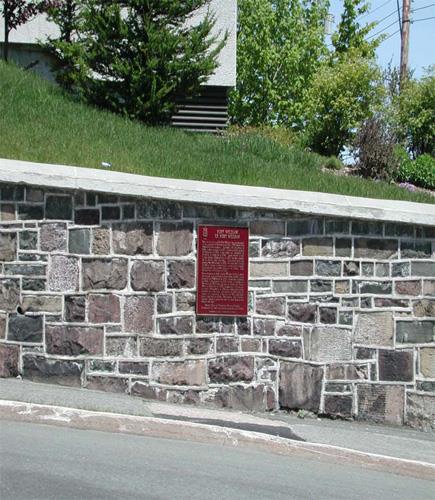 Fort William National Historic Site of CanadaSt. John's, Newfoundland And Labrador
 Bay Street Drill Hall National Historic Site of CanadaVictoria, British Columbia
From the Canadian Register of Historic Places, as last updated on December 12, 2025. The register’s text is shown word for word.