National Historic Site of Canada
Fort Rodd Hill National Historic Site of Canada
Colwood, British Columbia
Also known as Fort Rodd Hill, Victoria-Esquilmalt Fortifications
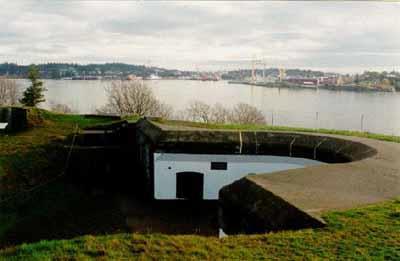
General view of Fort Rodd Hill, showing the integrity of topographical land forms and vegetation strategically linked to the setting of individual structures and batteries, 1997.
Photo: Parks Canada Agency/Agence Parcs Canada, J. Mattie, 1997.
- Built
- 1895–1897
- Recognized
- 1958
- By
- Government of Canada
The register’s text, word for word
Description
Fort Rodd Hill National Historic Site of Canada is a 19th and 20th century coastal defence site strategically located on Esquimalt Harbour near Victoria, British Columbia. It contains three artillery batteries set within an open, park-like site, linked by an historic circulation pattern. The site includes additional buildings and structures located outside individual batteries. The fort is surrounded by natural forested areas on the north and west, Esquimalt Harbour on the east, and the Strait of Juan de Fuca to the south. Official recognition refers to the property of the site at the time of designation (1958).
Heritage value
Fort Rodd Hill was designated a National Historic Site of Canada in 1958 to:
- commemorate the role of the Victoria-Esquimalt fortifications (1878-1956) in the defence of Victoria and the naval base at Esquimalt, and by extension the defence of Canada and the British Empire.
The heritage value of Fort Rodd Hill lies in the integrity and legibility of its cultural landscape. Its strategic location and setting as well as the layout, orientation, nature and composition of the many defence structures it contains witness almost a century of change in military design and requirements.
In 1878, Canada first built temporary batteries at Macaulay Point using surplus British naval ordnance. This battery was meant to protect the port of Victoria and the Esquimalt naval harbour during the Anglo-Russian crisis of that year. In the 1890s, Canada negotiated with Great Britain for the construction of a series of permanent defences for the Victoria-Esquimalt area, to be manned by British troops in defence of the Empire. Construction began on Fort Rodd Hill in 1895 and Canada assumed control of these fortifications in 1906, extensively enlarging and rebuilding them by the end of the Second World War. They were declared obsolete in 1956. The site was subsequently acquired by Parks Canada.
SourceHistoric Sites and Monuments Board of Canada, Minutes, 1958, 1992; Commemorative Integrity Statement, November 1996.
Character‑defining elements
Key elements contributing to the heritage value of this site include:
- its strategic location and orientation at the entrance to Esquimalt Harbour;
- its profile, deliberately minimized by the strategic use of topographical features;
- its spatial organization in three separate batteries (Upper Battery, Lower Battery, Belmont Battery);
- the massing and profile of individual batteries, their layout, design, and orientation, the integrity of their component buildings, structures and spaces, the interior layout, materials and details, and the disposition and orientation of individual buildings and structures within each battery;
- the integrity and function of spaces, pathways, roads, trails, communication lines and viewscapes between batteries;
- the massing and profile of individual structures and buildings outside the batteries, particularly those of greater interest with regards to function, original design and components, including the World War II Hut, Warrant Officer’s Quarters, Battery Commander’s Post, Searchlight No. 7, Searchlight Engine Room, Canteen, Fortress Plotting Room;
- their simple utilitarian forms, and the elements of their design, form, and materials that speak to their military role, their construction materials and craftsmanship, particularly the stone masonry, and interior evidence of early original materials, layout and finishes;
- the integrity of the machinery and special features of each building which reflect its purpose;
- the placement and orientation of each building and structure within its compound and its setting in relation to the dominant landscape features of the battery;
- the integrity of topographical land forms and vegetation strategically linked to the setting of individual structures and batteries;
- residual evidence (such as archaeological footprints, vestiges of earlier structures integrated in the footings of newer buildings) relating to the military use of buildings, structures, individual batteries and the overall cultural landscape over the 1895-1856 period;
- viewscapes to Esquimalt Harbour, the Strait of Juan de Fuca and Fisgard Lighthouse National Historic Site of Canada.
End of the register’s text
Location
603 Fort Rodd Hill Road, Colwood, British Columbia, V9C, Canada
48.43239° N, 123.44989° W
Get directions (opens in a new tab)Being on the register doesn’t make a place open to visitors. Many are private homes or businesses; please view them from the street.

Loading map…
Nearby
All 30 places in Colwood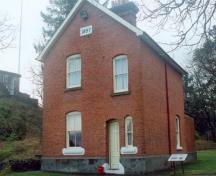
Similar places
Places whose register descriptions are closest to this one.
 Fort Victoria National Historic Site of CanadaVictoria, British Columbia
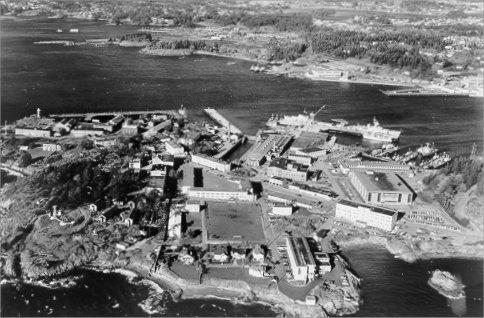 Esquimalt Naval Sites National Historic Site of CanadaEsquimalt, British Columbia
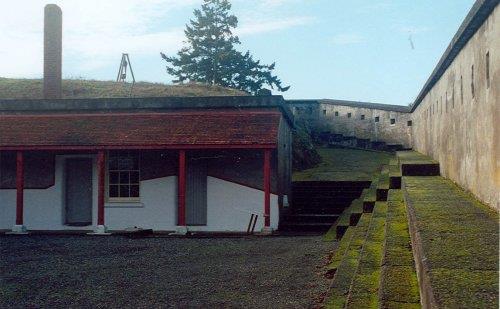 Fort Rodd Hill National Historic Site, Lower Battery, Casemate Barracks (6 Buildings)Colwood, British Columbia
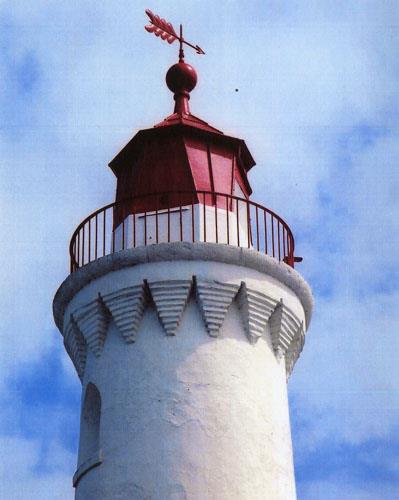 Fisgard Lighthouse National Historic Site of CanadaColwood, British Columbia
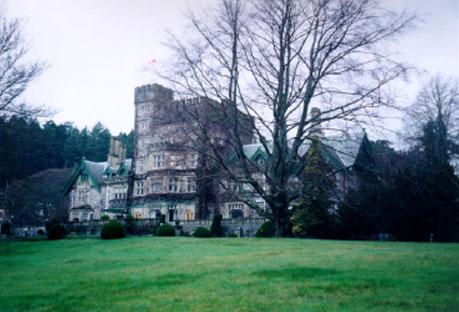 Hatley Park / Former Royal Roads Military College National Historic Site of CanadaColwood, British Columbia
 Fort Amherst National Historic Site of CanadaSt. John's, Newfoundland And Labrador
From the Canadian Register of Historic Places, as last updated on December 12, 2025. The register’s text is shown word for word.