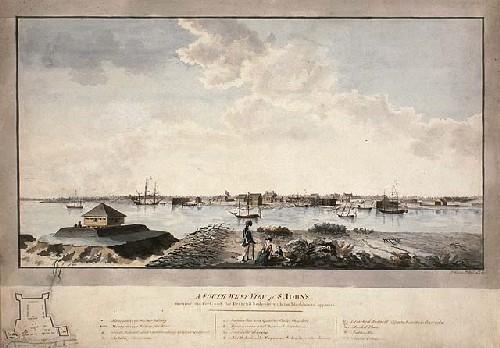
Fort St. Joseph National Historic Site of Canada
Also known as: Fort St. Joseph National Historic Site of Canada, Fort St. Joseph, Fort St. Joseph
Description
Fort St. Joseph National Historic Site of Canada is composed of the remnants of three archaeological sites: Old Fort St. Joseph Point, Rains Point and LaPointe Point, all located on adjacent points of land projecting into Lake Huron on St. Joseph Island at the narrow mouth where it connects with Lake Superior. Official recognition refers to the legal limits of Old Fort St. Joseph Point, Rains Point and LaPointe Point.
Heritage Value
Fort St. Joseph was designated a National Historic Site of Canada in 1923 because:
- it symbolizes the commercial and military alliance that existed between the British and the First Nation Peoples of the western Great Lakes region in the aftermath of the American Revolutionary War through the War of 1812;
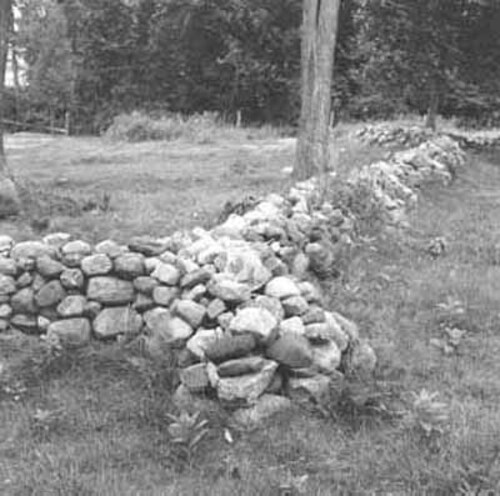
- the site contains a remarkable assemblage of archaeological features which in their undeveloped state reveal part of the complex pattern of military, domestic and commercial life – Aboriginal and European - in this frontier outpost;
- the ruins of the fortifications and the archaeological resources dating from the 1796-1812 period are considered to be of national significance.
The heritage value of Fort St. Joseph National Historic Site of Canada resides in its location and remote setting and in the extensive collection of archaeological remains from the 1796-1812 period. Old Fort St. Joseph Point was a military and a British Indian Department post established by the British in 1796-1799, and vacated in 1812. Rains Point was the site of Milford Haven, a 19th-century tract settlement for British settlers. LaPointe Point was the site of a private 20th-century hunting camp. Efforts to construct a road to this camp in the 1940s resulted in damage to the east half of Old Fort St. Joseph Point and structures on Rains Point.
Sources: Historic Sites and Monuments Board of Canada, Minutes, 1995; Commemorative Integrity Statement, 2001.
Character-Defining Elements
The key elements that contribute to the heritage character of this site include:
- the remote location and natural setting;
- the visual linkages of Old Fort St. Joseph Point, Rains Point and LaPointe Point when viewed from the water (on consecutive points of land facing the channel and projecting a similar distance into it);
- the visual separateness of the three places when viewed from the land (separated by bays);
- their sitings on high points of land with unobstructed viewscapes to the west and to each other.
The key elements that contribute to the heritage character of Old Fort St. Joseph Point include:
- the rectangular footprint with its projecting corners;
- the footprints of 29 building remnants and other archaeological features;
- the surviving forms and materials of these remnants;
- the spatial relationships between and among these remnants.
The key elements that contribute to the heritage character of Rains Point include:
- the surviving location, forms and materials of two storehouses, and other undisturbed remnants from the 1796-1812 period;
- their spatial relationships.
The key elements that contribute to the heritage character of LaPointe Point include:
- the surviving locations, forms and materials of several possible structures, and undisturbed remnants from the 1796-1812 period;
- their spatial relationships.
Gallery
3 imagesLocation
Loading map...
Similar Places
Heritage sites with similar characteristics