National Historic Site of Canada
Esquimalt Naval Sites National Historic Site of Canada
Esquimalt, British Columbia
Also known as Esquimalt Naval Sites, Sites navals d'Esquimalt
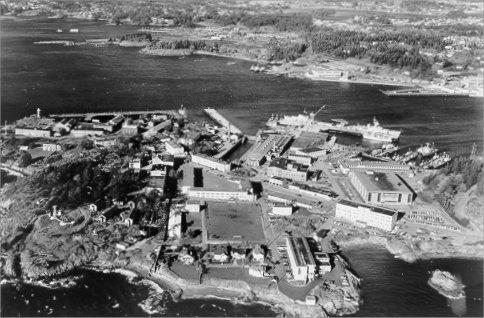
Aerial view of Esquimalt Naval Sites, showing the view facing north, 2001.
Photo: Parks Canada Agency / Agence Parcs Canada, 2001.
- Built
- 1855–1966
- Recognized
- 1995
- By
- Government of Canada
The register’s text, word for word
Description
Esquimalt Naval Sites National Historic Site of Canada is a historic district that incorporates four important naval station sites forming a ring around Esquimalt harbour, British Columbia. These are Her Majesty’s Canadian (HMC) Dockyard, the former Royal Navy Hospital, the Veterans’ Cemetery and the Cole Island Magazine. Official recognition refers to all these sites and the associated historic resources they contain.
Heritage value
The Esquimalt Naval Sites were designated a national historic site of Canada in 1995 because:
- they contain a wealth of built resources, unique among Canadian military bases and sites, and they represent a continuum of defence themes, from the Imperial defence period, through the creation of the Royal Canadian Navy, to Canadian naval institutions in wartime and as a member of post-war alliances;
- they are in homogeneous groupings which promote a distinctive sense of place, and the Royal Navy Dockyard compound is a rare surviving, largely intact, example of the many 18th- and 19th-century Admiralty bases which once circled the globe;
- they illustrate the range of facilities required for the operation of an Imperial naval station headquarters and successor operations of the Canadian Navy.
The heritage value of Esquimalt Naval Sites National Historic Site of Canada lies in the range and richness of the naval history illustrated by the site, setting, and the built and landscaped forms of the four components. While each has value as a homogenous grouping with a distinctive sense of place, together their distinctive design, forms, materials, functional priorities and technologies reflect a complete and legible record of the development of Canada’s Pacific naval experience.
HMC Dockyard was established by the British Royal Navy in 1865 and has, since then, been the heart of Canadian Forces Base (CFB) Esquimalt. Today it has two major sub-areas: the 12 hectares (30 acres) developed by the British Royal Navy before 1906, and a second section developed by the Royal Canadian Navy during the Second World War era and consistently expanded and rebuilt by the Department of Public Works and the Royal Canadian Navy. The other components in this historic district include the former Royal Navy Hospital (built 1860s, rebuilt 1887-1901, 1929), the Veterans’ Cemetery (established in 1868, expanded 1901, 1960s), and the Cole Island Magazine (established 1859, expanded 1887-1904, retired 1938).
SourceHistoric Sites and Monuments Board of Canada, Minute, 1995, 2000; Commemorative Integrity Statement, July 2000.
Character‑defining elements
Elements key to the heritage value of this site include:
- the location and siting, ringing Esquimalt harbour;
- the legibility of each of the four component sites with an individual and distinctive identity (ship repair and West Coast military headquarters, medical compound, contemplative resting place, guard and munitions establishment);
- the completeness of each component site with its range of historic resources, orientated to a central function;
- legibility of the layers of expansion exhibited within each individual complex;
- legibility of the layers of development as reflected in the design, forms, construction materials and techniques of buildings and structures typical of 1850s, 1885, 1937-1941, 1942-1945, and 1945-1995 construction periods;
- the different forms and spaces of cemetery gravestones and monuments linked to these periods;
- the consistent location of core functional areas in each complex over time;
- the surviving archaeological remnants of previous facilities and activities in their locations, forms and materials;
- the core circulation routes and landscaped areas in their locations, extent, design and materials, as defining features of each complex;
- the spatial relationships within the individual and among the four district sites;
- the continuity of the nature and location of long-term plants and trees, particularly in the cemetery;
- the specific natural geographic features impacting the definition and development of each individual site, including the secure natural dockyard harbour, the shallow harbour and vulnerable strategic placement of Cole Harbour, and the cemetery’s rolling open countryside;
- viewscapes to Esquimalt Harbour and the Strait of Juan de Fuca from each of these sites.
End of the register’s text
Location
Esquimalt, British Columbia, V9A, Canada
48.43401° N, 123.43430° W
Get directions (opens in a new tab)Being on the register doesn’t make a place open to visitors. Many are private homes or businesses; please view them from the street.

Loading map…
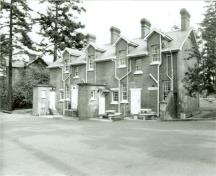 Former Married Privates' Quarters, Building 523100 m · 1904
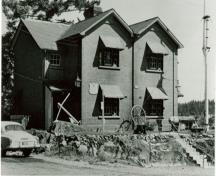 Former Armament Artificer's and Sergeant's Quarters, Building 522100 m · 1904
 Building D70450 m · 1937
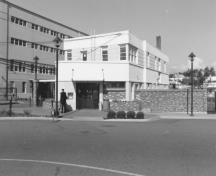 Building D214450 m · 1943
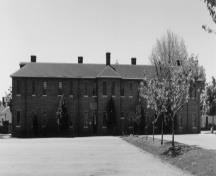 Royal Garrison Artillery Barracks’ Blocks, Building 1075450 m · 1902
 Building D80, former Cordage / Furniture Stores Recognized Federal Heritage Building450 m · 1902
Similar places
Places whose register descriptions are closest to this one.
 Fort Rodd Hill National Historic Site of CanadaColwood, British Columbia
 Halifax Dockyard National Historic Site of CanadaHalifax, Nova Scotia
 Kingston Navy Yard National Historic Site of CanadaRoyal Military College, Ontario
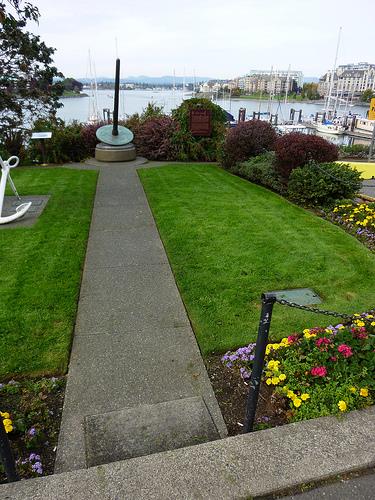 Fort Victoria National Historic Site of CanadaVictoria, British Columbia
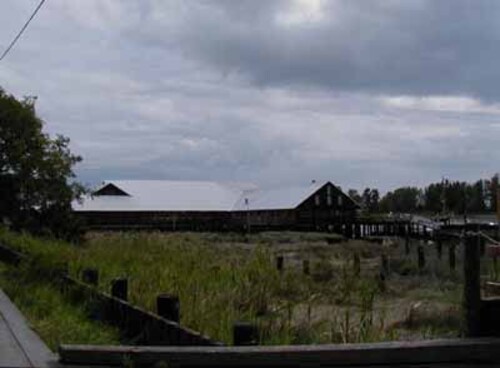 Britannia Shipyard National Historic Site of CanadaRichmond, British Columbia
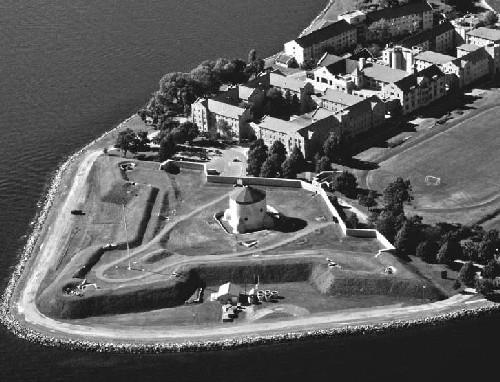 Kingston Fortifications National Historic Site of CanadaKingston, Ontario
From the Canadian Register of Historic Places, as last updated on December 12, 2025. The register’s text is shown word for word.