National Historic Site of Canada
Bead Hill National Historic Site of Canada
Toronto, Ontario
Also known as Bead Hill, Colline Bead
- Built
- 1665–1687
- Recognized
- 1991
- By
- Government of Canada
The register’s text, word for word
Description
Bead Hill National Historic Site of Canada is located within the boundaries of Rouge Valley Park in the lower Rouge River Valley in Scarborough, Ontario. Set on the west side of the Rouge River at its confluence with Little Rouge Creek, the site sits on a high point of land just north of, and adjacent to, Highway 2. One of the few remaining 17th-century Seneca sites in Canada, it consists of the historic Seneca village and an associated burial area, both dating from the late-17th century, a tree covered midden on the hillside, an Archaic period campsite dating from roughly 3000 BCE, as well as additional burials located on the tip of the point of the tableland, east of the village. Official recognition refers to the 2.68 hectares of land in two irregular polygons that encompass the sites.
Heritage value
Bead Hill was designated a national historic site of Canada in 1991 because:
- it is apparently the only known remaining and intact 17th-century Seneca site in Canada.
The heritage value of Bead Hill lies in its association with the Seneca and in its integrity as an intact archaeological site. The village and the associated burial area have been dated to circa 1665-1687 CE, when they were used by the Seneca, members of the Iroquois Confederacy. Bead Hill is an example of the sedentary, semi-permanent villages characteristic of the Seneca, which were generally pallisaded and located in high, defensible locations some distance from major waterways.
Bead Hill was first discovered in the late-19th century when a pallisaded village near the mouth of the Rouge River was reported. Further archaeological surveys turned up numerous small artifacts such as glass beads, ceramic smoking pipes and European gunflints. These findings, along with the location of the village on a defensible hillside, and the presence of a burial site, are typical of Seneca villages from the 17th century. The only known surviving “Iroquois du Nord” village, the site presents enormous potential for acquiring new knowledge regarding Iroquois culture of the time period. Due to the fact that Bead Hill has never undergone large-scale excavations, the site is well preserved and relatively undisturbed.
SourceHistoric Sites and Monuments Board, Minutes, November 1991, June 2008.
Character‑defining elements
Key elements that contribute to the heritage character of the site include:
- the location of the site within Rouge Valley Park and the proximity to the Rouge River and Little Rouge Creek;
- its setting amidst the steep slopes descending to the Rouge Valley floor that surround the site on all but the west side, making it a highly defensible location;
- the undisturbed hillside midden located to the north of the village, protected from erosion by tree cover;
- the discrete burial area to the west of the village, as well as additional burials located to the east;
- the composition and integrity of the geographical elements which constitute the site, including the sandy tableland, grasses, and sumac and poplar trees;
- the continued association of the site with the collection of seventeenth-century Seneca archaeological artifacts removed for research, and those in storage and on display to the public, including glass beads, ceramic smoking pipes, European gun flints, metal kettle fragments, a wompum belt, and a carved bone hair comb;
- the integrity of any surviving or as yet unidentified archaeological remains which may be found within the site in their original placement and extent.
End of the register’s text
Location
72 & 98 Old Kingston Road, Toronto, Ontario, Canada
43.81200° N, 79.14000° W
Get directions (opens in a new tab)Being on the register doesn’t make a place open to visitors. Many are private homes or businesses; please view them from the street.

Loading map…
Nearby
All 60 places in Toronto John Pearse House4.8 km · Scarborough · 1852
 John Pearse Coach House4.8 km · Scarborough · 1852
 Village of Markham Post Office12 km · Town of Markham · 1828
 Art Gallery / Former Brougham School House12 km · Pickering · 1859
 The Wedding Cake House12 km · Town of Markham · 1870
 Former Miller Residence12 km · Brougham · 1880
Similar places
Places whose register descriptions are closest to this one.
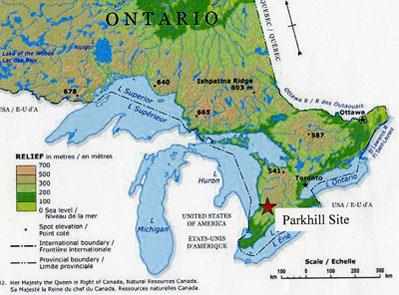 Parkhill National Historic Site of CanadaParkhill, Ontario
 Sheguiandah National Historic Site of CanadaManitoulin Island, Ontario
 Boyd's Cove Beothuk National Historic Site of CanadaBoyd's Cove, Newfoundland And Labrador
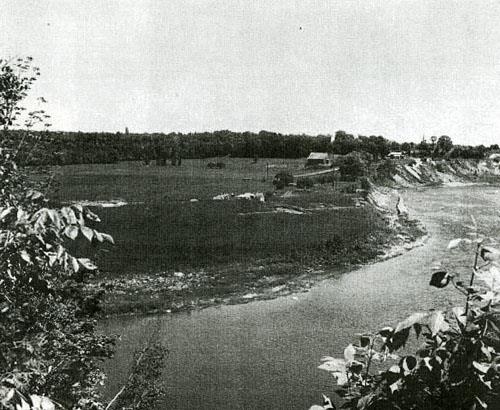 Donaldson Site National Historic Site of CanadaChippawa Hill, Ontario
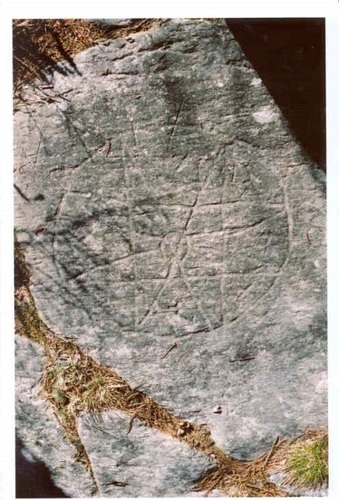 Bedford Petroglyphs National Historic Site of CanadaHalifax, Nova Scotia
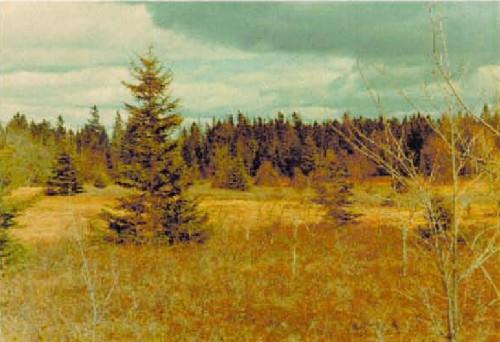 Debert Palaeo-Indian Site National Historic Site of CanadaDebert, Nova Scotia
From the Canadian Register of Historic Places, as last updated on December 12, 2025. The register’s text is shown word for word.