National Historic Site of Canada
D'Anville's Encampment National Historic Site of Canada
Halifax, Nova Scotia
Also known as D'Anville's Encampment, Encampement d'Anville
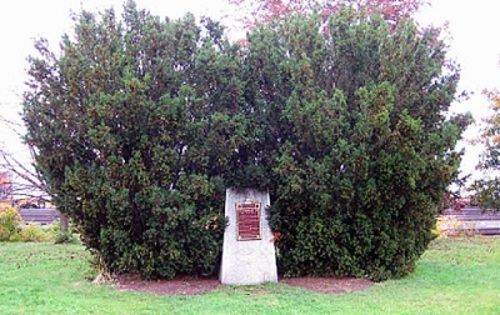
General view of the location of the plaque and cairn, 2006.
Photo: Parks Canada | Parcs Canada, Miriam Walls, 2006.
- Recognized
- 1925
- By
- Government of Canada
The register’s text, word for word
Description
D’Anville’s Encampment National Historic Site of Canada is located on a small plot of land in Centennial Park in Bedford Basin, Halifax, Nova Scotia. It was in this area, in 1746, that Duc d’Anville camped along the shore on a failed expedition from France to recover Acadia. The site consists of a Historic Sites and Monuments Board of Canada (HSMBC) plaque and cairn surrounded by a five-metre radius in Centennial Park. There are no known extant remains associated with Duc d’Anville’s 1746 encampment, and its precise location remains unknown. Official recognition refers to the five-metre radius surrounding the HSMBC plaque and cairn.
Heritage value
D’Anville’s Encampment was designated a national historic site of Canada in 1925 for the following reasons:
- in the autumn of 1746, Duc d’Anville’s formidable but storm-shattered expedition, sent from France to recover Acadia, encamped along this shore;
- owing to storms and disease, the enterprise utterly failed.
A year after Louisbourg fell to the British in 1745, France sent an armada of warships across the Atlantic to retake and dismantle the fortress, to take Annapolis, and to attack Boston. The expedition was led by Jean-Baptiste-Louis-Frédéric de la Rochefoucauld de Roye, Marquis de Roucy and Duc d’Anville, who is often referred to as Duc d’Anville or d’Anville. The powerful fleet started with 70 ships, 10,000 sailors, and upwards of 3,000 soldiers. When d’Anville arrived in Chebucto (Halifax Harbour) on September 10, 1746, the fleet included only three war ships and a few transports; the rest had been scattered or sunk due to severe storms. Many men perished, mainly of food shortages, typhus, dysentery, and scurvy. The remaining crews camped on the beach where many continued to succumb to illness. On September 27th, d’Anville himself died and control of the fleet passed to Jacques-Pierre de Taffanel de la Jonquière, Marquis de La Jonquière, who later became a Governor of Canada. La Jonquière returned to France with the remaining fleet in October, losing more ships and men due to further storms and sickness.
SourceHistoric Sites and Monuments Board of Canada, Minutes, May 1929, December 2007.
Character‑defining elements
Key elements that contribute to the heritage character of the site include:
- its location on the coast in the Rockingham neighbourhood of Halifax, Nova Scotia;
- its setting on a small plot of land in Centennial Park next to the Rockingham rail station, overlooking Bedford Basin;
- the Historic Sites and Monuments Board of Canada plaque and cairn commemorating the site in the centre of the designated place;
- viewscapes from the plaque and cairn across Bedford Basin to the Wallace Heights neighbourhood in Halifax.
End of the register’s text
Location
Across from 188 Bedford Highway, Halifax, Nova Scotia, Canada
44.67469° N, 63.64660° W
Get directions (opens in a new tab)Being on the register doesn’t make a place open to visitors. Many are private homes or businesses; please view them from the street.

Loading map…
 Pineo House (Caribou Lodge)100 m · 1891
 Africville National Historic Site of Canada2.2 km
 Van Steenburgh and Polaris Buildings at The Bedford Institute of Oceanography2.9 km · Dartmouth · 1962
 Hydrostone District National Historic Site of Canada3.7 km
 Halifax Forum4 km · 1926
 Hennessey Place Hydrostones4 km · 1918
Similar places
Places whose register descriptions are closest to this one.
 Fort Anne National Historic Site of CanadaAnnapolis Royal, Nova Scotia
 Fort St. Louis National Historic Site of CanadaBarrington - Port La Tour, Nova Scotia
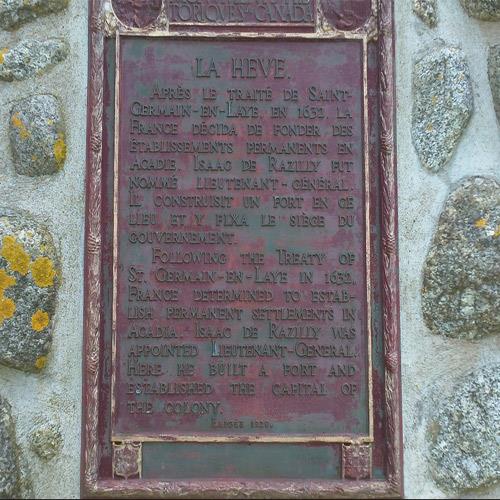 Fort Sainte Marie de Grace National Historic Site of CanadaLaHave, Nova Scotia
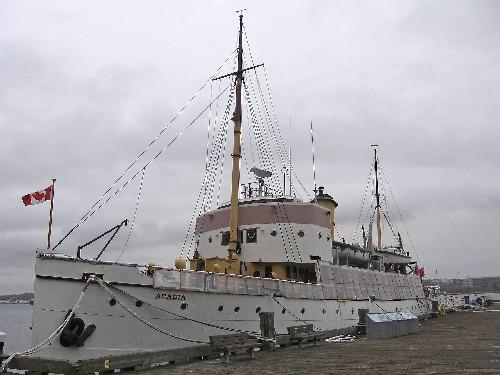 S.S. Acadia National Historic Site of CanadaHalifax, Nova Scotia
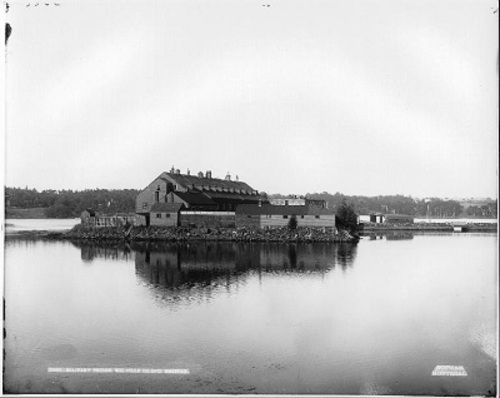 Melville Island and Deadman’s Island National Historic Site of CanadaHalifax, Nova Scotia
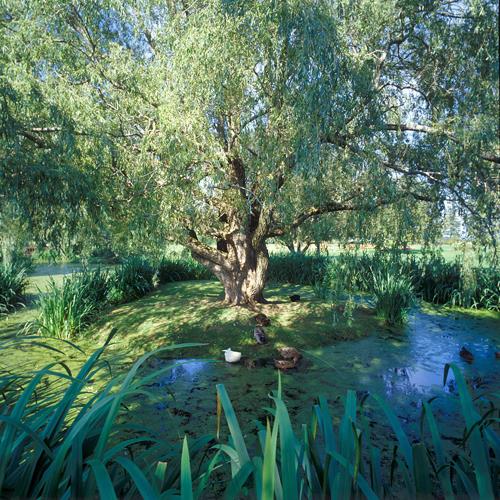 Grand-Pré National Historic Site of CanadaGrand Pré, Nova Scotia
From the Canadian Register of Historic Places, as last updated on December 12, 2025. The register’s text is shown word for word.