National Historic Site of Canada
Battlefield of Fort George National Historic Site of Canada
Niagara-on-the-Lake, Ontario
Also known as Battlefield of Fort George, Champ-de-bataille-du-Fort George, Battle of Fort George
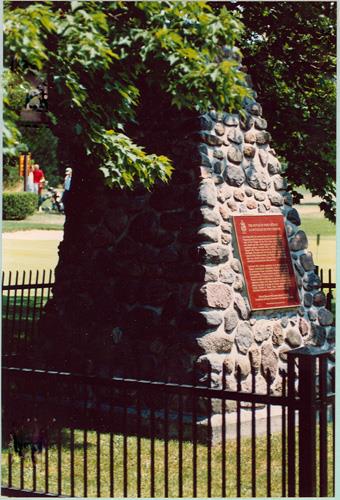
Battlefield of Fort George National Historic Site of Canada, showing the cairn and the plaque marking the north-east corner of the battle site, 1989.
Photo: Parks Canada Agency/Agence Parcs Canada 1989
- Built
- 1921
- Recognized
- 1921
- By
- Government of Canada
The register’s text, word for word
Description
Battlefield of Fort George National Historic Site is located near Fort George National Historic Site of Canada in Niagara-on-the-Lake, Ontario. The rolling open landscape near the shore of Lake Ontario at Two Mile Creek was the site of one of the fiercest and most important battles of the War of 1812. There are no extant remains of the 1813 battle between American invading forces and British regulars and Canadian militia; however, a cairn and plaque erected by the Historic Sites and Monuments Board of Canada (HSMBC) marks the northeast corner of the battle site. Official recognition refers to the irregular polygon encompassing the battlefield.
Heritage value
Battlefield of Fort George was designated a national historic site of Canada in 1921 because:
- it gave the American army temporary control over the entrance to the Niagara River and blocked vital British supplies being shipped to the western posts.
The heritage value of the Battlefield of Fort George lies in the landscape, which was witness to a significant battle fought on Canadian soil. The Battle of Fort George, which took place from May 25 to 27, 1813, constituted some of the fiercest fighting during the War of 1812, as British and Canadian forces attempted to prevent the American landing at Two Mile Creek. Victory in the Battle of Fort George permitted the Americans to gain a toehold on the Niagara Peninsula forcing the British and Canadian forces to temporarily abandon the peninsula. Despite their victory, the Americans were checked at the Battle of Stoney Creek, and were ultimately overcome in Niagara (now Niagara-on-the-Lake), which they abandoned and burned in December 1813.
SourceHistoric Sites and Monuments Board of Canada, Minutes, 1921.
Character‑defining elements
Key elements which contribute to the heritage value of this site include:
- its location near Fort George National Historic Site of Canada at Niagara-on-the-Lake, Ontario;
- its setting on an open, rolling landscape near the shore of Lake Ontario at Two Mile Creek;
- the surviving landscape features significant to the conduct of the battle including the American landing site, the ravines of One Mile and Two Mile Creeks, Four Mile Pond, the beach with its steep and crumbling bank, as well as the flat plateau above the bank with its mixture of forest and clearing;
- the presence of Carolinian forest and other plants native to the Niagara area;
- the plaque and cairn erected by the Historic Sites and Monuments Board of Canada, surrounded by a fence;
- the integrity of any surviving or as yet unidentified archaeological remains relating to the battle which may be found within the site in their original placement and extent;
- viewscapes across Lake Ontario.
End of the register’s text
Location
Queen Street, Niagara-on-the-Lake, Ontario, Canada
43.25510° N, 79.10813° W
Get directions (opens in a new tab)Being on the register doesn’t make a place open to visitors. Many are private homes or businesses; please view them from the street.

Loading map…

Similar places
Places whose register descriptions are closest to this one.
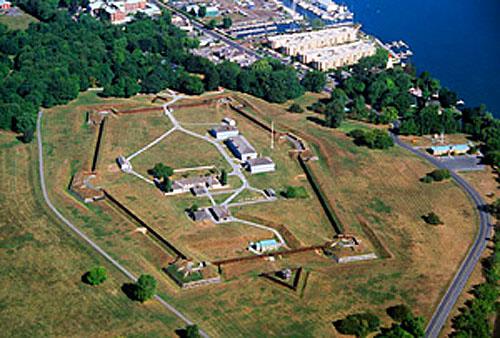 Fort George National Historic Site of CanadaNiagara-on-the-Lake, Ontario
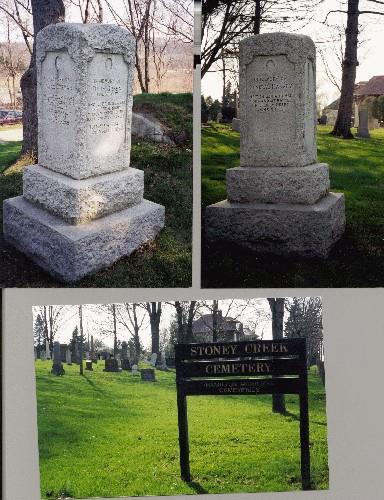 Battle of Stoney Creek National Historic Site of CanadaHamilton, Ontario
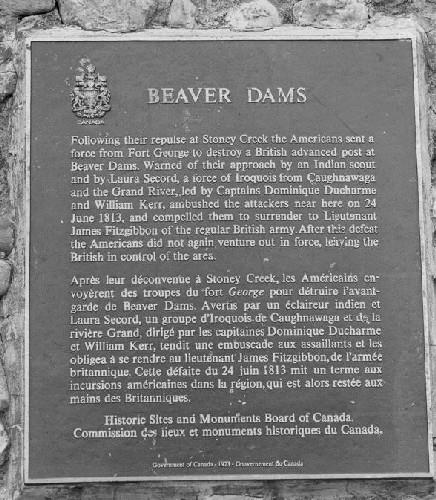 Battle of Beaver Dams National Historic Site of CanadaThorold, Ontario
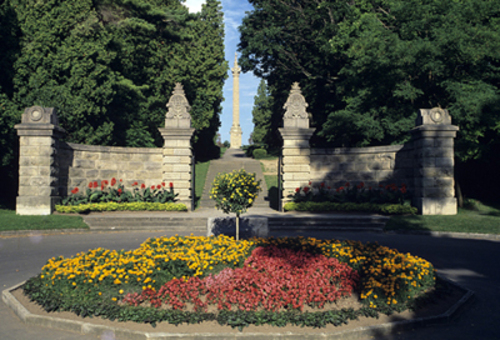 Queenston Heights National Historic Site of CanadaNiagara-on-the-Lake, Ontario
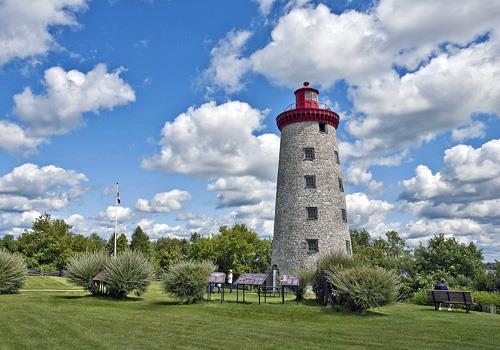 Battle of the Windmill National Historic Site of CanadaPrescott, Ontario
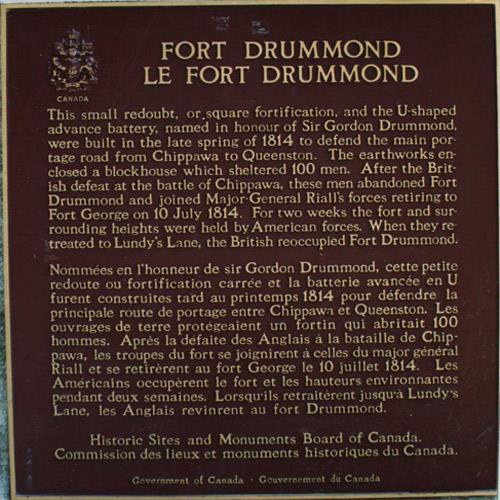 Fort Drummond National Historic Site of CanadaNiagara-on-the-Lake, Ontario
From the Canadian Register of Historic Places, as last updated on December 12, 2025. The register’s text is shown word for word.