National Historic Site of Canada
Mississauga Point Lighthouse National Historic Site of Canada
Niagara-on-the-Lake, Ontario
Also known as Mississauga Point Lighthouse, Phare de la Pointe Mississauga, Fort Mississauga
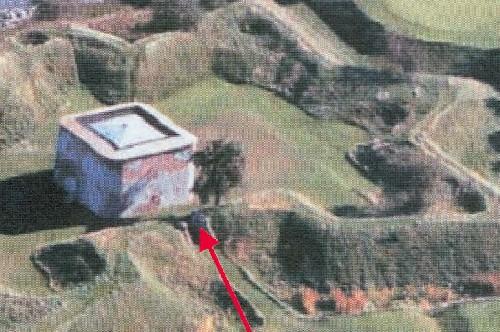
Aerial view of Mississauga Point Lighthouse, with an arrow showing its location, 2005.
Photo: Parks Canada Agency/ Agence Parcs Canada, 2005.
- Built
- 1804
- Recognized
- 1937
- By
- Government of Canada
The register’s text, word for word
Description
Located on the shoreline of the Niagara River in Niagara-on the-Lake, Ontario, Mississauga Point Lighthouse National Historic Site of Canada marks the site of the first lighthouse built on the Great Lakes in 1804. While archaeological remains are believed to be situated below what is now the eastern mortar bastion of Fort Mississauga National Historic Site of Canada, no aboveground evidence survives. Official recognition refers to the symbolic significance of the vanished lighthouse as represented by the commemorative plaque affixed to the west gate of Fort Mississauga National Historic Site of Canada, with a perimeter of 5 metres in radius from the plaque.
Heritage value
Mississauga Point Lighthouse was designated a national historic site of Canada in 1937 because:
- it was the first lighthouse on the Great Lakes.
The heritage value of Mississauga Point Lighthouse lies in its historical associations as symbolized by the commemorative plaque affixed to the west gate of Fort Mississauga.
Mississauga Point Lighthouse was constructed in 1804 by the military masons of the 49th Regiment of Foot. Its hexagonal stone tower was accompanied by a separate but adjacent lightkeeper’s residence. The lighthouse was damaged in the Battle of Fort George in 1813, and demolished by the British in 1814 when they built Fort Mississauga on the same site. According to local legend, the remains of the lighthouse were incorporated into the tower of the fort.
SourceHistoric Sites and Monuments Board of Canada, Minutes, 1937; December 2005.
Character‑defining elements
The key elements that contribute to the heritage character of this historic site include:
- its location at the confluence of the Niagara River and Lake Ontario;
- any surviving remains of the hexagonal footprint and stone walls of the lighthouse in their location, workmanship and materials and spatial relationships with other archaeological evidence of early British occupation of the site;
- the commemorative plaque affixed to the west gate of Fort Mississauga National Historic Site of Canada.
End of the register’s text
Location
Niagara-on-the-Lake, Ontario, L0S, Canada
43.26147° N, 79.07705° W
Get directions (opens in a new tab)Being on the register doesn’t make a place open to visitors. Many are private homes or businesses; please view them from the street.

Loading map…



Similar places
Places whose register descriptions are closest to this one.
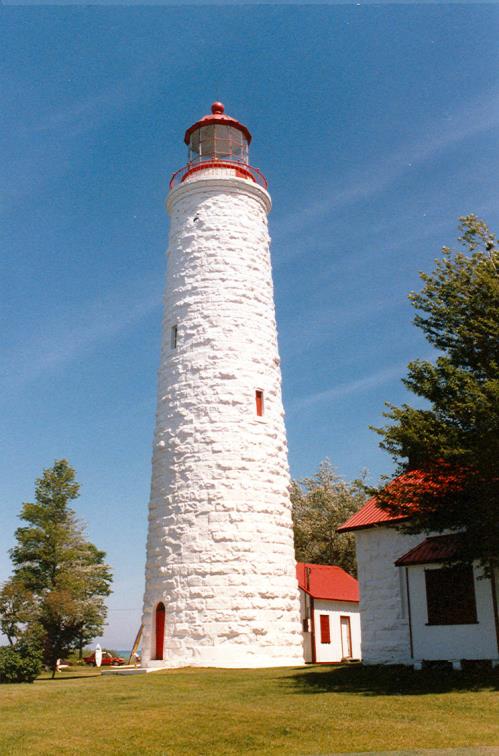 Point Clark Lighthouse National Historic Site of CanadaPoint Clark, Ontario
 LighthousePointe au Baril, Ontario
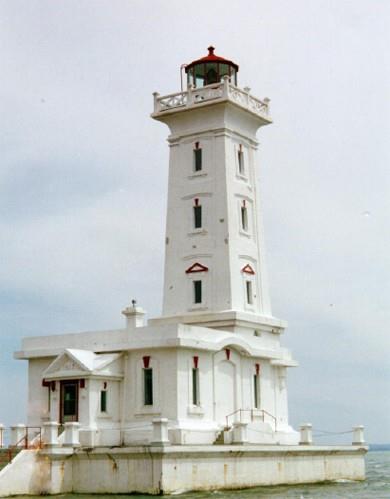 Point Abino Light Tower National Historic Site of CanadaCrystal Beach, Ontario
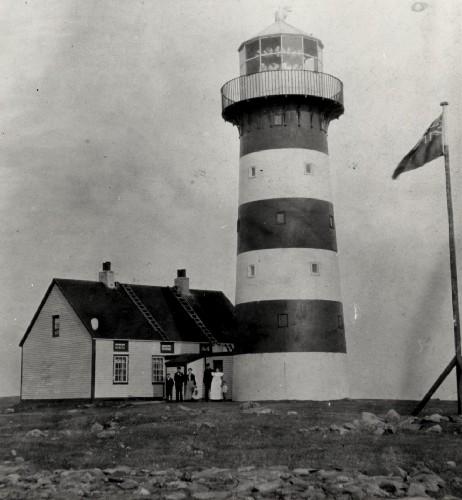 Cape Pine Lighthouse National Historic Site of CanadaCape Pine, Newfoundland And Labrador
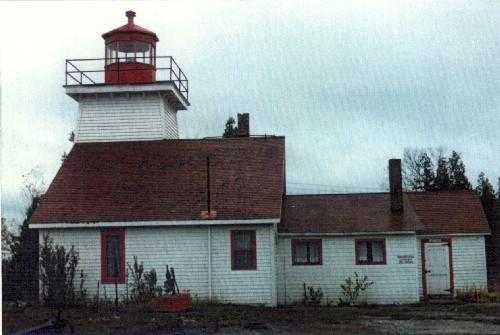 LighttowerMississagi, Ontario
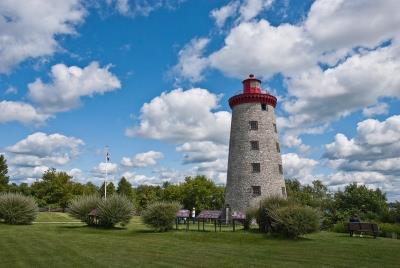 Windmill Point LighthousePrescott, Ontario
From the Canadian Register of Historic Places, as last updated on December 12, 2025. The register’s text is shown word for word.