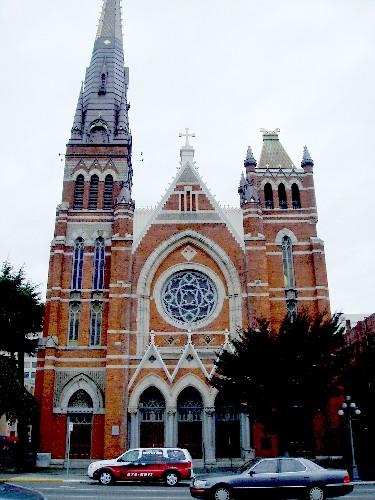
St. Paul's Presbyterian Church / Former St. Andrew's Church National Historic Site of Canada
Also known as: St. Paul's Presbyterian Church / Former St. Andrew's Church National Historic Site of Canada, St. Paul's Presbyterian Church / Former St. Andrew's Church, Église presbytérienne St. Paul / ancienne église St. Andrew
Description
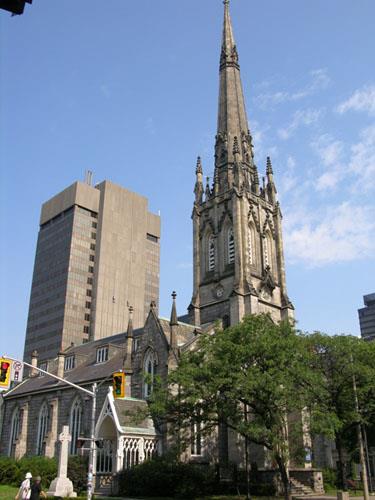
St. Paul's Presbyterian Church / Former St. Andrew's Church National Historic Site of Canada is an elegant stone church with a soaring stone spire. Built during the mid-19th century in the Gothic Revival style, it is located in the heart of downtown Hamilton. Official recognition consists of the building on its legal property.
Heritage Value
St. Paul’s Presbyterian Church / Former St. Andrew’s Church was designated a national historic site of Canada in 1990 because:
- it is a fine representative example of the Gothic Revival Style.
Built in 1854-1857 for the Anglican congregation of St. Andrew’s, St. Paul’s Presbyterian Church / Former St. Andrew’s Church is an elegant example of the Gothic Revival style in a small, urban parish church. Designed by architect William Thomas, it reflects the influence of the Ecclesiological Gothic Revival movement, which favoured historically correct plans based on medieval English parish churches. St. Paul’s exemplifies many of the principles of the Ecclesiological Gothic Revival movement in its scale, composition, and simple, historically accurate detailing. The chancel was extended by architect Hugh Vallance near the end of the nineteenth century.
Source: Historic Sites and Monuments Board of Canada, Minutes, February 1990.
Character-Defining Elements
Key elements contributing to the heritage value of this site include:
- features based on medieval English parish churches, including the historically accurate ornamentation, the interior woodwork, the side porches, and the tower with a striking stone spire;
- features which exemplify Ecclesiological Gothic Revival principles for parish churches, including, its small scale, the positioning of the tower over the main entrance, the north porch, the prominent chancel, and the simpler yet historically accurate detail;
- its use of historically accurate ornamentation, including Gothic arches, tracery, pinnacles, and buttresses;
- the square tower over the main entrance with its striking stone spire, pinnacles, and paired and louvered, pointed-arch windows;
- its deep entrance porches with steeply pitched roofs and intricate woodwork;
- its original interior woodwork;
- features which depart from Ecclesiological principles, including an interior gallery.
Gallery
3 imagesLocation
Loading map...
Similar Places
Heritage sites with similar characteristics