St. Antoine de Padoue Rectory
Also known as: St. Antoine de Padoue Rectory, Saint-Antoine de Padoue Rectory, Batoche NHSC
Description
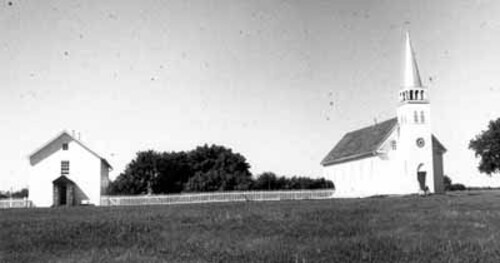
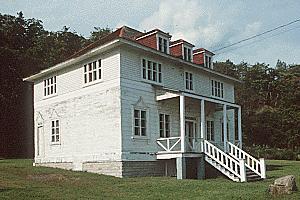
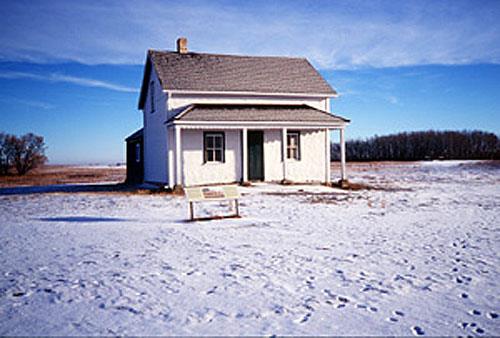
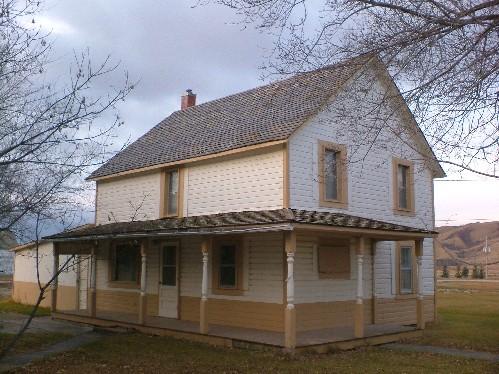
The St. Antoine de Padoue Rectory is located at the Batoche National Historic Site of Canada. It is an austere, two-storey, rectangular structure with a gabled roof and weatherboard cladding. The exterior is plain, relieved only by the pattern of regularly spaced windows along the side elevations. A small, pitched-roof porch protects the gable end entrance. The designation is confined to the footprint of the building.
Heritage Value
The St. Antoine de Padoue Rectory is a Recognized Federal Heritage Building because of its historical associations, and its architectural and environmental values.
Historical Value:
The St. Antoine de Padoue Rectory is very closely associated with the cultural heritage of the Métis population, and with the clash of the Métis and white cultures, which resulted in the 1885 Rebellion. It is also associated with the early activities and influence of the Oblate order that was the dominant Roman Catholic order throughout the northwest of Canada. The structure has a general association with Louis Riel and his Métis council, and Major/General Frederick Middleton and the Northwest Field Force, who played significant parts in the Battle of Batoche. The erection of the St. Antoine de Padoue Rectory and Church marked a significant stage in the development of Batoche as a community.
Architectural Value:
The St. Antoine de Padoue Rectory is valued for its good aesthetic qualities. It is an example of Red River frame construction, a technique that consists of logs laid horizontally and slotted into grooved vertical timbers at each end. The use of the ground floor space as a waiting area, a combined kitchen and dining room, and as accommodation for the priest speaks to its very good functional design. The second storey was also multi-functional and accommodates the Bishop’s bedroom, the post office, Father Moulin’s two-room living quarters and a chapel. The building exhibits good craftsmanship.
Environmental Value:
The St. Antoine de Padoue Rectory reinforces the historic character of Batoche National Historic Site and is a familiar to staff and visitors at the site.
Sources:
Shannon Ricketts, Saint-Antoine-de-Padoue Rectory and Church Batoche National Historic Park, Batoche, Saskatchewan, Federal Heritage Buildings Review Office Report 88-160; Saint-Antoine-de-Padoue Rectory, Batoche National Historic Site, Batoche Saskatchewan, Heritage Character Statement 88-160.
Character-Defining Elements
The character-defining elements of the Saint-Antoine-de-Padoue Rectory should be respected.
Its good aesthetic and simple, functional design and good craftsmanship and materials as evidenced in:
-the simple, rectangular form and two storey massing of the functional structure;
-the simple façade with end gable entrance and small storm porch;
-the Red River framing consisting of walls constructed of locally available materials, logs laid horizontally, and slotted into vertical timbers at each corner, and the weatherboard siding.
The manner in which the St. Antoine de Padoue Rectory reinforces the historic character of its Batoche National Historic Site setting and is a familiar, local landmark, as evidenced by:
-its overall design and materials that harmonize with the historic setting;
-its role as an important component of the surviving structures at the Batoche National Historic Site complex that makes it familiar to locals and visitors.
Gallery
3 imagesLocation
Loading map...
Similar Places
Heritage sites with similar characteristics