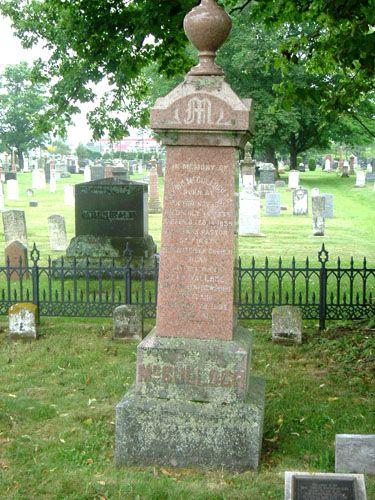
Burial marker of Rev. William McCullough, Robie Street Cemetery, Truro, NS, 2007. It is widely believed that McCullough's grave is located on the site of the original meeting house.
Photo: Heritage Division, NS Dept. of Tourism, Culture and Heritage, 2007
- Recognized
- 2008
- By
- Province of Nova Scotia
The register’s text, word for word
Description
The Robie Street Cemetery is a large, treed burial ground located on Robie Street, a main thorough-fare in Truro, NS. The provincial heritage designation includes the land, burial monuments and associated features.
Heritage value
The Robie Street Cemetery is valued for its cultural, spiritual and historical associations and for its physical features including burial markers, and general layout.
Cultural and Spiritual Values
The earliest English-speaking settlers at Truro were Presbyterians from New Hampshire, originally of Scots-Irish descent. This group is among the earliest of Dissenting Protestants to come to Nova Scotia, following the 1759 proclamation assuring dissenting Protestants religious tolerance and relief from levies for support of the Established Church. Their settlement at Truro is one of the earliest Presbyterian settlements in the province and predates the arrival of the well-known “Hector” at Pictou by thirteen years.
Shortly following their arrival, the settlers established a burial ground and built a meeting house. The congregation that worshiped at this meeting house later incorporated into First United Church at Church Union in 1925 and is perhaps the oldest continuing and first established Presbyterian congregation in Nova Scotia and Canada. While the meeting house is not long extant, the burial ground, established circa 1760, remains in use.
Historical Values
Due to the age of the cemetery, burial markers for many of the community’s founders and active citizens can be found here, the first burial having taken place in 1761. Several notable graves include that of Sir Adams George Archibald, a Father of Confederation and the Hon. George Isaac Smith, Premier of Nova Scotia and later a Senator.
Architectural Values
Robie Street Cemetery contains hundreds of burial markers made with a variety of materials and in a variety of styles, showing the development of craft. The quality and variety are representative of the provincial scope for the same period. The monuments are predominantly upright slabs with several open table markers and altar tomb types. Materials include slate, sandstone, marble and granite. A number of the graves have individual boundaries, marked by period stone cubs, cast iron fences, and posts and chain.
SourceProvincial Heritage Property Program files, no. 272
Character‑defining elements
Character-defining elements of the Robie Street Cemetery relate to its use as a cemetery and include:
- land form including surface contours, discernability for surrounding land and latterly developed sections of overall cemetery;
- pathways;
- mature trees;
- period monuments of corresponding character, design and materials;
- individual grave site boundaries and fences;
- all archaeological evidence of meeting house.
End of the register’s text
Location
125 Robie Street, Truro, Nova Scotia, B2N, Canada
45.36806° N, 63.31130° W
Get directions (opens in a new tab)Being on the register doesn’t make a place open to visitors. Many are private homes or businesses; please view them from the street.

Loading map…
Nearby
All 57 places in Truro
Similar places
Places whose register descriptions are closest to this one.
 Old Burying GroundHalifax, Nova Scotia
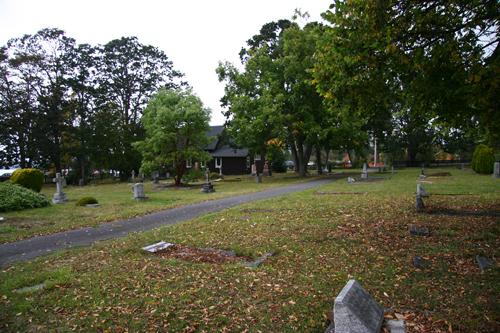 Holy Trinity CemeteryNorth Saanich, British Columbia
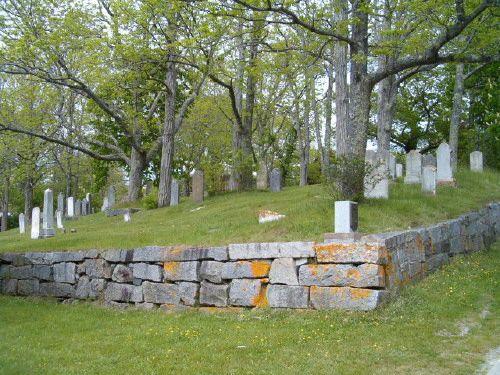 Old Kirk Burying GroundShelburne, Nova Scotia
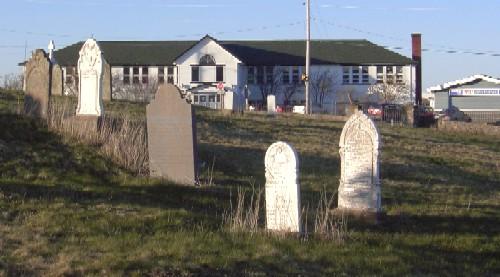 Old Holy Trinity Parish Cemetery Municipal Heritage SiteTorbay, Newfoundland And Labrador
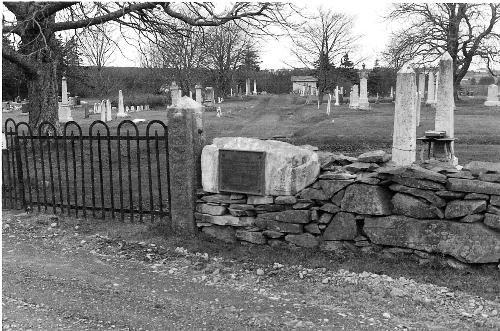 Chebogue CemeteryRockville, Nova Scotia
 Church Street CemeteryLockeport, Nova Scotia
From the Canadian Register of Historic Places, as last updated on December 12, 2025. The register’s text is shown word for word.