National Historic Site of Canada
Reader Rock Garden National Historic Site of Canada
Calgary, Alberta
Also known as Reader Rock Garden
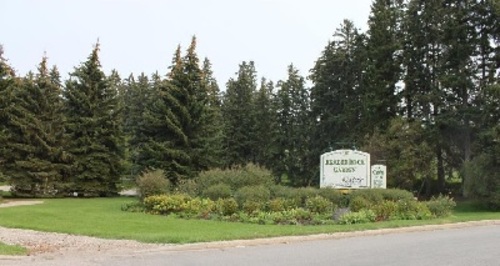
Entrance to the garden
Photo: Parks Canada | Parcs Canada
- Recognized
- 2018
- By
- Government of Canada
The register’s text, word for word
Description
The Reader Rock Garden National Historic Site of Canada is located within Union Cemetery in the City of Calgary. It is an Arts and Crafts style alpine rockery, a garden type popular in Europe and North America at the beginning of the 20th century. The garden consists of a matrix of rock paths, steps, walls and water features forming planting beds divided into sections containing thousands of native and non-native plant and tree specimens. A curved driveway leads up to the Superintendent’s Cottage. An arched metal gate leads into the garden’s five distinct areas. Official recognition refers to Reader Rock Garden which covers 0.57 hectares and is located within Union Cemetery in the City of Calgary. It excludes the Superintendent’s Cottage reconstructed in 2005 on the site of the original.
Heritage value
Reader Rock Garden was designated a National Historic Site of Canada in 2018. It is recognized because:
- established in 1913 and developed until 1942, this horticultural garden is a showcase for the horticultural, ecological, and aesthetic possibilities of gardening in the harsh climate of Calgary, and the need to illustrate the potential of gardening in Western Canada;
- in its heyday, it was regarded as one of the most beautiful and successful gardens in Western Canada, combining the informal aesthetics of the Edwardian Arts and Crafts movement with the structure and content of the highly popular alpine rock garden typology;
- its founder, William Roland Reader was one of a small number of municipal parks superintendents in Canada who significantly shaped the open space systems of their cities through professional skill and knowledge, personal energy, dedication and long-service. This garden supported horticultural work in the larger urban parks system, including the adjacent cemeteries developed by Reader
The century-old garden can be appreciated for the beauty of its plantings and ingenuity of design. Its importance to Canadian history is as an example of the promotion of horticultural possibilities of the Canadian Prairies when European settlement in Western Canada was in its infancy. The garden was laid out between 1913 and 1943 by William Roland Reader, Calgary’s most influential parks superintendent. Reader created one of the few significant gardens in Western Canada in an environment believed to be hostile to agriculture. Undaunted by desert-like conditions, chinook winds, and extremes temperatures, his personal garden became a vehicle for promoting settlement and a successful experiment in civic beautification. The creation of the garden was driven by two factors: the encouragement of European settlement at a time when southern Alberta’s climate was considered hostile to agricultural and horticultural development, and the City Beautiful movement, which linked civic beauty with social progress. Reader drew from British gardening influences popular in the late 19th and early 20th centuries, and adapted them to the Canadian prairies. The resulting garden was well appreciated in its day for its beauty and design, and inspired private citizens to follow Reader’s example in their own gardens.
SourceHistoric Sites and Monuments Board of Canada, Minutes, November 2016.
Character‑defining elements
Key elements contributing to the heritage value of this site include:
- its location within Union Cemetery in the City of Calgary;
- its topography;
- the surviving evidence of William Roland Reader’s naturalistic design and layout including the South Slope, Upper Garden, High Rockery, and Western Slope, the West Garden and the area, including the lawn and perennial beds, surrounding the reconstructed superintendent’s house;
- its vegetation representing Reader’s documented plantings and collections;
- the remnant evidence of natural and created ponds, streams, and pathways;
- the views opening as the path ascends and descends the hill;
- the rock retaining walls, stairs, and paths;
- its entrance arch;
- its views of the city from the points in the garden.
End of the register’s text
Location
325 25th Avenue Southeast, Calgary, Alberta, T2G, Canada
51.02986° N, 114.05838° W
Get directions (opens in a new tab)Being on the register doesn’t make a place open to visitors. Many are private homes or businesses; please view them from the street.

Loading map…
Nearby
All 80 places in Calgary
Similar places
Places whose register descriptions are closest to this one.
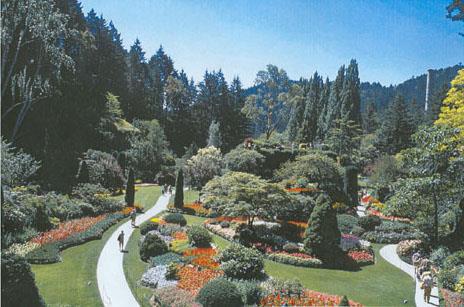 Butchart Gardens National Historic Site of CanadaSaanich, British Columbia
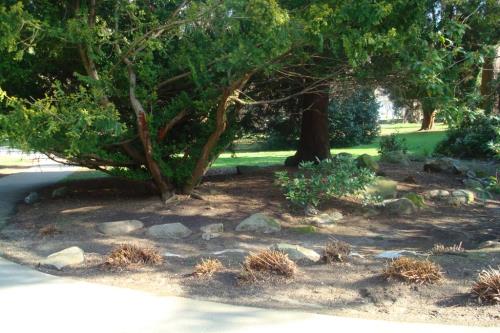 Stanley Park Rock GardenVancouver, British Columbia
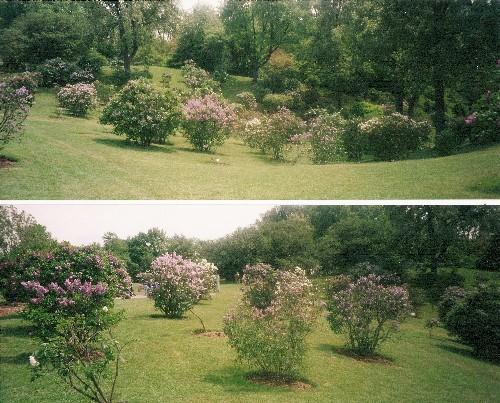 Royal Botanical Gardens National Historic Site of CanadaHamilton, Ontario
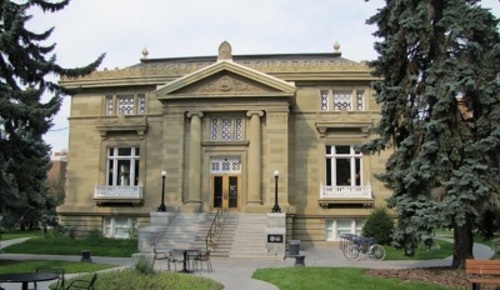 Central Memorial Library and Park National Historic Site of CanadaCalgary, Alberta
 Montréal Botanical Garden National Historic Site of CanadaMontréal, Quebec
 EnhancedBeaulieu National Historic Site of CanadaCalgary, Alberta
From the Canadian Register of Historic Places, as last updated on December 12, 2025. The register’s text is shown word for word.