National Historic Site of Canada
Marie-Reine-du-Monde Cathedral National Historic Site of Canada
Montréal, Quebec
Also known as Marie-Reine-du-Monde Cathedral, Cathédrale Marie-Reine-du-Monde, Saint-Jacques-le-Majeur Basilica
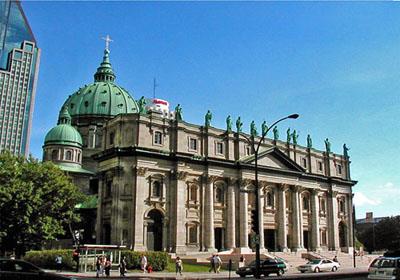
Marie-Reine-du-Monde Cathedral, General View
Photo: Parks Canada, 2006
- Built
- 1870–1878
- Recognized
- 2000
- By
- Government of Canada
The register’s text, word for word
Description
The Marie-Reine-du-Monde Cathedral is an imposing building in the Baroque Revival style of the second half of the 19th century. The cathedral is in the shape of a Latin cross, covering nearly 4,700 square meters. It is characterized by a prominent narthex built in coursed ashlar, surmounted by 13 statues and a monumental dome. It is 77 meters in height, and dominates the building where the transepts meet. The other walls of the cathedral are made of limestone with embossed surface. The nave has a two slope roof made of copper. Inside rises a red copper canopy with gold leaves. The cathedral was built in the “Golden Square Mile”, a privileged neighbourhood where lived the Montreal gentry that emerged during the mid-19th century. Nowadays, the cathedral is surrounded by Place du Canada and Dorchester Square, two green spaces, and is adjacent to renowned buildings such as the Sun Life building, the Queen Elisabeth Hotel and Central Station. The limits of the designated site are the cathedral and Bishop Bourget’s statue, on their footprint.
Heritage value
The Marie-Reine-du-Monde Cathedral was designated a national historic site of Canada in 1999 because:
- it bears national importance because this cathedral is inspired by the architecture and imposing dimensions of St. Peter’s Basilica in Rome, and is the greatest symbol of ultramontanism in Canada.
The Marie-Reine-du-Monde Cathedral was built gradually, from 1870 to 1878 and from 1885 to 1894. The interior decoration was put in place over the course of many years during which, among other things, marble altars, the large organ, the canopy and a series of historical paintings were added. The commemorative monument to Bishop Bourget was erected in 1903. The cathedral was built at a time when revolutionary liberal ideas collided with the Church’s conservatism. Bishop Bourget, second bishop of the Montreal diocese and keen promoter of ultramontanism, initiated the project which was aimed at promoting the predominance of the Church over social and government spheres and the construction of the cathedral evokes the materialization of this will. Built in a district in full development, the cathedral demonstrates the will of the Church to impose itself at the very core of an urban centre in full bloom.
Through its style, the Marie-Reine-du-Monde Cathedral illustrates the will to copy the baroque model of St. Peter’s Basilica in Rome, the greatest symbol of the Catholic religion. It offers an interpretation, although simplified and of more modest dimensions, of its roman model. Architects Victor Bourgeau and Joseph Michaud were, in turn, sent to Rome by Bishop Bourget in order to draw the plans of the cathedral. The cathedral’s Baroque style breaks with the neo gothic architecture in both Protestant and Catholic churches in Montreal during this period.
SourceHistoric Sites and Monuments Board of Canada, Serial Report, Commemorative integrity statement, 2007.
Character‑defining elements
Key elements contributing to the heritage value of the Marie-Reine-du-Monde Cathedral include:
Its association with a figure eagerly defending ultramontanism, is Bishop Bourget, evoked by:
- the commemorative monument to Bishop Ignace Bourget with its bas relief in bronze representing the presentation to the bishop of the plans of the cathedral by the architect, his mausoleum.
The elements recalling the baroque architecture and St. Peter’s Basilica, including:
- the elevation of the narthex (columns and newels) with the thirteen surmounting statues, the large dome, the interior design which leads to the centre and is surmounted by a dome, the decoration of its vault, the baroque canopy and lateral chapels;
- the decoration, which includes references to Rome (stained glass with Christ meeting St. Peter in Rome), Pope Leon 13th’s coat of arms, and St. Peter’s keys;
- the interior, richly decorated and ornate in the Baroque Revival style, including such elements as columns, newels, Corinthian capitals, cornices, sculptures, paintings, rich materials, stained glass, the dome.
The elements recalling local techniques, such as:
- the austere treatment of lateral walls in embossed stone, two slope copper roof over the nave, and interior decoration including sculptures, paintings and stained glass recalling the history of Montreal (plaster statues of the founders of Montreal).
Its location in the heart of the “Golden Square Mile”, and its proximity to green spaces :
- the cathedral, because of its location in a district of Montreal in full bloom and which embodies the economic structures, provincial and national takes root as to dominate the State and society.
- the perspectives from the cathedral of the parks and key downtown buildings such as the Queen Elisabeth Hotel, Place Ville-Marie and the Sun Life Building;
- the views of the cathedral from Place du Canada and René-Lévesque Boulevard.
End of the register’s text
Location
1085 Cathedral Street, Montréal, Quebec, Canada
45.49922° N, 73.56825° W
Get directions (opens in a new tab)Being on the register doesn’t make a place open to visitors. Many are private homes or businesses; please view them from the street.

Loading map…
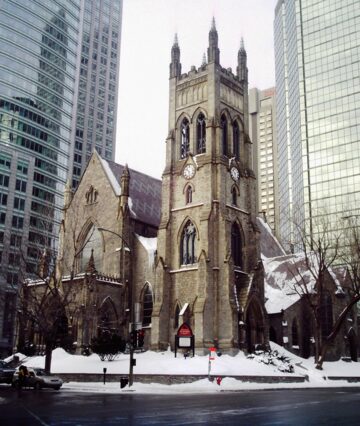 EnhancedSt. George's Anglican Church National Historic Site of Canada150 m · 1869
 Canadian National Railways Central Station200 m · 1938
 Windsor Station (Canadian Pacific) National Historic Site of Canada250 m · 1888
 Windsor Station250 m · 1888
 EnhancedGare Windsor300 m · 1969
 Federal Building300 m · 1934
Similar places
Places whose register descriptions are closest to this one.
 Notre-Dame Roman Catholic Cathedral National Historic Site of CanadaQuébec, Quebec
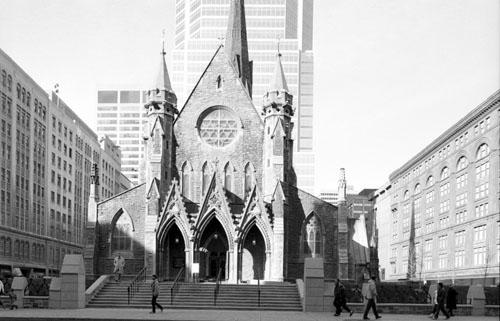 Christ Church Cathedral National Historic Site of CanadaMontréal, Quebec
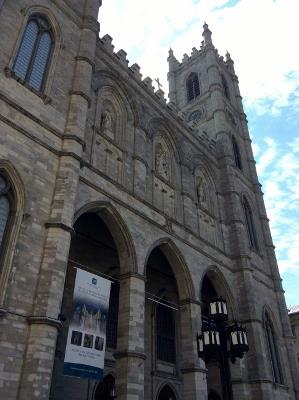 Notre-Dame Roman Catholic Church / Basilica National Historic Site of CanadaMontréal, Quebec
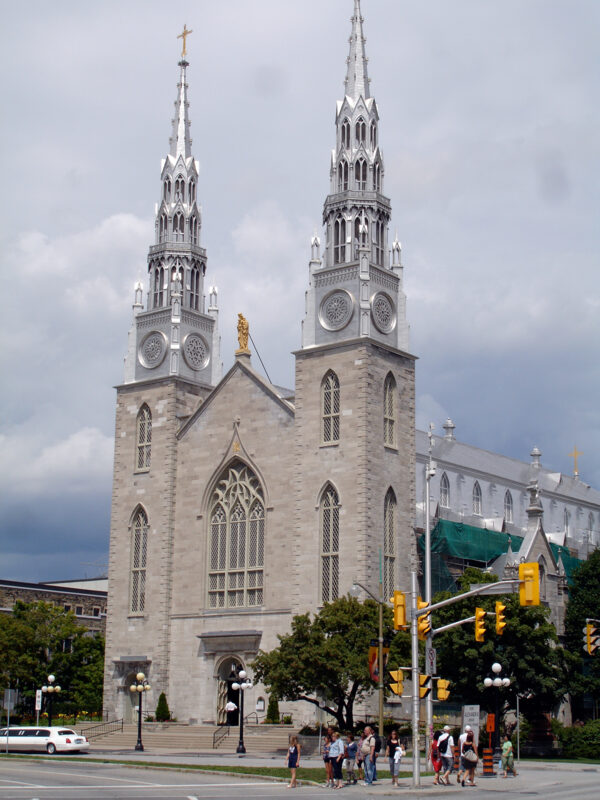 EnhancedNotre-Dame Roman Catholic Basilica National Historic Site of CanadaOttawa, Ontario
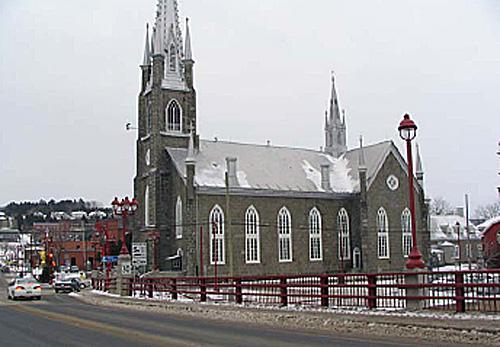 Church of Sainte-Marie National Historic Site of CanadaSainte-Marie, Quebec
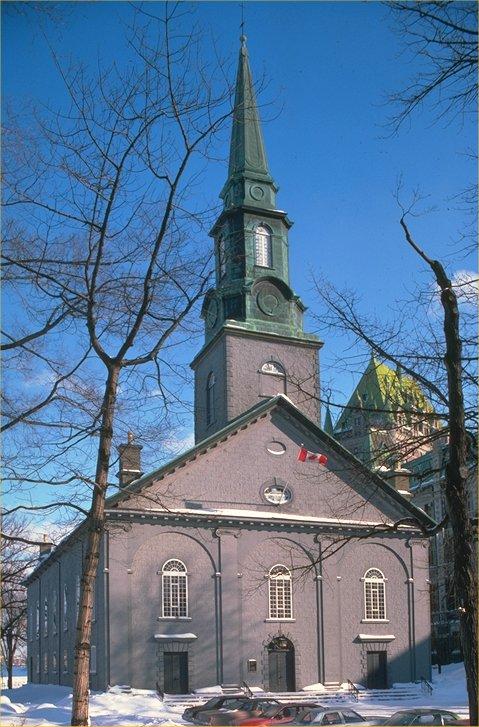 Holy Trinity Anglican Cathedral National Historic Site of CanadaQuébec, Quebec
From the Canadian Register of Historic Places, as last updated on December 12, 2025. The register’s text is shown word for word.