MAJORVILLE CAIRN AND MEDICINE WHEEL
Also known as: MAJORVILLE CAIRN AND MEDICINE WHEEL, Bow East Bank Winter Solstice Cairns, McKenzie's Jump
Description
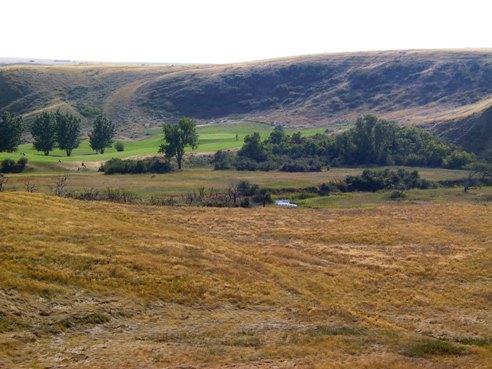
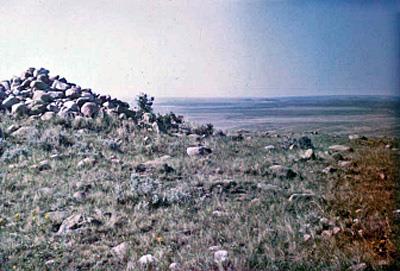
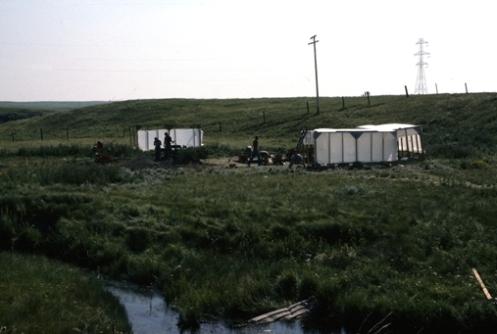
The Majorville Cairn and Medicine Wheel (EdPc-1) consists of a central cairn, which is linked to a surrounding stone circle by 28 spokes, and the cultural landscape which contains this monument. The designation encompasses 160 acres and is situated on a height of land with an expansive view of the surrounding prairie landscape west of the Bow River in southern Alberta.
Heritage Value
Majorville Medicine Wheel (Iniskim Umaapi) provides a record of place where Blackfoot ritual activity links the present with the past and the past to the future. Iniskim (buffalo calling stones) are a central element of Blackfoot ceremonial activity and are present in exposed bedrock formations below the medicine wheel and have been recovered from archaeological excavations at the central cairn. Offerings of sweetgrass, sage, willow, cloth, tobacco, prayer and song which symbolically maintain the link of contemporary people with their ancestors continue to be left at the monument. Archaeological studies indicate this site has been continuously used for the last 4,500 years, making this one of the oldest religious monuments in the world. Artifacts were deposited in the cairn in an accretional fashion, like layers in an onion, with the oldest materials on the inside and the more recent materials towards the outside. Excavation demonstrates the sequence of use mirrors that known from other site types in the area, an indication that Majorville medicine wheel was an element of in-place Plains spiritual culture for millennia.
Source: Alberta Culture and Community Spirit, Historic Resources Management Branch (File: Des. 724)
Character-Defining Elements
The character defining elements at Majorville Cairn and Medicine Wheel include:
- the structure itself, which is dominated by a 9 m diameter central cairn connected to a 27 m diameter cobble circle by 28 spokes organized in a radially-symmetrical fashion and represents one of the most complex designs for sites of this nature in Alberta;
- its location crowning a large hill overlooking a relatively undisturbed native prairie landscape providing a sense of place key to its aesthetic values; minimization of visual intrusion is necessary to preserve aesthetic values;
- the information potential in surface and subsurface archaeological artifacts, especially in the unexcavated portions of the central cairn;
- existing artifact collections that provide a potential for additional scientific analysis and educational/commemorative opportunities for First Nations people;
- numerous tipi ring sites located in undisturbed prairie surrounding the medicine wheel, including bisected rings where ritual activity occurred, evince community settlements related to use of the medicine wheel;
- outcropping of fossil ammonites immediately below the medicine wheel in the Bow River valley provide a source for securing Iniskim for cultural retention and renewal activities by First Nations people;
- oral history/legend retained by local Blackfoot communities relating the history and use of iniskim;
- ongoing ritual use of the site.
Gallery
3 imagesSimilar Places
Heritage sites with similar characteristics