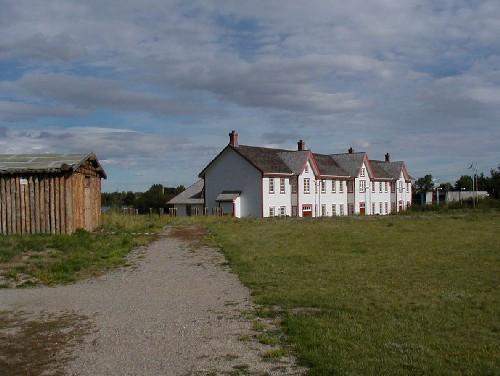
BALZAC ARCHAEOLOGICAL SITE
Also known as: BALZAC ARCHAEOLOGICAL SITE, Balzac Campsite
Description
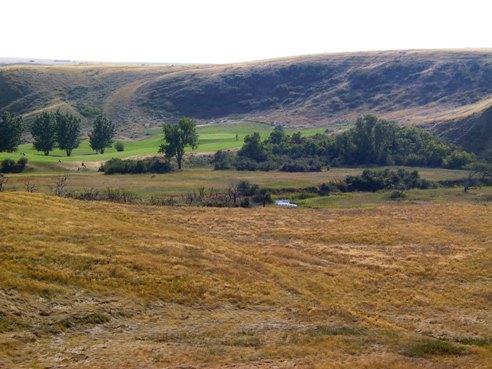
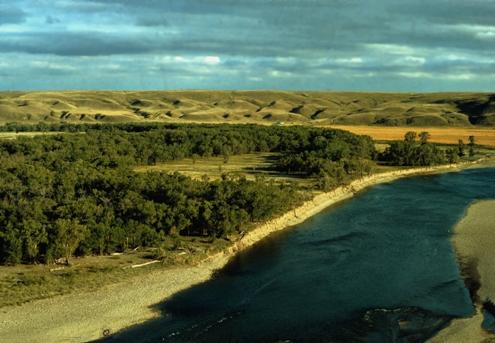
The Balzac archaeological site is located along a large meander of Nose Creek in northern Calgary and adjacent parts of the Municipal District of Rockyview. Covering an area of approximately 10 hectares, it contains an intact, layered record of Aboriginal campsite occupations spanning the last 2,000 years. The Late Prehistoric Period (ca. 1750 to 250 years ago) is represented in its entirety at this site. Also preserved are cultural materials associated with the Historic, Protohistoric and Middle Prehistoric Periods.
Heritage Value
The heritage value of the Balzac archaeological site lies in the fact that its multiple campsite occupations represent a well-preserved and clearly identifiable Aboriginal land use pattern that occurred in the Calgary area over the last two millennia. Rapid and frequent burial of continuous cultural occupations by creek flooding events has resulted in excellent preservation of at least 13 discrete cultural layers. The most completely represented occupations are those of the Late Prehistoric Period, which include five layers of Avonlea Phase (ca. A.D. 250 to 800) cultural material and six cultural layers containing Old Women's Phase (ca. A.D. 800 to 1750) materials. Among archaeological sites in Alberta, few are so well stratified or contain well-preserved materials in such quantity.
Source: Alberta Culture and Community Spirit, Historic Resources Management Branch (File: Des. 2130)
Character-Defining Elements
The character-defining elements of the Balzac archaeological site include:
- the well-stratified occurrence of numerous Late Prehistoric Period occupations;
- the potential scientific value of remaining intact deposits which exhibit quantity, diversity and integrity in cultural materials, including the excellent preservation of organic specimens such as bone;
- the scientific research potential retained in the over 7,000 stone artifacts and in excess of 120,000 preserved bones that have been recovered to date from the site, as well as more unique artifacts such as bone tools, shell and bone beads, pottery and a metal projectile point;
- the presence of time-diagnostic artifacts, such as projectile points (arrow points) and pottery which contain valuable information on cultural affinity;
- the presence of activity nodes indicated by the occurrence of campfire features such as hearths and burn areas, which are numerous and well preserved and provide valuable information on prehistoric subsistence activities.
Gallery
1 imageSimilar Places
Heritage sites with similar characteristics