Ressource historique provinciale
Raymond Buddhist Church
Raymond, Alberta
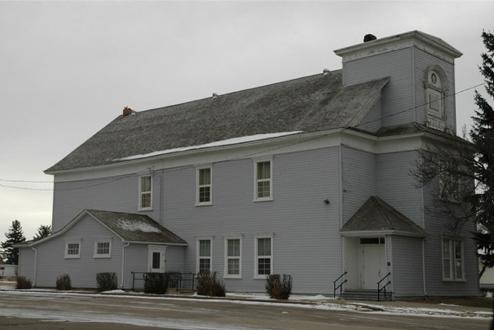
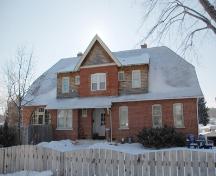
Photo: Alberta Culture and Community Spirit, Historic Resources Management, 2000
- Construction
- 1902–1903
- Reconnaissance
- 1984
- Par
- Province de l'Alberta
Le texte du répertoire, mot pour mot
Description
The Raymond Buddhist Church is a two-storey building with a rectangular plan and a steeply-pitched gable roof. The building is painted gray with white trim and is clad in horizontal wood siding. It has a truncated tower with a decorative wooden plaque over the west side. It is located in Raymond at 35 Broadway Avenue South.
Valeur patrimoniale
The heritage value of the Raymond Buddhist Church building lies in its association with both the Latter Day Saints and Buddhist communities in Alberta and its architectural importance as a representative example of schoolhouse and church construction in rural Alberta during the early part of the twentieth century.
The Raymond Buddhist Church is significant for its association with two religious communities: the Latter Day Saints and the Japanese Buddhists. In 1901, with the assistance of the Canadian Northwest Irrigation Company, the Knight family established a sugar beet growing and refining operation. In August of that year, the Knight family assisted 150 Latter Day Saints members in relocating to the area and the community of Raymond was founded. The area's population grew rapidly and a substantial town site quickly emerged. In 1903, the citizens of Raymond completed construction on the community's first schoolhouse. In addition to its use as a school, the Raymond Buddhist Church was also used for Latter Day Saints worship services and community events. In 1910, the school moved to a larger building, but the building continued to be used as a Latter Day Saints church and a community gathering place. In 1929, the Mormon community moved into the larger Park Avenue Chapel. The church is the only remaining original building from the period of Raymond's founding and the last original building connected to Raymond's Mormon roots.
Japanese settlers, mostly of the Jodo Shinshu Buddhist faith, began arriving in the Raymond area in 1904 and quickly became an integral part of the community. In 1929, they purchased the former Latter Day Saints church for use as a temple, school and a meeting place. In 1932, a co-op store, called the Kobai Kumiai, was established in the building which provided staple products to generate revenue to support the temple. The co-op operated until the 1990s. The local Buddhist community grew dramatically after the evacuation of Japanese people from coastal British Columbia during the Second World War. A large ornate Buddhist altar was donated to the Raymond sanctuary by a British Columbia-based temple in 1946. The building hosted numerous internationally respected Buddhist spiritual leaders and members of the Raymond Buddhist community assumed leadership roles within the larger provincial and national Buddhist organizations. In 2006, the Buddhist community relocated their temple to Lethbridge, taking most of the interior decorations and ritual objects with them. Prior to the temple's relocation, the building was the oldest continually used Buddhist sanctuary in Canada.
The Raymond Buddhist Church is architecturally significant as a representative of typical schoolhouse and church construction in rural Alberta during the early part of the twentieth century. Construction of Raymond's first schoolhouse began in 1902 and was completed in 1903. Built on a simple rectangular plan, the Raymond Buddhist Church is a spartan structure with little exterior ornamentation. In its two-storey scale, it reflected the rapid growth of the community in the first years of the twentieth century and the optimistic expectations of the years to come. The building featured four rooms for classroom instruction and was adapted for use as a religious facility and gathering place. The simple design and mixed use of the Raymond Buddhist Church was typical of the kinds of public buildings erected in early 1900s Alberta.
SourceAlberta Culture and Community Spirit, Historic Resources Management Branch (File: Des. 1146)
Éléments caractéristiques
The character-defining elements of the Raymond Buddhist Church include such features as its:
- austere, simple, yet monumental design;
- truncated tower;
- steeply-pitched gable roof clad in cedar shingles;
- horizontal gray clapboard siding and panel frieze of alternating vertical and diagonal tongue-and-groove boards;
- original fenestration pattern with original sills and dentiled head mouldings over windows and doorways;
- decorative wood plaque on front (west) side of the tower containing the symbol of the Buddhist sanctuary's patron saint;
- original floor plan, including large open interior rooms used for gatherings;
- original finishes including wood floors, painted tongue-and-groove wood walls and ceilings, millwork on door mouldings and baseboards, five-panel doors and associated hardware, light fixtures, wainscot and cornice moulding of main congregation area;
- transom windows, historic to the 1940s;
- counter and shelves of the co-op store.
Fin du texte du répertoire
Emplacement
49.46053° N, 112.66195° W
Itinéraire (s’ouvre dans un nouvel onglet)L’inscription au répertoire ne rend pas un lieu accessible au public. Beaucoup sont des résidences ou des commerces privés; admirez-les depuis la rue.

Chargement de la carte…
À proximité
 Latter Day Saints Park Avenue Chapelà moins de 100 m · 1928
 Andreas Michelsen Farmstead11 km · Stirling · 1912
 Lieu historique national du Canada Village-Agricole-de-Stirling11 km · Stirling
 Isolation Hospital14 km · Lethbridge · 1920
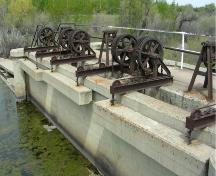 Magrath Canal16 km · Magrath · 1898
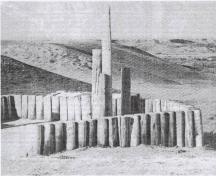 Lieu historique national du Canada Fort-Whoop-Up25 km · Lethbridge · 1869
Lieux semblables
Les lieux dont la description du répertoire se rapproche le plus de celle-ci.
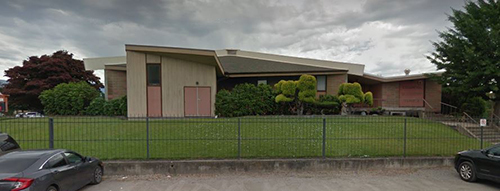 Kelowna Buddhist TempleKelowna, Colombie Britannique
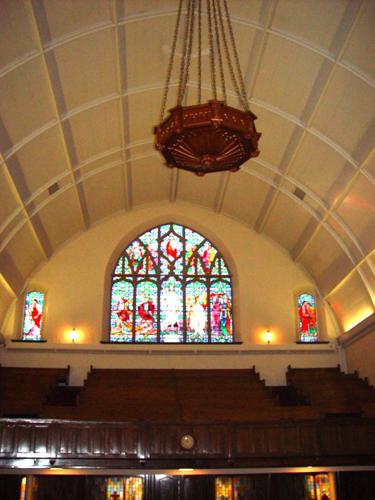 Robertson-Wesley United ChurchEdmonton, Alberta
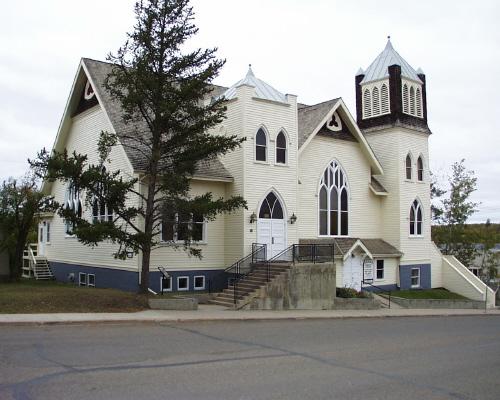 Athabasca United ChurchAthabasca, Alberta
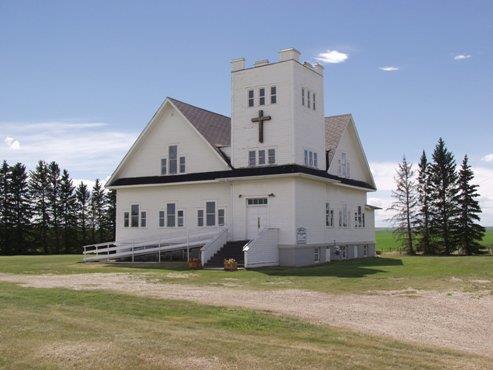 Irricana United ChurchNear Irricana, Alberta
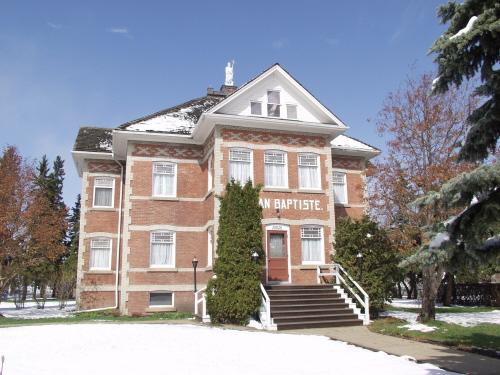 St. Jean Baptiste Church and RectoryMorinville, Alberta
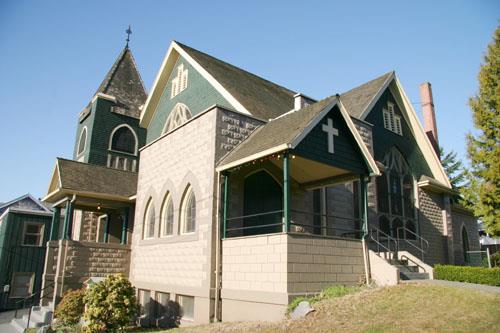 Sixth Avenue United ChurchNew Westminster, Colombie Britannique
Tiré du Répertoire canadien des lieux patrimoniaux, dans sa dernière mise à jour du 12 décembre 2025. Le texte du répertoire est reproduit mot pour mot.