Kelowna Buddhist Temple
Description
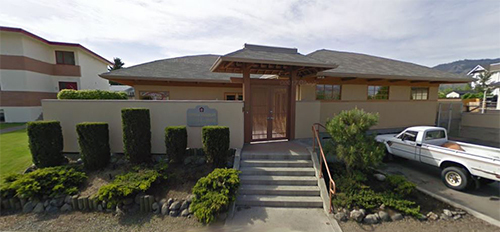
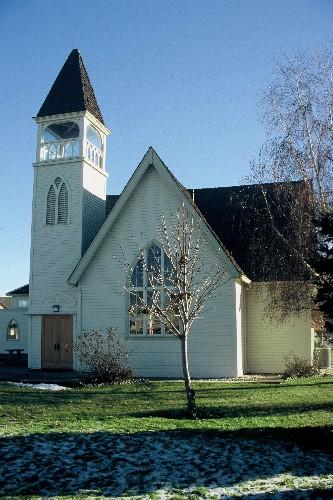
The Kelowna Jodo Shinshu Buddhist Temple is a contemporary, one-storey wood and masonry building with an asymmetrical sloped roof housing an important religious, cultural and social institution at 1089 Borden Avenue in the Central Okanagan city of Kelowna, B.C.
Valeur patrimoniale
The Kelowna Buddhist Temple is significant as a place that has served the city or many decades as both a place for Japanese Canadian Buddhists to practice their faith and as a Japanese Canadian cultural centre where the community today can gather and share their heritage and language. It is also a symbol of a culture of division towards Japanese Canadians that occurred in Kelowna during World War II.
Founded in 1933, the Kelowna Buddhist Temple has spiritual, cultural and social value for serving Japanese Canadians in the central Okanagan area and continues to do so today. Prior to the opening of Japanese Canadian cultural centres in the 1970s, Buddhist temples were instrumental in serving as cultural centres for Japanese Canadians of all denominations in the region.
The Kelowna Buddhist Temple has historic and social value for being the one place where Japanese Canadians could gather and maintain a sense of community in the face of the culture of discrimination, divisiveness and resentment found in parts of the Okanagan Valley during World War II. Prior to the war, Kelowna had 500 Japanese Canadians living in the vicinity of the city, the largest inland concentration of Japanese Canadians in Canada. While farmers, who had been suffering from a labour shortage since the outbreak of the war needed labourers, city residents resisted any further arrivals of Japanese Canadians being removed and interned from the coast, concerned about the long-term implication of Japanese settlement.
The temple has social and cultural value for providing a post-World War II cultural space for younger Japanese Canadians in the central Okanagan. In contrast with those Japanese Canadians who moved back to the coast, the temple was particularly valuable for its close-knit community and social milieu, giving young Japanese Canadians regular exposure to Japanese culture and the opportunity to meet and socialize as they were growing up.
Source: Province of British Columbia, Heritage Branch
Éléments caractéristiques
Not applicable
Location
Loading map...
Lieux similaires
Sites patrimoniaux avec des caractéristiques semblables