National Historic Site of Canada
Former Hamilton Customs House National Historic Site of Canada
Hamilton, Ontario
Also known as Former Hamilton Customs House, Ancien édifice de la douane de Hamilton, Ontario Workers Arts and Heritage Centre
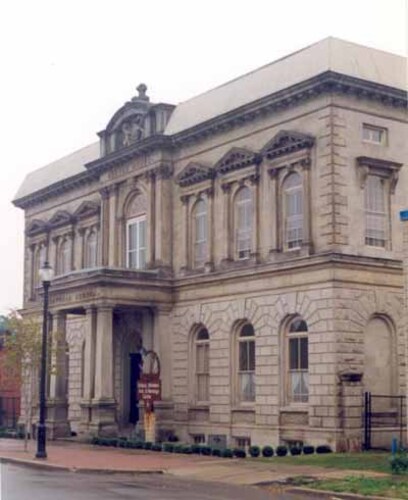
General view of the Former Hamilton Customs House National Historic Site of Canada, showing the main façade, 1998.
Photo: Parks Canada Agency/Agence Parcs Canada, HRS 0918, 1998.
- Built
- 1858–1860
- Recognized
- 1990
- By
- Government of Canada
The register’s text, word for word
Description
The Former Hamilton Custom House National Historic Site of Canada is a handsome two-storey Italianate-style building, located in downtown Hamilton, Ontario. It is executed in beautifully tooled stonework, and features a rich vocabulary of classical details, such as a columned portico, prominent stringcourses and cornice, and elaborate interior mouldings and plasterwork. It now houses the Workers Arts and Heritage Centre.
Heritage value
The Former Hamilton Custom House was designated a national historic site of Canada because it is an extremely attractive example of Italianate architecture in Canada with stonework of exceptionally fine quality.
The Former Hamilton Custom House (1858-1860) is a fine example of the Italianate style of architecture, which was popular in Canada from the 1840s through the 1870s. Inspired by Renaissance palazzi of Rome and Florence, Italianate buildings were characterized by an elevated first storey of rusticated stone, a smooth upper storey, abundant classical detailing and a heavy cornice. The design of the Former Hamilton Custom House is enhanced by the variety of finishes and the superior quality of its stonework.
Built by the preconfederation Province of Ontario’s Board of Works to designs by F. P. Rubidge, its construction reflected the rise of Hamilton as a major railway centre and Great Lakes port. This function ceased in 1915 after which the building served a variety of uses, it currently houses a cultural centre.
SourceHistoric Sites and Monuments Board of Canada, Minutes, June 1990 and April 1999.
Character‑defining elements
Aspects of this site which contribute to its heritage values include:
- its compact rectangular massing under a flat roof;
- its hierarchically arranged floors with a rusticated stone basement that acts as a low podium, a prominent main storey featuring richly tooled and channelled masonry, and a second storey of smooth ashlar blocks capped by an ornamented cornice and parapet;
- the hierarchical use of classical orders and anthropomorphic keystones in the decorative treatment around window and door openings;
- its symmetrically organized façade with centre door beneath a double-height portico;
- its rich vocabulary of Italianate motifs both inside and out, specifically wide voussoirs, stringcourses, tympana around windows, a decorative frontispiece, and richly detailed wood- and plaster-work.
End of the register’s text
Location
51 Stuart Street, Hamilton, Ontario, Canada
43.26649° N, 79.86726° W
Get directions (opens in a new tab)Being on the register doesn’t make a place open to visitors. Many are private homes or businesses; please view them from the street.

Loading map…
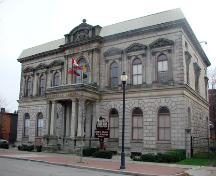 Hamilton Custom Housewithin 100 m · City of · 1858
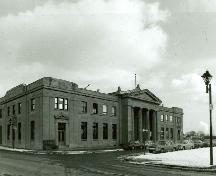 Canadian National Railway Station200 m · 1929
 Former Hamilton Railway Station (Canadian National) National Historic Site of Canada200 m · 1929
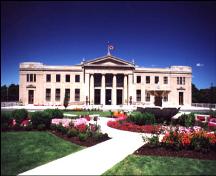 Hamilton CNR Station250 m · 1929
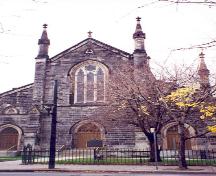 Christ's Church Cathedral350 m · 1852
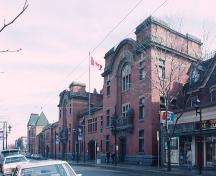 John Weir Foote Armoury National Historic Site of Canada500 m · 1887
Similar places
Places whose register descriptions are closest to this one.
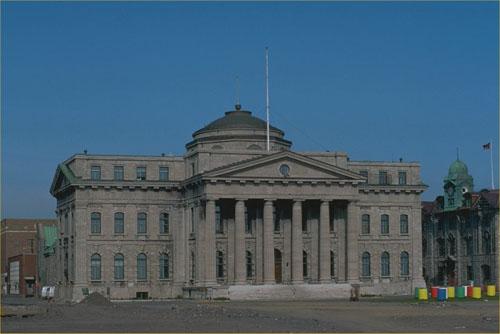 New Québec Custom House National Historic Site of CanadaQuébec, Quebec
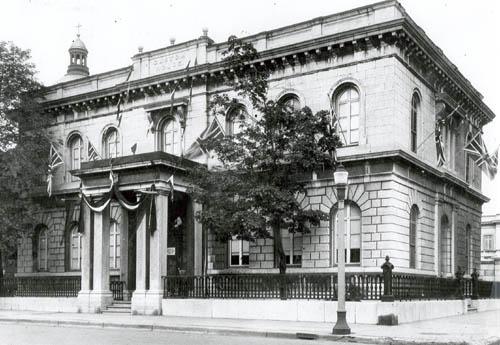
 Former Montréal Custom House National Historic Site of CanadaMontréal, Quebec
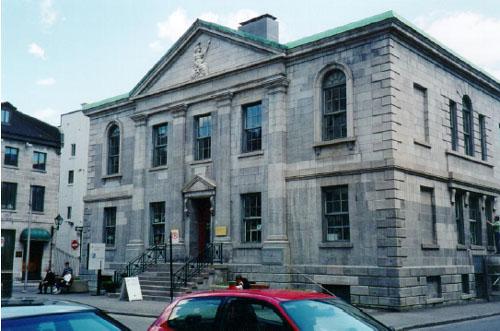
 Kingston Customs House National Historic Site of CanadaKingston, Ontario
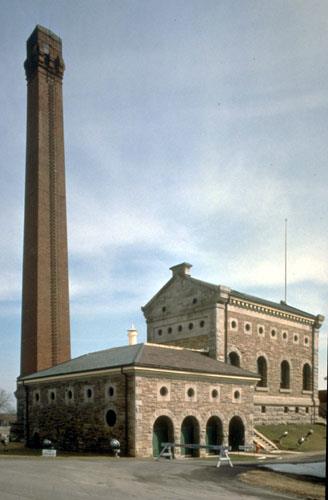 Hamilton Waterworks National Historic Site of CanadaHamilton, Ontario
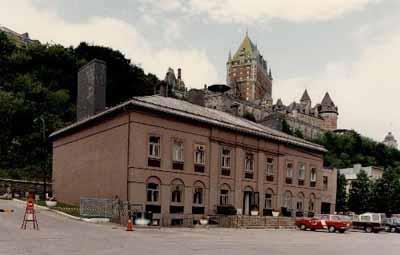 Old Québec Custom House National Historic Site of CanadaQuébec, Quebec
- Custom HouseKingston, Ontario
From the Canadian Register of Historic Places, as last updated on December 12, 2025. The register’s text is shown word for word.