National Historic Site of Canada
Estate of the Lieutenant Governor of British Columbia National Historic Site of Canada
Victoria, British Columbia
Also known as Estate of the Lieutenant Governor of British Columbia, Domaine du lieutenant-gouverneur de la Colombie-Britannique
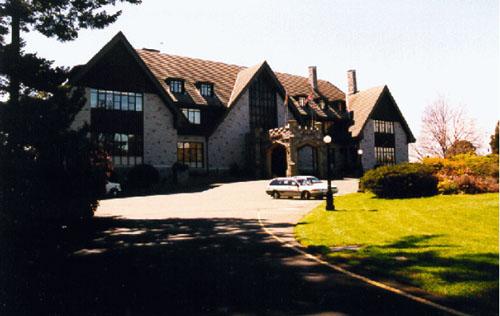
Front elevation of the official residence, 2002.
Photo: Parks Canada Agency/Agence Parcs Canada, N. Clerk, 2002.
- Built
- 1911–2001
- Recognized
- 2002
- By
- Government of Canada
The register’s text, word for word
Description
The Estate of the Lieutenant Governor is an evolving cultural landscape of some 14.6 hectare situated on a height of land known as the Rockland Escarpment in a residential area of Victoria with commanding views of the Strait of Juan de Fuca. The site contains a mosaic of varied landscapes that includes 5.7 hectares of gardens, agricultural lands, a mature stand of Douglas fir, and an extensive Garry oak ecosystem. The site also contains the official residence built in 1957-59 following a fire that destroyed its predecessor, a group of five service buildings known as the Mews constructed between 1872 and 1903, a former gardener’s cottage (1903), and a former chauffeur’s cottage (1929). The formal recognition refers to the 14.6 hectare estate including landscape features and related buildings.
Heritage value
The Estate of the Lieutenant Governor of British Columbia was designated a national historic site because:
- it is a cultural landscape that has had a long and noteworthy connection since 1865 with an official function, namely serving as the residence of the Governors and Lieutenant Governors of the province, three of whom have been recognized as being of national historic importance; and
- it is remarkable for its aesthetic qualities, consisting of a variety of different landscapes, picturesque gardens that have been and may be augmented from time to time, agricultural lands with an old mews, and a valuable ecosystem of Garry oaks.
The present residence, built in 1957-59, is the third official residence to occupy the site. It sustains the building-site relationship of its predecessors through its placement, modified Tudor Revival style elements and the retention of the porte-cochere from the previous residence destroyed by fire. The grounds of the estate, originally laid out in the early 20th century to a plan inspired by the great English estates of the Edwardian era, contains an array of ornamental gardens that have evolved over time. The rich mosaic of picturesque, pastoral and natural landscapes lends a distinctive quality to an estate that is a notable part of the history of British Columbia.
SourceHistoric Sites and Monuments Board of Canada, Minutes, June 2002.
Character‑defining elements
Key features contributing to the heritage value of this site include:
- the site in its defined boundaries and its continuous association with the vice regal office since 1865;
- its location on a conspicuous ridge that makes it a visible landmark within the city;
- the siting of the official residence and the historical relationship between it, and its predecessors, and the site;
- the residence’s stone porte-cochere, a surviving remnant from the previous residence;
- the unimpeded sightlines from the residence to the surrounding estate grounds and to the Strait of Juan de Fuca;
- the picturesque design elements developed after 1911, notably, the mosaic of gardens (including English, herbal, perennial, alpine, rock, rhododendron, and rose gardens,various other flower gardens, and a duck pond), an agricultural area (orchard, nursery garden, fields), winding lanes and pathways, mature trees, and an 8.9 hectare Garry Oak ecosystem);
- the group of service buildings known collectively as the Mews (built between 1872 and 1903), and the two staff cottages (built in 1903 and 1929) which, through their age, forms, massing and materials, convey a sense of historical processes associated with the operation of a great estate in the 19th and early 20th centuries;
- the stone perimeter wall;
- the accessibility of the estate’s gardens to the general public.
End of the register’s text
Location
1401 Rockland Avenue, Victoria, British Columbia, V8S, Canada
48.41831° N, 123.34247° W
Get directions (opens in a new tab)Being on the register doesn’t make a place open to visitors. Many are private homes or businesses; please view them from the street.

Loading map…
Similar places
Places whose register descriptions are closest to this one.
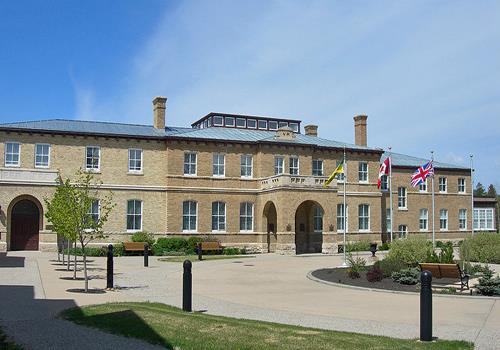 Government House National Historic Site of CanadaRegina, Saskatchewan
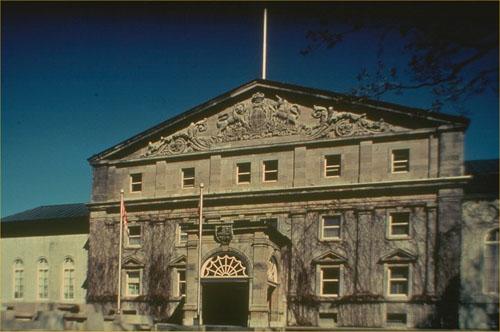 Rideau Hall and Landscaped Grounds National Historic Site of CanadaOttawa, Ontario
 151 Sunny LaneOak Bay, British Columbia
 Hatley Park / Former Royal Roads Military College National Historic Site of CanadaColwood, British Columbia
 B.C. LegislatureVictoria, British Columbia
 Government HouseCharlottetown, Prince Edward Island
From the Canadian Register of Historic Places, as last updated on December 12, 2025. The register’s text is shown word for word.