National Historic Site of Canada
Caughnawaga Mission / Mission of St. Francis Xavier National Historic Site of Canada
Kahnawake, Quebec
Also known as Caughnawaga Mission / Mission of St. Francis Xavier, Mission de Caughnawaga / mission Saint-François-Xavier
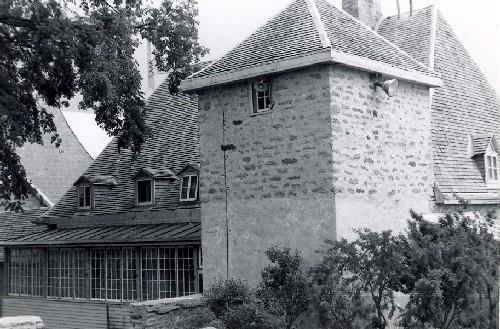
Corner view of Caughnawaga Mission / Mission of St. Francis Xavier, showing its fieldstone exterior construction, 1966.
Photo: Canadian Inventory of Historic Buildings / Inventaire des bâtiments historiques du Canada, 1966.
- Built
- 1716–1914
- Recognized
- 1966
- By
- Government of Canada
The register’s text, word for word
Description
Caughnawaga Mission / Mission of St. Francis Xavier National Historic Site of Canada is located on the banks of the St. Lawrence Seaway in Kahnawake Mohawk Territory, in Quebec. Jesuit Missionaries established the mission in 1716-1718. The site comprises four components: the Saint François Xavier Church (1845), the old presbytery (1716-1719) including its west wing and corridor, the sacristy (1831-1832), and the museum (1914). The mission is now located within the walls of Fort St-Louis National Historic Site of Canada. Official recognition refers to the footprints of the old presbytery including its west wing and its corridor, as well as the church, the vestry and the museum.
Heritage value
The Caughnawaga Mission / Mission of St. Francis Xavier was designated a national historic site of Canada in 1966 because:
- in 1647, the Jesuits established the mission of Saint-François Xavier which was moved frequently, along with the Mohawk village, before coming to rest definitely in Caughnawaga in 1716-1718;
- until the fall of New France, the Mohawks of Caughnawaga remained allies of the French.
The mission of St. François-Xavier was first founded at La Prairie in 1667 by the Jesuits for the local Christian Iroquois. It was forced to relocate several times due to economic concerns until finally settling permanently in Kahnawake in 1716.
The oldest surviving building on the site is the old presbytery, which was built between 1716 and 1719. The west wing, adjacent to the presbytery, and the old church was constructed soon after, in 1720. Until the fall of New France the Mohawks of Caughnawaga remained close allies of the French. As a result of this alliance, in 1725 the French built a palisade of wood, which was later replaced by stonework, to protect the mission. The remains of this palisade define the limits of Fort St-Louis National Historic Site of Canada, of which the mission is a part. In 1831 both a new tower for the St. Francis Xavier church and a sacristy were constructed for the instruction of the converted Iroquois.
SourceHistoric Sites and Monuments Board of Canada, Minutes, May 2009; plaque text, 1976.
Character‑defining elements
Key elements that contribute to the heritage character of the entire site include:
- its location in the semi-urban setting of Kahnawake, Quebec;
- its setting within the walls of Fort St-Louis National Historic Site of Canada, on the banks of the St. Lawrence Seaway;
- the spatial relationship between the various components of the site, their massing, heights, and profiles;
- the integrity of any surviving or as yet unidentified archaeological remains which may be found within the site in their original placement and extent;
- the viewscapes from the site across the St. Lawrence Seaway;
Key elements that contribute to the heritage character of the Saint François Xavier Church include:
- its location at the far east end of the site;
- its cruciform shape with a square tower on the main façade;
- its exterior construction of neatly-dressed large, square stone blocks, as well as the hammer-dressed, randomly coursed stonework of the tower;
- the octagonal belfry featuring a broached roof, round headed openings, and a steeple with a flared base and weathercock;
- its steeply pitched gable roof with bell-cast eaves, adorned with a statue set in a niche;
- the various types of openings, including round-headed windows with fan-light heads and sashes with narrow panes at the sides, rectangular tower windows, and a doorway with a high ellipse with a simple fan;
- the interior features of the church including the elaborately-painted altar, reredos and statuary, the conventional bench-style pews with scroll ends, and the ceiling painting from 1925.
Key elements that contribute to the heritage character of the old presbytery, the west wing, and the corridor include:
- their large, one-and-a-half-storey massing typical of 17th- and 18th-century vernacular Quebec buildings, topped with a shingled hip roof with bell-cast curves;
- their stone construction;
- the main exterior features, including the gabled dormers, the exterior doors with semi-circular panel-heads, and the twelve-paned casement windows;
- any remaining interior features, including exposed stonework, an assortment of original or early interior woodwork and hardware, fireplaces, elaborate architraves with bolection moulds, doors with late-17th century or early-18th century panelling and panelled overdoors, armoires with lap doors and ornamental hinges;
- the collections of pre-1760 documents, original records and account books.
Key elements that contribute to the heritage character of the museum and sacristy include:
- their location adjacent to the old presbytery and the corridor connecting the presbytery to the church;
- the fieldstone exterior construction of the museum, with vestiges of old roughcast clinging to its eaves;
- the collections of early religious art.
End of the register’s text
Location
River Front Road, Kahnawake, Quebec, Canada
45.24250° N, 73.41090° W
Get directions (opens in a new tab)Being on the register doesn’t make a place open to visitors. Many are private homes or businesses; please view them from the street.

Loading map…
 Chapelle-reposoir de Saint-Jacques-le-Mineur4.1 km · Saint-Jacques-le-Mineur · 1889
 Maison Roy5.1 km · Saint-Blaise-sur-Richelieu · 1835
 Cimetière Douglass5.9 km · Saint-Cyprien-de-Napierville
 Maison Nathaniel-Douglass6 km · Saint-Cyprien-de-Napierville
 Palais de justice de Napierville6.1 km · Napierville · 1834
 Ferme Joseph-Roy7.6 km · Saint-Jean-sur-Richelieu · 1805
Similar places
Places whose register descriptions are closest to this one.
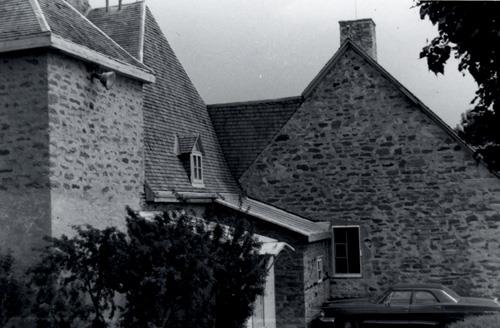 Caughnawaga Presbytery National Historic Site of CanadaKahnawake, Quebec
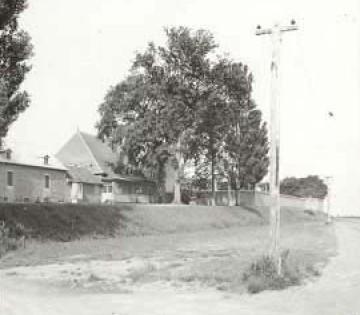 Fort St-Louis National Historic Site of CanadaKahnawake, Quebec
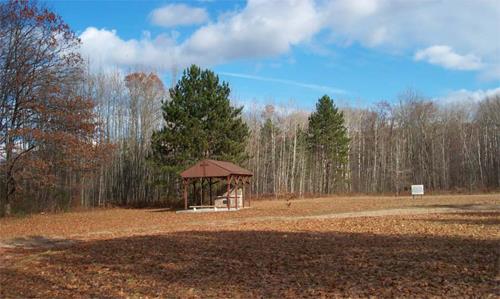 Mission of St. Ignace II National Historic Site of CanadaTay, Ontario
- Saint-Louis Mission National Historic Site of CanadaVictoria Harbour, Ontario
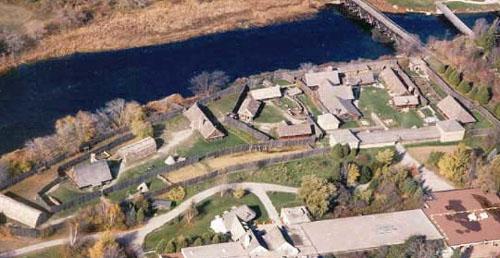 Sainte-Marie Among the Hurons Mission National Historic Site of CanadaMidland, Ontario
 Cartier-Brébeuf National Historic Site of CanadaQuébec, Quebec
From the Canadian Register of Historic Places, as last updated on December 12, 2025. The register’s text is shown word for word.