Provincial Historic Resource
Canadian Northern Railway Station
Smoky Lake, Alberta
Also known as C.No.R. Station, CNoR Station, Canadian National Railway Station
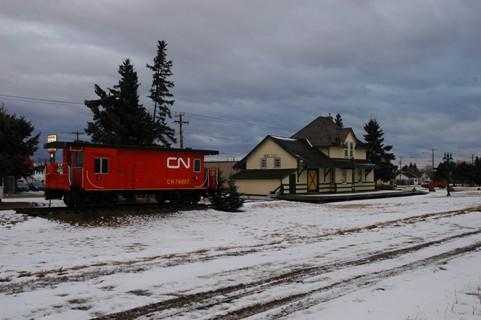
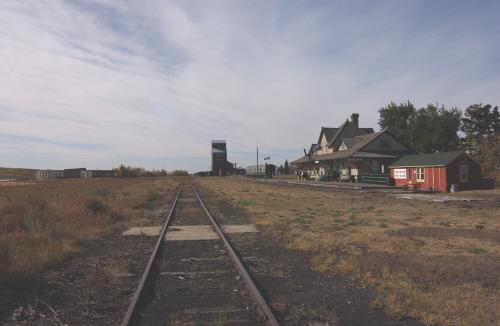
Canadian Northern Railway Station, Smoky Lake (December 2005)
Photo: Alberta Culture and Community Spirit, Historic Resources Management Branch, 2005
- Built
- 1919
- Recognized
- 2007
- By
- Province of Alberta
The register’s text, word for word
Description
The Canadian Northern Railway Station is a one and one-half storey building situated on one lot on Railway Drive in the Town of Smoky Lake. The site is adjacent to the abandoned railway right-of-way that now serves as a portion of the Iron Horse Trail, a regional recreational corridor. The building is a Standard Third Class station constructed in 1919 according to Plan 100-72. It features a white stucco exterior with green trim, a hipped roof over the main station area, two gabled wall dormers on the front and back elevations, and a low-pitched gable roof over the baggage area. A wide eave with large brackets extends along the platform.
Heritage value
The heritage value of the Canadian Northern Railway Station at Smoky Lake lies in its architectural significance as a fine example of a Standard Third Class, Plan 100-72 railway station and in its symbolic value as an emblem of the central role of railways in opening the province to settlement and agriculture.
In 1918, as World War One neared its conclusion, the federal government established the Soldiers' Settlement Board, an agency designed to help returning veterans acquire land and reintegrate into civilian life. In response to this initiative, the Canadian Northern Railway (CNoR) extended its line northeast of Edmonton to Smoky Lake, a community perceived to be an ideal venue for the repatriated soldiers. In 1919, the CNoR built a Standard Third Class, Plan 100-72 station at Smoky Lake to serve the community. The station was typical of small rural stations constructed by the CNoR at the time. Designed by influential Winnipeg architect, Ralph Benjamin Pratt, the station featured a high hipped roof with gabled dormers - an architectural element that Pratt effectively developed into an instantly recognizable trademark for CNoR stations. The main floor included a waiting area and office while the second storey provided living quarters for the station agent. A baggage room to the west offered space for freight storage. When it was initially built, the station's exterior was clad in wood shingling. In 1920, the CNoR was amalgamated into the Canadian National Railway (CNR); in 1936, the CNR covered the shingle siding in stucco and added the company's corporate colours of forest green and gold to the building's trim - a standard CNR practice that homogenized the appearance of stations along lines absorbed by the company. The station was closed in the 1980s. The Smoky Lake Canadian Northern Railway Station is one of the oldest surviving examples of this particular type of building in Alberta.
With the gradual disappearance of early train stations from Alberta's communities, buildings like the Smoky Lake Canadian Northern Railway Station have gained increased historic significance as symbols of the essential role that the railways played in establishing settlement and agricultural economy in the province.
SourceAlberta Culture and Community Spirit, Historic Resources Management Branch (File: Des. 1871)
Character‑defining elements
The character-defining elements of the Canadian Northern Railway Station include such features as:
- mass, form, scale, and style;
- stucco exterior;
- cedar-shingled hipped roof over main station area;
- low-pitched, cedar-shingled gable roof over baggage area with very wide, open bracketed eaves;
- corbelled brick chimney;
- forest green and gold colouring of trim;
- square, centrally-located bay on the east side of building;
- gabled wall dormers on the front and back elevations;
- fenestration pattern and style, including nine-over-one double-hung sash units;
- original door pattern and style, including standard five panel interior doors and two freight doors in the baggage room;
- tongue-and-groove wood flooring in main station area;
- rough lumber flooring in baggage area;
- original mouldings, staircases, and fixtures;
- original artifacts associated with the site.
End of the register’s text
Location
Railway Drive, Smoky Lake, Alberta, T0A, Canada
54.11271° N, 112.47118° W
Get directions (opens in a new tab)Being on the register doesn’t make a place open to visitors. Many are private homes or businesses; please view them from the street.

Loading map…
Nearby
 River Lot 3, Victoria Settlement13 km · near Pakan · 1882
 Victoria District National Historic Site of Canada13 km · Pakan · 1863
 Presentation of the Blessed Virgin Mary Ukrainian Catholic Church (Delph)17 km · near Lamont · 1917
 McDONALD STOPPING HOUSE18 km · Near Waskatenau · 1909
 Nativity of the Holy Virgin Orthodox Church of Kysylew23 km · near Andrew · 1950
 Russo Greek Orthodox Church of St. Peter and St. Paul23 km · Smoky Lake County · 1909
Similar places
Places whose register descriptions are closest to this one.
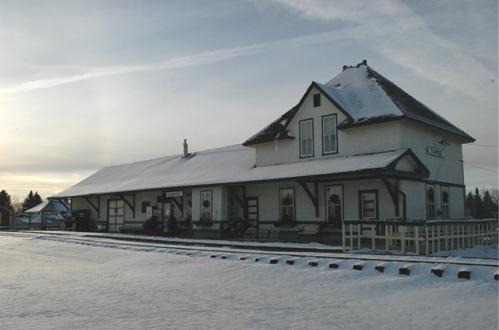 Canadian Northern Railway StationCamrose, Alberta
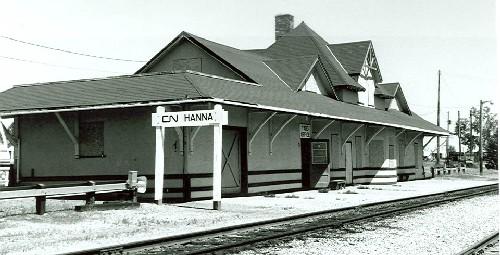 Former Canadian Northern Railway StationHanna, Alberta
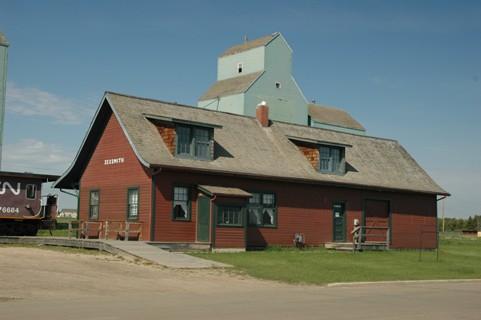 Northern Alberta Railway StationSexsmith, Alberta
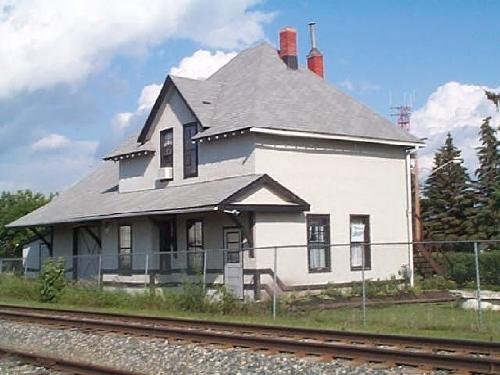 CN Station BuildingBlaine Lake, Saskatchewan
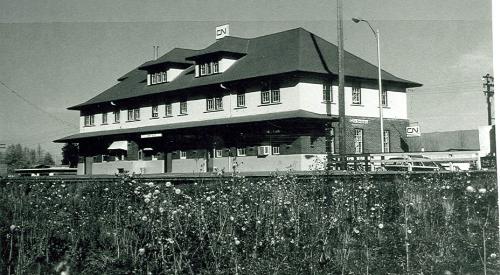 Canadian National Railway StationSmithers, British Columbia
 Canadian Northern Station Building and Roundhouse Site ComplexBig Valley, Alberta
From the Canadian Register of Historic Places, as last updated on December 12, 2025. The register’s text is shown word for word.