Winnipeg Landmark Heritage Structure
Belgian War Memorial
Winnipeg, Manitoba
Also known as War Memorial, Monument aux morts
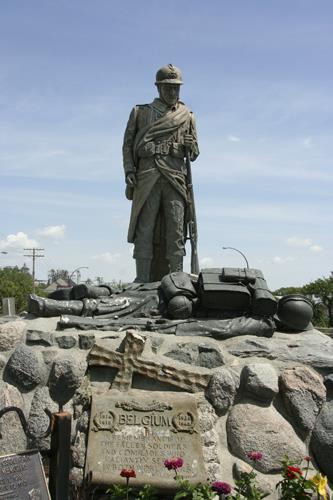
Primary view, from the west, of the Belgian War Memorial, Winnipeg, 2006
Photo: Historic Resources Branch, Manitoba Culture, Heritage and Tourism, 2006
- Recognized
- 1995
- By
- City of Winnipeg
The register’s text, word for word
Description
The Belgian War Memorial, a tall three-dimensional stone monument of a World War I soldier and his fallen comrade, unveiled in 1938, stands on the grassy median of a main thoroughfare in the community of St. Boniface, across from Winnipeg's Belgian Club. The City of Winnipeg designation applies to the monument on its footprint.
Heritage value
The Belgian War Memorial, a large, prominently situated stone sculpture, is an evocative and stunningly detailed representation of the anguish of life and death on the Great War battlefields of Europe. The arresting monument presents its message through two oversized figures, one an erect and stoic Belgian soldier in battledress, the other the prone body of a comrade whose faceless anonymity serves as a universal symbol of sacrifice. This starkly realistic wartime scene, commissioned by the Belgian Veterans' Association, is the work of renowned St. Boniface sculptor Hubert A. Garnier whose reliefs, monuments, architectural ornamentation and official emblems are found across Canada and the United States. Befitting its purpose, the memorial occupies a highly visible location on a busy Winnipeg streetscape near the historic Belgian Club, a vibrant and long-standing patriotic organization. Intended as a World War I monument, the site has since evolved to recognize succeeding international conflicts.
SourceCity of Winnipeg Committee on Planning and Community Services Minutes, April 4, 1995
Character‑defining elements
Key elements that define the heritage character of the Belgian War Memorial site include:
- the location on a widened and landscaped section of the Provencher Boulevard median, in a small St. Boniface park named in honour of King Albert the First of Belgium and almost directly across from the home of the Belgian Veterans' Association (Royal Canadian Legion) in the City of Winnipeg's designated Belgian Club
Key elements that define the monument's evocative representational design, sculptural execution and memorial function include:
- the base, about 1.5 metres high, of fieldstone boulders randomly piled in cement
- the two oversized military figures carved out of white Haddington Island sandstone in three dimensions
- the exceptional sculpted detail, including the posture and facial expression of the erect soldier (who stands approximately 2.4 metres high) and the clothing, badges, boots, weaponry, equipment, etc., of both men
- the stylized cross embedded on the upper west side of the base
- the scrolls and plaques incorporated into the base and inscribed as follows: on the west side, 'Belgium 1914 1918, 1939 1945, In remembrance of the fallen soldiers and comrades who valiantly served in both World Wars, H. Garnier, sculptor'; on the north, 'Belgie 1914-1918'; on the east, 'Hubert A. Garnier 1938'; and on the south, 'Belgique 1914-1918 1939-1945 1950-1953'
End of the register’s text
Location
Winnipeg, Manitoba, R2H, Canada
49.89488° N, 97.11122° W
Get directions (opens in a new tab)Being on the register doesn’t make a place open to visitors. Many are private homes or businesses; please view them from the street.

Loading map…
Similar places
Places whose register descriptions are closest to this one.
 Manitou CenotaphManitou, Manitoba
 War Memorial CenotaphSt. Stephen, New Brunswick
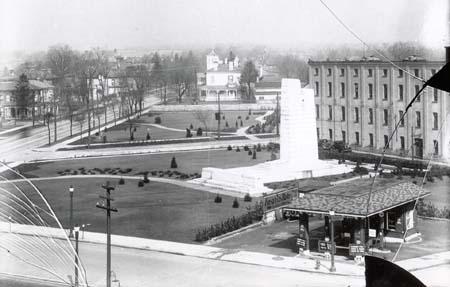 Brant County War MemorialCity of Brantford, Ontario
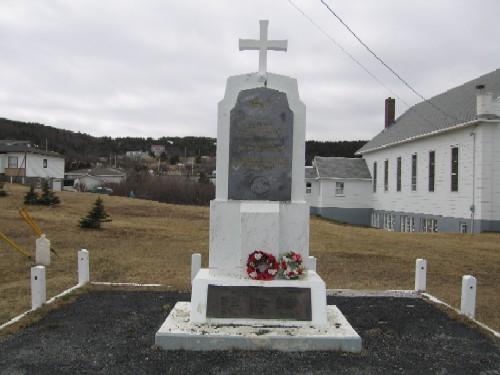 War Memorial Municipal Heritage StructureSt. Anthony, Newfoundland And Labrador
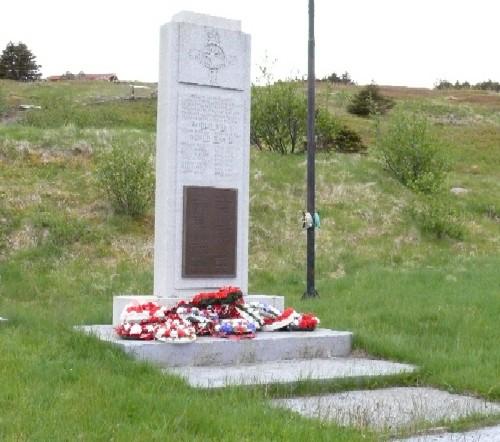 War Memorial Municipal Heritage SiteBranch, Newfoundland And Labrador
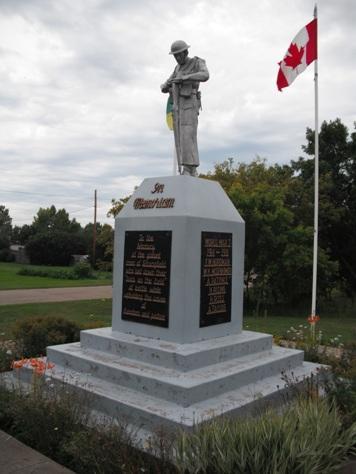 Strongfield CenotaphStrongfield, Saskatchewan
From the Canadian Register of Historic Places, as last updated on December 12, 2025. The register’s text is shown word for word.