Provincially Registered Property
Bard John MacLean Cemetery
Glen Bard, Nova Scotia
Also known as Glen Bard Cemetery
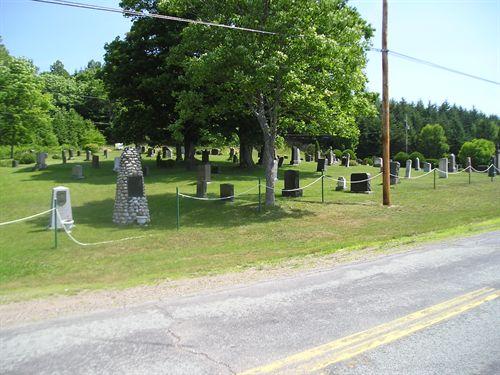
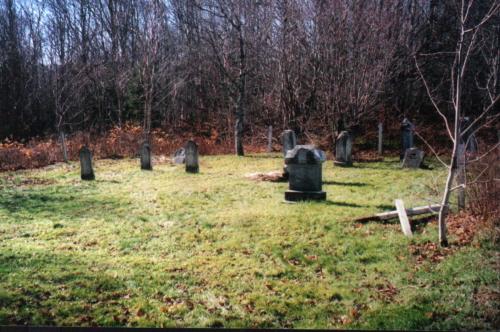
Bard John MacLean Cemetery, with Bard John Maclean's stone rubble monument in the foreground, Glen Bard, Nova Scotia, 2005.
Photo: Heritage Division, NS Dept. of Tourism, Culture and Heritage, 2005.
- Built
- 1848
- Recognized
- 1986
- By
- Province of Nova Scotia
The register’s text, word for word
Description
The Bard John MacLean Cemetery is located along Highway No. 4 in the Glen Bard District of Antigonish County, Nova Scotia. The cemetery was established in 1848 and is now inactive. It is enclosed along Highway No. 4 with post and chain fencing. The land, gravestones, and the post and chain fencing are included in the provincial designation.
Heritage value
The Bard John MacLean Cemetery is valued as the burial site for Bard John MacLean, the most representative Gaelic bard of the New World and the Reverend Alexander MacLean Sinclair, considered the greatest Gaelic scholar born on Canadian soil. The cemetery is also valued because it is considered to be an integral part of the adjacent property known as the Bard John MacLean House.
John MacLean was born in Caolas, on the Hebridean island of Tiree in Scotland in 1787. He arrived in Pictou in 1829 with his wife and three children. Already well known for his Gaelic songs and poetry, MacLean composed, his "A Choille Ghruamach" ("The Gloomy Forest") circa 1821- considered one of the most graphic descriptions of pioneer conditions in North America. MacLean was undoubtedly one of the greatest Gaelic bards who left Scotland. After living for some years at nearby Barney's River, MacLean moved his family to Glen Bard where he built a house about one hundred yards from where the MacLean House would later be built. This first house burned down in 1850, two years after his death.
Bard MacLean was the first person to be buried in the Bard John MacLean Cemetery. His grave, a stone rubble monument, has been the site of a number of commemorative occasions involving the descendants of Highland Scottish settlers in Nova Scotia.
MacLean's grandson, the Reverend Alexander MacLean Sinclair, was brought up in the MacLean House and became the most eminent North American Gaelic scholar of his day. Sinclair is also buried in the cemetery. Also buried in the cemetery is Major Colum Iain Nicholson MacLeod, a respected Gaelic scholar, poet and educator.
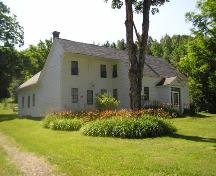
The cemetery adjoins the property on which the Bard John MacLean House is located. The MacLean House is typical of the houses built in the period 1830-1860 in eastern Nova Scotia. The wood frame construction, the floor plan, the exceptional foundation and central fireplace also suggest some New England influences. This style, however, was also very popular with Scottish immigrants to this area, who incorporated these influences into traditional building styles brought with them from Scotland.
The Bard John MacLean Cemetery is maintained by the Glen Bard Cemetery Trustees and is no longer active.
SourceProvincial Heritage Program property files, no. 45, 1747 Summer Street, Halifax, NS.
Character‑defining elements
Character-defining elements of the Bard John MacLean Cemetery include:
- post and chain fencing along Highway No. 4;
- mature trees located throughout the cemetery;
- original and historic grave stones and monuments, with their surviving inscriptions in both English and Scottish Gaelic;
- grass-covered interment areas;
- location adjacent to the Bard John MacLean House property.
End of the register’s text
Location
No. 4 Highway, Glen Bard, Nova Scotia, B0H, Canada
45.34240° N, 62.09070° W
Get directions (opens in a new tab)Being on the register doesn’t make a place open to visitors. Many are private homes or businesses; please view them from the street.

Loading map…
Nearby
Similar places
Places whose register descriptions are closest to this one.
 Acadian-Scottish Ancient Burial GroundEldon, Prince Edward Island
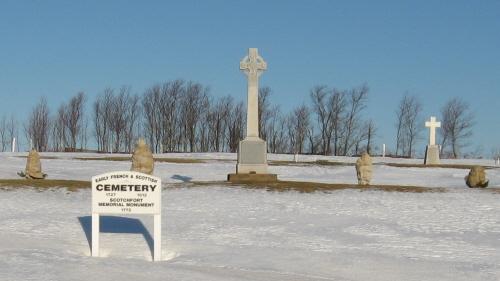 Scotchfort Pioneer CemeteryScotchfort, Prince Edward Island
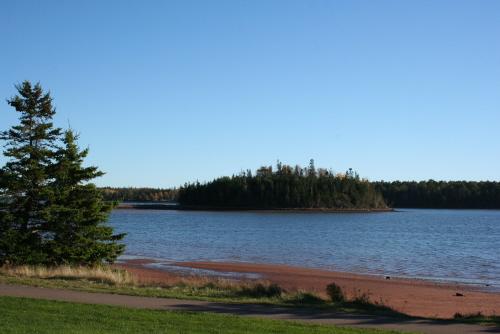 Brudenell Island Pioneer CemeteryGeorgetown Royalty, Prince Edward Island
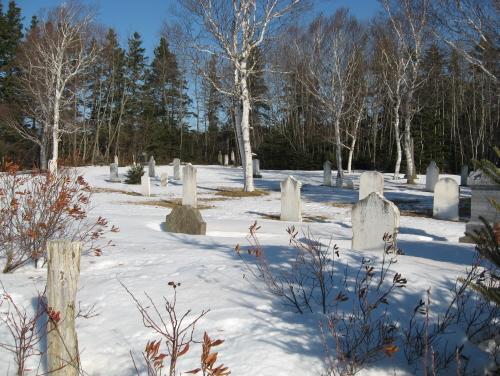 Belle River Pioneer CemeteryBelle River, Prince Edward Island
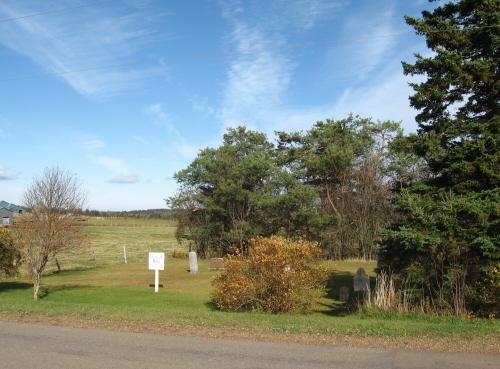 Glasgow Road CemeteryEbenezer, Prince Edward Island
 McArthur Family CemeteryChurchill, Prince Edward Island
From the Canadian Register of Historic Places, as last updated on December 12, 2025. The register’s text is shown word for word.