Historic Sites Protection Act – Historic
Albert Mines Site
Hillsborough (Parish), New Brunswick
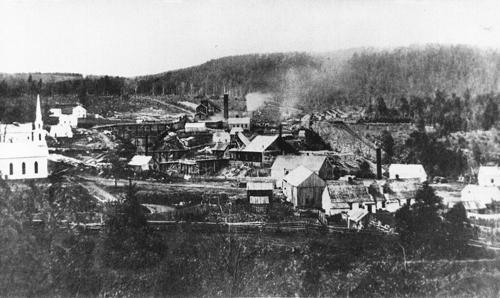
Image of the mines and the surrounding community during the period of albertite extraction.
Photo: Albert County Museum
- Recognized
- 1998
- By
- Province of New Brunswick
The register’s text, word for word
Description
Albert Mines Site is a 324 hectare defunct mine site containing outcrops of albertite (a shiny brown to black hydrocarbon rock classified as bitumen), visible ruins including mine shafts, tailings piles, manager’s house and a church. It is located in Albert Mines, Albert County.
Heritage value
Albert Mines Site is designated a Provincial Historic Site for the outcrops of albertite mines and for being the site of the first commercial extraction of petroleum products.
Petroleum products have had a massive influence on cultural and environmental change worldwide. The petroleum industry began when Dr. Abraham Gesner, the first government geologist in British North America, developed a process for distilling kerosene from bitumen in 1846.
Gesner lost control of the albertite mine in 1852 when a provincial court ruled incorrectly that albertite was coal, not bitumen. For the next 30 years, Albert Mines produced 200,000 tons of albertite, much of it shipped to Boston and New York for the production of gas to illuminate their street lamps. Gesner was cheated out of his share of the wealth and died in poverty.
Albert Mines was the site of the first commercial extraction of petroleum products anywhere in the world. When drilling for crude oil began in the USA in the 1950’s, it too was refined mainly into kerosene. By the turn of the century, the internal combustion engine created demand for gasoline, a byproduct of kerosene. In the 1940’s, kerosene again found a market as jet fuel.
In the mid-1800’s, kerosene replaced whale oil as lantern fuel. It produced a brighter flame, less smoke and smell, could be burned in the same lamps, and was cheaper than whale oil. By 1880, the whaling industry collapsed, leading some to say that Abraham Gesner’s invention had saved the whales. Today, the ruins of mine shafts, the manager's house and a church, as well as a collection of tailings piles, remain on the site.
SourceDepartment of Wellness, Culture and Sport - File Number 73
Character‑defining elements
The character-defining elements that relate to Albert Mines Site include:
- source of the first commercial petroleum product;
- albertite, named by and used to produce kerosene by Abraham Gesner in the 1840’s;
- visible ruins of mine shafts, tailings piles, manager’s house and church.
End of the register’s text
Location
Old Albert Mines Road, Hillsborough (Parish), New Brunswick, E4H, Canada
45.88528° N, 64.68979° W
Get directions (opens in a new tab)Being on the register doesn’t make a place open to visitors. Many are private homes or businesses; please view them from the street.

Loading map…
Nearby
 Taylor Estate4.9 km · Hillsborough · 1786
 Valley Baptist Church5 km · Hillsborough · 1871
 Wallace Farm5.1 km · Hillsborough · 1884
 Hillsborough United Church5.2 km · Hillsborough · 1862
 Honourable John Lewis House5.3 km · Hillsborough · 1865
 Victoriana Steeves Homestead Bed and Breakfast5.3 km · Hillsborough · 1860
Similar places
Places whose register descriptions are closest to this one.
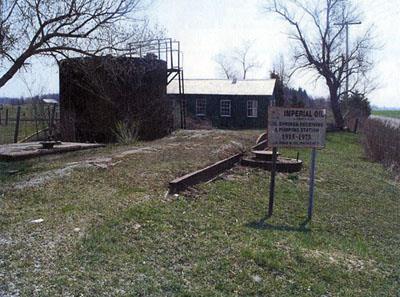 First Commercial Oil Field National Historic Site of CanadaOil Springs, Ontario
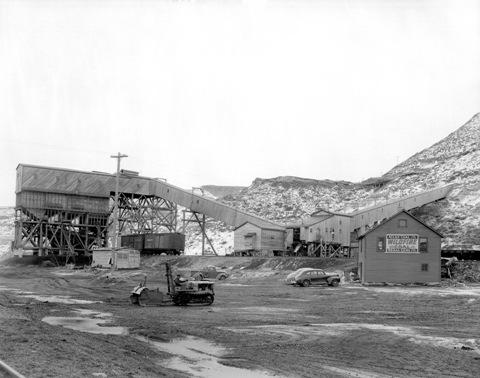 Atlas Coal Minenear East Coulee, Alberta
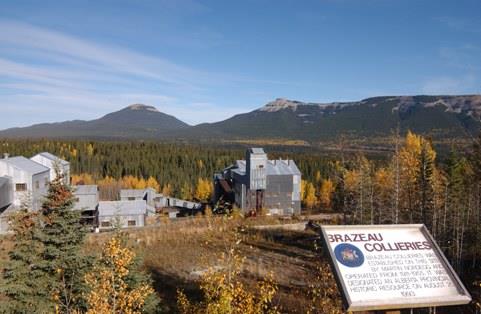 Nordegg / Brazeau Collieries MinesiteNordegg, Alberta
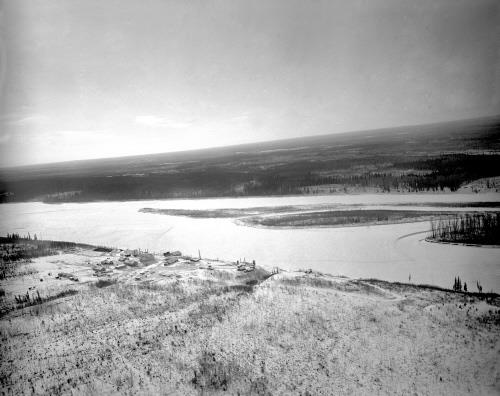 Bitumount Sitenear Fort McMurray, Alberta
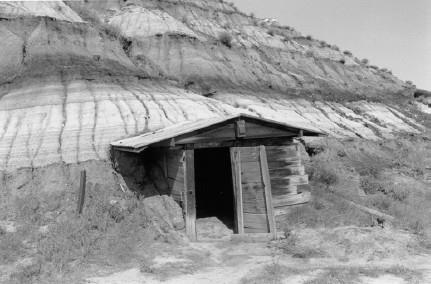 Atlas No. 3 Coal Mine National Historic Site of CanadaEast Coulee, Alberta
 Atlantic No. 3 Wild Well Sitenear Devon, Alberta
From the Canadian Register of Historic Places, as last updated on December 12, 2025. The register’s text is shown word for word.